















































KI-Beratung Beta

Gutscheinbedingungen

Gültig bis 30.11.2026 | Gültig für nicht preisgebundene fremdsprachige Bücher | Einzelne Artikel können ausgeschlossen sein | Online auf thalia.de und in der Thalia App einlösbar | Click & Collect nur mit Online-Zahlung (Paypal/Kreditkarte) vorab | Nicht kombinierbar mit anderen Gutscheinen oder Preisaktionen | Nur einmal pro Einkauf einlösbar | Gutschein wird auf max. 500€ Bestellwert angerechnet | Keine Barauszahlung | Nicht gültig für Versandkosten und Services

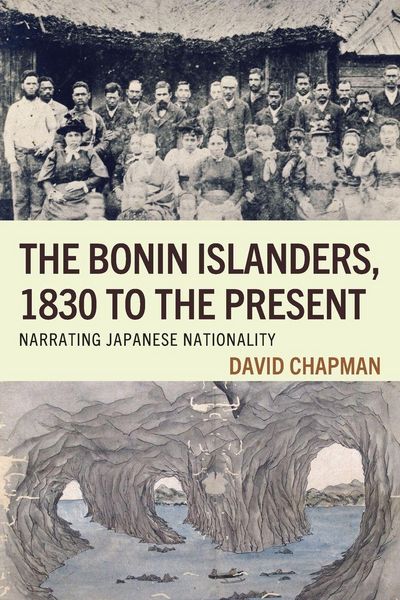
Produktbild: The Bonin Islanders, 1830 to the Present

The Bonin Islanders, 1830 to the Present Narrating Japanese Nationality

Aus der Reihe AsiaWorld

72,99 €

inkl. gesetzl. MwSt., Versandkostenfrei


Beschreibung

This book is a collection of interwoven historical narratives that present an intriguing and little known account of the Ogasawara (Bonin) archipelago and its inhabitants. The narratives begin in the seventeenth century and weave their way through various events connected to the ambitions, hopes, and...

Beschreibung

This book is a collection of interwoven historical narratives that present an intriguing and little known account of the Ogasawara (Bonin) archipelago and its inhabitants. The narratives begin in the seventeenth century and weave their way through various events connected to the ambitions, hopes, and machinations of individuals, communities, and nations. At the center of these narratives are the Bonin Islanders, originally an eclectic mix of Pacific Islanders, Americans, British, French, German, Portuguese, Italian, and African settlers that first landed on the islands in 1830. The islands were British sovereign territory from 1827 to 1876, when the Japanese asserted possession of the islands based on a seventeenth century expedition and a myth of a samurai discoverer. As part of gaining sovereign control, the Japanese government made all island inhabitants register as Japanese subjects of the national family register. The islanders were not literate in Japanese and had little experience of Japanese culture and limited knowledge of Japanese society, but by 1881 all were forced or coerced into becoming Japanese subjects. By the 1930s the islands were embroiled in the Pacific War. All inhabitants were evacuated to the Japanese mainland until 1946 when only the descendants of the original settlers were allowed to return. In the postwar period the islands fell under U.S. Navy administration until they were reverted to full Japanese sovereignty in 1968. Many descendants of these original settlers still live on the islands with family names such as Washington, Gonzales, Gilley, Savory, and Webb. This book explores the social and cultural history of these islands and its inhabitants and provides a critical approach to understanding the many complex narratives that make up the Bonin story.

Produktdetails

Einband

Taschenbuch

Erscheinungsdatum

11.09.2017

Abbildungen

13 BW Photos, 2 Tables

Verlag Ingram Publishers Services

Produktdetails

Einband

Taschenbuch

Erscheinungsdatum

11.09.2017

Abbildungen

13 BW Photos, 2 Tables

Verlag Ingram Publishers Services
Seitenzahl

246

Maße (L/B/H)

22,9/15,2/1,3 cm

Gewicht

362 g

Sprache

Englisch

ISBN

978-1-4985-1665-5

Herstelleradresse

Libri GmbH
Europaallee 1
36244 Bad Hersfeld
DE

Email: gpsr@libri.de

Ein neues Kapitel für Ihre Bücher

Ein neues Kapitel für Ihre Bücher

Schenken Sie Ihren alten Schätzen ein zweites Leben und erhalten Sie dafür eine Thalia Geschenkkarte.

Jetzt verkaufen
Jetzt verkaufen

Noch keine Bewertungen vorhanden

Verfassen Sie die erste Bewertung zu diesem Artikel

Helfen Sie anderen Kundinnen und Kunden durch Ihre Meinung.

Kundinnen und Kunden meinen

Bewertungen (0)

Die Leseprobe wird geladen.
  • Produktbild: The Bonin Islanders, 1830 to the Present
  • Chapter 1: The Orphan, the Uninhabited, and the Archbishop: Narratives of Discovery and Possession
    Chapter 2: An Unsettled Settlement: Narratives of Promise and Menace
    Chapter 3: Encountering Japan: Narratives of Possession and Reclamation
    Chapter 4: Naturalized Foreigners: Narratives of Nation and Modernity
    Chapter 5: Christianity, Colonialism, and Community: Narratives of Spectacle and Religion
    Chapter 6: Strangers at Home: Narratives of Suspicion and Conflict
    Chapter 7: A World Apart: Narratives of Identity
    Chapter 8: Conclusion