















































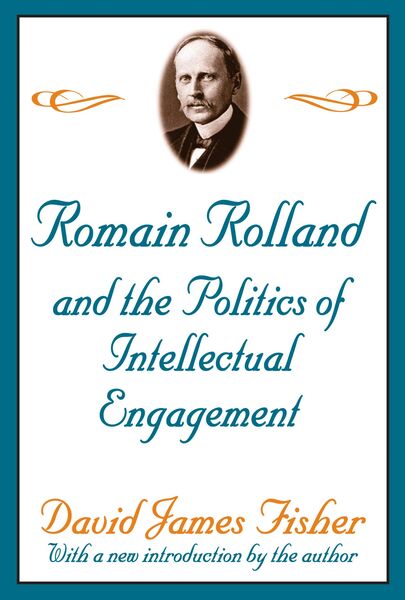
Romain Rolland and the Politics of the Intellectual Engagement
-
- Hardcover
- Taschenbuch
- eBook ausgewählt
-
Form:Einzelkauf Download
-
Sprache:Englisch
-
eBook Format:ePUB
- PDF 69,49 €
- ePUB 69,49 € ausgewählt
69,49 €
inkl. gesetzl. MwSt.Beschreibung
Produktdetails
Format
ePUB
Kopierschutz
Ja
Family Sharing
Nein
Text-to-Speech
Ja
Erscheinungsdatum
05.07.2017
Verlag
Taylor & FrancisSeitenzahl
378 (Printausgabe)
Dateigröße
2385 KB
Sprache
Englisch
EAN
9781351492638
This intellectual portrait of Romain Rolland (1866-1944)--French novelist, musicologist, dramatist, and Nobel prizewinner in 1915--focuses on his experiments with political commitment against the backdrop of European history between the two world wars. Best known as a biographer of Beethoven and for his novel, Jean-Christophe, Rolland was one of those nonconforming writers who perceived a crisis of bourgeois society in Europe before the Great War, and who consciously worked to discredit and reshape that society in the interwar period. Analyzing Rolland's itinerary of engaged stands, David James Fisher clarifies aspects of European cultural history and helps decipher the ambiguities at the heart of all forms of intellectual engagement.
Moving from text to context, Fisher organizes the book around a series of debates--Rolland's public and private collisions over specific committed stands--introducing the reader to the polemical style of French intellectual discourse and offering insight into what it means to be a responsible intellectual. Fisher presents Rolland's private ruminations, extensive research, and reexamination of the function and style of the French man of letters. He observes that Rolland experimented with five styles of commitment: oceanic mysticism linked to progressive, democratic politics; free thinking linked to antiwar dissent; pacifism and, ultimately, Gandhism; antifacism linked to anti-imperialism, antiracism, and all-out political resistance to fascism; and, most controversially, fellow traveling as a form of socialist humanism and the positive side of antifascism. Fisher views Rolland's engagement historically and critically, showing that engaged intellectuals of that time were neither naive propagandists nor dupes of political parties.
David James Fisher makes a case for the committed writer and hopes to re-ignite the debate about commitment. For him, Romain Rolland sums up engagement in a striking, dialectical formula:
Noch keine Bewertungen vorhanden
Verfassen Sie die erste Bewertung zu diesem Artikel
Helfen Sie anderen Kundinnen und Kunden durch Ihre Meinung.
Kurze Frage zu unserer Seite
Vielen Dank für Ihr Feedback
Wir nutzen Ihr Feedback, um unsere Produktseiten zu verbessern. Bitte haben Sie Verständnis, dass wir Ihnen keine Rückmeldung geben können. Falls Sie Kontakt mit uns aufnehmen möchten, können Sie sich aber gerne an unseren Kund*innenservice wenden.
zum Kundenservice