















































KI-Beratung Beta

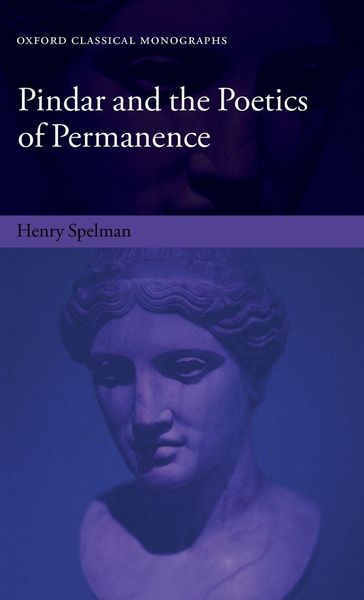
  • Produktbild: PINDAR & POETICS OF PERMANENCE OCM C
  • Produktbild: PINDAR & POETICS OF PERMANENCE OCM C

PINDAR & POETICS OF PERMANENCE OCM C

155,99 €

inkl. gesetzl. MwSt., Versandkostenfrei


Beschreibung

Produktdetails

Einband

Gebundene Ausgabe

Erscheinungsdatum

17.05.2018

Verlag

Oxford University Press

Seitenzahl

376

Maße (L/B/H)

22,2/14,5/2,4 cm

Gewicht

604 g

Sprache

Englisch

ISBN

978-0-19-882127-4

Beschreibung

Produktdetails

Einband

Gebundene Ausgabe

Erscheinungsdatum

17.05.2018

Verlag

Oxford University Press

Seitenzahl

376

Maße (L/B/H)

22,2/14,5/2,4 cm

Gewicht

604 g

Sprache

Englisch

ISBN

978-0-19-882127-4

Herstelleradresse

Libri GmbH
Europaallee 1
36244 Bad Hersfeld
DE

Email: gpsr@libri.de

Ein neues Kapitel für Ihre Bücher

Ein neues Kapitel für Ihre Bücher

Schenken Sie Ihren alten Schätzen ein zweites Leben und erhalten Sie dafür eine Thalia Geschenkkarte.

Jetzt verkaufen
Jetzt verkaufen

Noch keine Bewertungen vorhanden

Verfassen Sie die erste Bewertung zu diesem Artikel

Helfen Sie anderen Kundinnen und Kunden durch Ihre Meinung.

Kundinnen und Kunden meinen

Bewertungen (0)

Die Leseprobe wird geladen.
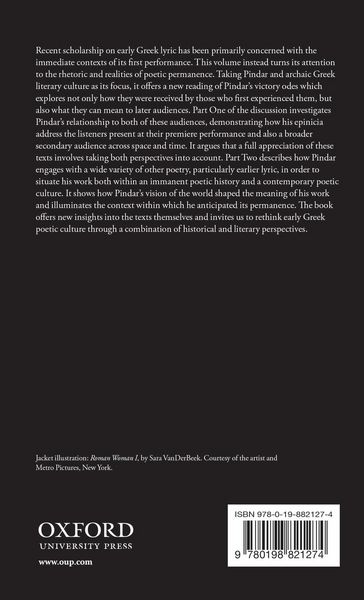
  • Produktbild: PINDAR & POETICS OF PERMANENCE OCM C
  • Produktbild: PINDAR & POETICS OF PERMANENCE OCM C
    • Frontmatter
    • Note on Translations and Conventions
    • List of Abbreviations
    • Precis
    • Part One: Pindar's Audiences
    • Introduction to Part One
    • I: Secondary Audiences
    • I.1: Knowledge of first performance
    • I.2: Knowledge of external realities
    • I.2.A: Public matters
    • I.2.B: Individual circumstances
    • I.2.C: Mythology
    • I.3: Difficult pleasures
    • I.4: Orality and writing
    • II: Vital Light in Isthmian 4
    • III: Event and Artefact: From Performance to Permanence
    • III.1: Isthmian 2.43 8
    • III.2: Olympian 10.91 6
    • III.3: Bacchylides 13.220 31
    • III.4: Pindar fr. 52o
    • III.5: Nemean 3.76 84
    • III.6: Bacchylides 3.90 8
    • III.7: Conclusions
    • IV: The Poetics of Permanence
    • IV.1: Time travel and tradition: Pythian 1
    • IV.2: The victor's perspective: Nemean 4
    • IV.3: Epinician lessons: Pythian 6
    • IV.4: Epic analogues: Pythian 3
    • IV.5: Epigrammatic interactions: Nemean 5
    • IV.6: Interwoven perspectives: Nemean 7 and Paean 6
    • V: Genre and Tradition
    • V.1: Genre
    • V.1.A: Occasions and audiences in cultic poetry
    • V.1.B: Permanence outside epinician
    • V.1.B.i: Paean 7b
    • V.1.B.ii: Dithyramb 2 (fr. 70b)
    • V.1.C: Conclusions: rhetoric and reality
    • V.2: Tradition
    • V.2.A: Alcman and Stesichorus
    • V.2.B: Alcaeus and Sappho
    • V.2.C: Ibycus and Anacreon
    • V.2.D: Common considerations
    • V.2.E: Conclusions: development and continuity
    • V.3: Coda
    • Part Two: Pindar and the Traditions of Lyric
    • Introduction to Part Two
    • VI: The Epinician Past
    • VI.1: Epinician origins in history: athletics, Ibycus, Simonides
    • VI.2: Epinician origins in epinician: from revel to literature
    • VI.2.A: Nemean 8
    • VI.2.B: Olympian 10
    • VI.3: The flowers of new poems: Olympian 9
    • VII: The Epinician Present
    • VII.1: Generic references
    • VII.2: The poet's career
    • VII.3: Patrons and communities
    • VII.4: Other eulogists
    • VII.5: Epinician revels
    • VII.6: Nemean 6
    • VII.7: Conclusions
    • VIII: The Lyric Past
    • VIII.1: Lyric history
    • VIII.2: Generic enrichment
    • VIII.2.A: Pythian 2
    • VIII.2.B: Pythian 1
    • VIII.2.C: Isthmian 2
    • VIII.3: Conclusions
    • Epilogue
    • Endmatter
    • Bibliography
    • 1. Texts
    • 2. Works cited
    • Index