















































KI-Beratung Beta

Gutscheinbedingungen

Gültig bis 30.11.2026 | Gültig für nicht preisgebundene fremdsprachige Bücher | Einzelne Artikel können ausgeschlossen sein | Online auf thalia.de und in der Thalia App einlösbar | Click & Collect nur mit Online-Zahlung (Paypal/Kreditkarte) vorab | Nicht kombinierbar mit anderen Gutscheinen oder Preisaktionen | Nur einmal pro Einkauf einlösbar | Gutschein wird auf max. 500€ Bestellwert angerechnet | Keine Barauszahlung | Nicht gültig für Versandkosten und Services

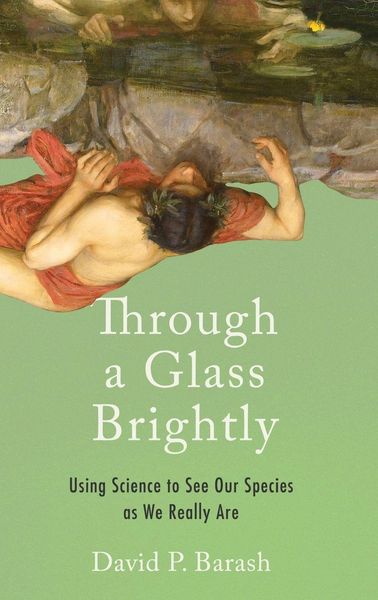
Produktbild: Through a Glass Brightly

Through a Glass Brightly Using Science to See Our Species as We Really Are

31,99 €

inkl. gesetzl. MwSt., Versandkostenfrei


Beschreibung

Human beings have long seen themselves as the center of the universe, the apple of God's eye, specially-created creatures who are somehow above and beyond the natural world. This viewpoint--a persistent paradigm of our own unique self-importance--is as dangerous as it is false. In Through a Glass Brightly,...

Beschreibung

Human beings have long seen themselves as the center of the universe, the apple of God's eye, specially-created creatures who are somehow above and beyond the natural world. This viewpoint--a persistent paradigm of our own unique self-importance--is as dangerous as it is false. In Through a Glass Brightly, noted scientist David P. Barash explores the process by which science has, throughout time, cut humanity "down to size," and how humanity has responded. A good paradigm is a tough thing to lose, especially when its replacement leaves us feeling more vulnerable and less special. And yet, as science has progressed, we find ourselves--like it or not--bereft of many of our most cherished beliefs, confronting an array of paradigms lost. Barash models his argument around a set of "old" and "new" paradigms that define humanity's place in the universe. This new set of paradigms range from provocative revelations as to whether human beings are well designed, whether the universe has somehow been established with our species in mind (the so-called anthropic principle), whether life itself is inherently fragile, and whether Homo sapiens might someday be genetically combined with other species (and what that would mean for our self-image). Rather than seeing ourselves through a glass darkly, science enables us to perceive our strengths and weaknesses brightly and accurately at last, so that paradigms lost becomes wisdom gained. The result is a bracing, remarkably hopeful view of who we really are.

Produktdetails

Einband

Gebundene Ausgabe

Erscheinungsdatum

01.08.2018

Verlag Oxford Academic
Seitenzahl

212

Produktdetails

Einband

Gebundene Ausgabe

Erscheinungsdatum

01.08.2018

Verlag Oxford Academic
Seitenzahl

212

Maße (L/B/H)

24/16,1/1,6 cm

Gewicht

437 g

Sprache

Englisch

ISBN

978-0-19-067371-0

Herstelleradresse

Libri GmbH
Europaallee 1
36244 Bad Hersfeld
DE

Email: gpsr@libri.de

Ein neues Kapitel für Ihre Bücher

Ein neues Kapitel für Ihre Bücher

Schenken Sie Ihren alten Schätzen ein zweites Leben und erhalten Sie dafür eine Thalia Geschenkkarte.

Jetzt verkaufen
Jetzt verkaufen

Noch keine Bewertungen vorhanden

Verfassen Sie die erste Bewertung zu diesem Artikel

Helfen Sie anderen Kundinnen und Kunden durch Ihre Meinung.

Kundinnen und Kunden meinen

Bewertungen (0)

Die Leseprobe wird geladen.
  • Produktbild: Through a Glass Brightly
    • Part 1: The allure of human centrality, or, how we persistently try to deny our place in the natural world
    • 1. The Journey to Brobdignag
    • 2. From Centrality to Periphery
    • 3. The Meaning of Life
    • 4. Well Designed?
    • 5. The Anthropic Principle
    • 6. Tardigrades, Trisolarans and the Toughness of Life
    • 7. Of Humanzees and Chimphumans
    • 8. Separateness of Self
    • Part 2: New Ways of Understanding Human Nature
    • 9. Uniquely Thoughtful
    • 10. Conflict between Parents and Offspring
    • 11. True or False?
    • 12. The Myth of Monogamy
    • 13. War and Peace
    • 14. About Those Better Angels ...
    • 15. Who's in Charge?
    • 16. The Paradox of Power
    • Conclusion: Optare aude