KI-Beratung Beta

Gutscheinbedingungen

Gültig bis 30.11.2026 | Gültig für nicht preisgebundene fremdsprachige Bücher | Einzelne Artikel können ausgeschlossen sein | Online auf thalia.de und in der Thalia App einlösbar | Click & Collect nur mit Online-Zahlung (Paypal/Kreditkarte) vorab | Nicht kombinierbar mit anderen Gutscheinen oder Preisaktionen | Nur einmal pro Einkauf einlösbar | Gutschein wird auf max. 500€ Bestellwert angerechnet | Keine Barauszahlung | Nicht gültig für Versandkosten und Services

  • Produktbild: Because We Are Bad
  • Produktbild: Because We Are Bad

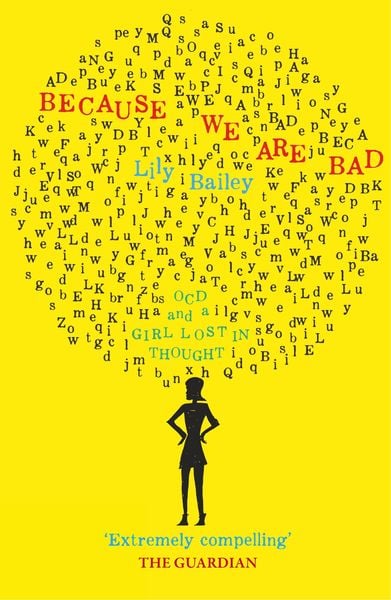
Because We Are Bad OCD and a Girl Lost in Thought

15,99 €

inkl. gesetzl. MwSt., Versandkostenfrei


Beschreibung

The true story of a teenager with OCD

'Extremely compelling' - THE GUARDIAN 'Remarkable' - WASHINGTON POST 'A beautifully-rendered memoir' - PUBLISHERS WEEKLY

Because We Are Bad is a gripping, fast-paced non-fiction memoir that takes you inside the invisible war of obsessive-compulsive disorder (OCD) - where...

Beschreibung

The true story of a teenager with OCD

'Extremely compelling' - THE GUARDIAN
'Remarkable'
- WASHINGTON POST
'A beautifully-rendered memoir' - PUBLISHERS WEEKLY

Because We Are Bad is a gripping, fast-paced non-fiction memoir that takes you inside the invisible war of obsessive-compulsive disorder (OCD) - where a single intrusive thought can feel like a verdict, and where the mind insists that certainty is the only form of safety.

From the outside, Lily is a bright, capable girl navigating school, friendships, and family life. On the inside, her days are governed by dread: unwanted images, taboo thoughts, sudden spikes of anxiety, and the persistent fear that thinking something "bad" means being bad.

OCD is not neat, quirky, or harmless in this story. It is urgent, intelligent, and exhausting - an illness that hijacks logic, steals time, and makes ordinary moments feel dangerous.

Written with razor-sharp clarity and literary elegance, Because We Are Bad has the pace of a thriller: a page-turning true story of rituals and mental compulsions, of moral panic and secret rules, of the desperate bargains made to keep disaster away.

Lily Bailey captures the looping nature of obsession - the way intrusive thoughts return, mutate, and demand new answers - while showing how shame and silence can tighten the trap. This is narrative nonfiction at its most intimate: an OCD memoir that turns a private disorder into a vivid, cinematic reading experience.

Yet this is not only a story of suffering. It is also a story of survival, insight, and recovery - the hard-won shift from fear-driven obedience to the possibility of freedom. With compassion and hard truth, Bailey traces how OCD distorts identity ("because we are bad"), and how naming the disorder can become the first step toward reclaiming the self. If you have ever lived with anxiety, panic, depression, perfectionism, rumination, or the crushing need to "get it right," you will recognise the emotional squeeze of a brain that refuses to let go.

Inside this unforgettable mental health memoir, you'll find:

  • A vivid, honest portrait of life with OCD and intrusive thoughts, including the isolating pressure to appear "fine."

  • The hidden mechanics of compulsions - checking, reassurance seeking, avoidance, mental reviewing - and how they can escalate in secret.

  • A moving coming-of-age journey through fear, courage, family, and the complicated work of growing up with mental illness.

  • A voice that is intelligent, humane, and fiercely readable: candid, darkly funny at times, and always compassionate.

Because We Are Bad is essential reading for anyone searching for an OCD memoir, an obsessive-compulsive disorder autobiography, or a powerful mental health book that combines literary nonfiction with real-life urgency. It's also a valuable read for partners, parents, friends, teachers, therapists, and caregivers - anyone who wants to understand what OCD can look like beyond stereotypes, and why reassurance and "just stop thinking about it" are not solutions.

If you crave narrative non-fiction that is emotionally intense, psychologically precise, and impossible to put down, Lily Bailey delivers. Because We Are Bad offers the rare combination of speed and depth: the propulsive momentum of a true life story and the enduring resonance of a book that changes how you see the mind.


Rezension

'Often as chilling as Sylvia Plath's The Bell Jar, but also full of so much inner and external turbulence that it reminded me at times of The Bourne Identity and Memento. Readers will root for Lily, even when she is attempting to run away from the realities - and sometimes authorities - chasing her ... an intense heart-rending roller coaster of a book ... Because We Are Bad is the most engaging and well-written account of mental health experiences I have read and should be on the reading lists of courses for mental health professionals.'

- WILL BLACK, HUFFINGTON POST

Produktdetails

Einband

Taschenbuch

Erscheinungsdatum

12.03.2018

Verlag Canbury Press
Seitenzahl

256

Produktdetails

Einband

Taschenbuch

Erscheinungsdatum

12.03.2018

Verlag Canbury Press
Seitenzahl

256

Maße (L/B/H)

19,8/12,9/1,5 cm

Gewicht

276 g

Sprache

Englisch

ISBN

978-0-9930407-4-0

EU-Ansprechpartner

Kolibri 360 GmbH
Ettore-Bugatti-Straße 6-14
51149 Köln
DE
produktsicherheit@kolibri360.de

Herstelleradresse

Canbury Press Ltd
14 Beresford Road
KT2 6LR London
UK
info@canburypress.com

Ein neues Kapitel für Ihre Bücher

Ein neues Kapitel für Ihre Bücher

Schenken Sie Ihren alten Schätzen ein zweites Leben und erhalten Sie dafür eine Thalia Geschenkkarte.

Jetzt verkaufen
Jetzt verkaufen

Noch keine Bewertungen vorhanden

Verfassen Sie die erste Bewertung zu diesem Artikel

Helfen Sie anderen Kundinnen und Kunden durch Ihre Meinung.

Kundinnen und Kunden meinen

Bewertungen (0)

Weitere Artikel finden Sie in

Die Leseprobe wird geladen.
  • Produktbild: Because We Are Bad
  • Produktbild: Because We Are Bad
  • Table of Contents

    1. Chesbury Hospital. Lily Bailey is in Chesbury Hospital, a private facility in London for patients with mental and physical illnesses. Lily is 19. 'The observation room is next to the nurses’ station; they keep you there until you are no longer a risk to yourself.'

    2. My Friend. Lily is in the playground, but her imaginary friend is not the others. She lives in her head all the time. 'Two of us sat side by side in my head, woven together, inseparable. She didn’t even have a name; she was just She. Really, it was hard to say where She ended and I began.'

    3. The Letter. Lily gets a letter from school, which must contain terrible news. Lily hides the letter from her grandmother because this terrible news must not reach her father and mother. Lily is bad. Very bad. Her cousin has died: Lily killed him with a thought.

    4. New School. It is Lily's first day at Buxton House. The other children laugh at Lily. She repeats the words: 'Fresh start. Fresh start. Fresh start.' Lily creeps into her sister's room because Ella could stop breathing at any moment. It is important to check that Ella is alive.

    5. Mum and Dad. Lily is told to be concerned with hygiene when visiting the swimming pool. Lily resolves to take this very seriously. Her routines intensify. Intrusive thoughts pop into her head. Mum and Dad's arguing worsens.

    6. Swearing in Church. 'Church is not the place for these words, but we can’t make them go away. Fucking boring ass church. Crap, fuck, shit, wanker, cunt.' Lily is one of the best at maths, but when Lily makes a mistake her friend in her head says: 'Stupid. Stupid. Stupid'.

    7. Most Apologetic Girl. At the Buxton House Leavers’ Awards, Lily receives an unusual award. ‘I’m sorry I was laughing when you walked past me in the corridor yesterday. I want you to know it was about something Mia said. I wasn’t laughing at you.’

    8. Hambledon. When she moves to boarding school, Lily's routines intensify. 'Recording our mistakes has become our full-time occupation. Most words are generated when interacting with other people, like at mealtimes or when everyone is hanging out in the dorm.' She lists her errors for 4 hours a day.

    9. Running from Words. Lily takes up athletics to flee from the lists that form in her heads. If she can run fast enough, the exertion - the sheer breathlessness - will silence her mind.

    10. Stumbling. Unable to keep up with her routines and overwhelmed with her lists, Lily's world finally collapses. She rushed to the bathroom. 'We curl up in a ball and rock back and forward. Normally the cold tiles make us feel better, but today they don't'

    11. Special Needs Department. Lily has to take GCSEs and is awarded 'extra time' because she is a 'slow processor'. Her friend in her head takes issue with the extra time Lily has been given. She scolds her: 'Lying scummy cheat. Lying scummy cheat. Lying scummy cheat.'

    12. Coming Home. Lily feigns an illness so that she is discharged from school. Her mother picks her up and takes her to a homeopathic doctor who prescribes some pills. Her mother also takes Lily to a GP, who finds her iron is low. She is referred to a specialist

    13. Doctor, Doctor. At a psychiatric hospital, Lily meets Dr Finch for the first time. Her friend insists there is no need to see this doctor. Has she ever let her down? Dr Finch says Lily has OCD: Obsessive Compulsive Disorder. Her friend is unhappy. 'OCD is a mental disorder. What we do is good'

    14. Pills, Pills, Pills. Having an invisible friend is unusual in OCD, Dr Finch explains. She says that Lily is not a bad person, but is worried about being a bad person. Lily must do CBT, Cognitive Behavioural Therapy. She tells Lily to rest from her routines. Lily's friend is unhappy and mocks her.

    15. Driving. Lily goes on a car journey with Dr Finch. Lily's friend is protesting, whining. Dr Funch says: ‘You know who your “friend” reminds me of? A wife beater. She beats you up in your head and calls you names when you don’t do what she says, and you follow her instructions because you’re scared'

    16. Those Who Love Me. Dr Finch sets Lily homework of graded exposure. To help cure her OCD, she has to resist recording lists of people she cares the least about. Lily decides she must do everything to make Dr Finch happy. But Lily wants to stop taking the anti-depressants she has been prescribed

    17. Thailand. Working in a nursery in London, Lily fears she has abused the children or that their food is unhygienic. During a gap year at a Thai orphanage, Lily's intrusive thoughts mock her. Her friend cackles about the basic washing up: 'Are you going to get sick?'

    18. Dublin. Lily starts an English degree at Trinity College, lodging at university halls in Rathmines. The voice in her head grows frantic during Freshers Week, and she writes to Dr Finch about managing her OCD. Dr Finch says: 'Tackling OCD involves taking risks to find out what actually happens'

    19. It Is My Fault. Things reach a crisis point in Lily's life and she decides to give up her battle against the voice in her head, her OCD, the endless list-making and routines. She is found by her university friends and an ambulance is called

    20. Mental Ward. Lily is transferred from intensive care in an Irish hospital to the psychiatric unit. She tells the psychiatrist: ‘I’m a bad person. I spend my life trying to be good and it’s never enough.’ ‘Is there anything else?’ ‘I love my doctor. I’m obsessed by her. It’s not an OCD thing.'


    21. Harley Street. Back in London after returning from Ireland, Lily is festering, writing endless lists. She is taken to a private consultation in Harley Street. Dr Dax says she will admit Lily to a private hospital in London, Chesbury. Lily escapes from her parents and ends up in a high-rise flat.

    22. Urine Test. Worried that she will contract HIV and die, Lily is forced to give blood - and a urine sample is demanded. Lily recites the Old list: I am preoccupied with four categories: BITCH LIAR, BODILY FUNCTIONS and PERVERT.

    23. Loser, Friend. Lily's list-making continues apace as her obsessive compulsions continue even during treatment, but she finds a friend and soulmate in Frankie and they have adventures together, breaking into an old part of the Victorian hospital building.

    24. Skating. Lily complains that Dr Dax at Chesbury Hospital is not giving her CBT for her OCD. 'I scream at her and ask her why she keeps changing my medication without explanation. My SPOILT category is going into overdrive, but for once, I don’t care.'

    25. Ashleaves. Lily is transferred to a rural hospital. She still goes through her OCD routines, including the list-making, but her medication is stablised – and she is given CBT to combat her obsessive behaviour

    26. Nursery. Discharged from the hospital, Lily starts work at a local nursery in London. 'I picture the 0.01% of germs that couldn’t be washed off by the antibacterial soap crawling from my naked fingers deep into an apple segment, ready to be delivered into the innocent mouth of an unsuspecting child'

    27. Journalism. Still suffering from OCD, Lily gets an internship at a local magazine and meets an attractive surfer dude, Doug. Lily wonders if she is introducing obscene terms into the articles she writes. Lily gets a dog, Rocky, and finds that she does not worry about him being unhygienic

    28. Rocky. Lily is encouraged to an OCD support class, where she finds talking to fellow sufferers helps. 'I remember what Dr Finch said: ‘Your routines feed off isolation'.'

    29. The Truth. Lily meets an older man and slowly comes to terms with her OCD. I have existed for 21 years. I didn’t live them all, but from now on I am hoping to. Sometimes... grey thoughts saunter in like unwanted dinner guests; the trick is not to invite them to sit at the table.'