















































KI-Beratung Beta

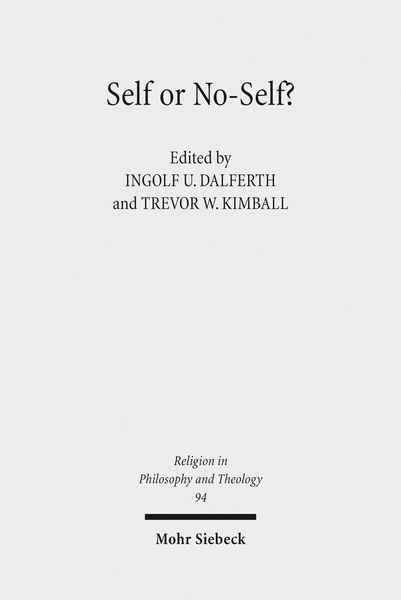
Produktbild: Self or No-Self?

Self or No-Self? The Debate about Selflessness and the Sense of Self. Claremont Studies in the Philosophy of Religion, Conference 2015

99,00 €

inkl. gesetzl. MwSt.

Beschreibung

Religious, philosophical, and theological views on the self vary widely. For some the self is seen as the center of human personhood, the ultimate bearer of personal identity and the core mystery of human existence. For others the self is a grammatical error and the sense of self an existential and epistemic...

Beschreibung

Religious, philosophical, and theological views on the self vary widely. For some the self is seen as the center of human personhood, the ultimate bearer of personal identity and the core mystery of human existence. For others the self is a grammatical error and the sense of self an existential and epistemic delusion. Buddhists contrast the Western understanding of the self as a function of the mind that helps us to organize our experiences to their view of no-self by distinguishing between no-self and not-self or between a solid or 'metaphysical' self that is an illusion and an experiential or psychological self that is not. There may be processes of 'selfing', but there is no permanent self. In Western psychology, philosophy, and theology, on the other hand, the term 'self' is often used as a noun that refers not to the performance of an activity or to a material body per se but rather to a (gendered) organism that represents the presence of something distinct from its materiality. Is this a defensible insight or a misleading representation of human experience? We are aware of ourselves in the first-person manner of our ipse -identity that cannot fully be spelled out in objectifying terms, but we also know ourselves in the third-person manner of our idem -identity, the objectified self-reference to a publicly available entity. This volume documents a critical and constructive debate between critics and defenders of the self or of the no-self that explores the intercultural dimensions of this important topic.

Produktdetails

Format

PDF

Kopierschutz

Ja

Family Sharing

Ja

Text-to-Speech

Nein

Produktdetails

Format

PDF

Format

eBooks im PDF-Format haben eine festgelegte Seitengröße und eignen sich daher nur bedingt zum Lesen auf einem tolino eReader oder Smartphone. Für den vollen Lesegenuss empfehlen wir Ihnen bei PDF-eBooks die Verwendung eines Tablets oder Computers.

Kopierschutz

Ja

Kopierschutz

Zum Lesen dieses eBooks auf Geräten der tolino Familie sowie auf sonstigen eReadern und am PC benötigen Sie eine Adobe ID. Weitere Hinweise zum Lesen von kopiergeschützten eBooks finden Sie unter Hilfe/Downloads.

Family Sharing

Ja

Family Sharing

Mit Family Sharing können Sie eBooks innerhalb Ihrer Familie (max. sechs Mitglieder im gleichen Haushalt) teilen. Sie entscheiden selbst, welches Buch Sie mit welchem Familienmitglied teilen möchten. Auch das parallele Lesen durch verschiedene Familienmitglieder ist durch Family Sharing möglich. Um eBooks zu teilen oder geteilt zu bekommen, muss jedes Familienmitglied ein Konto bei Thalia oder einem anderen tolino-Buchhändler haben. Weitere Informationen finden Sie unter Hilfe/Family-Sharing.

Text-to-Speech

Nein

Text-to-Speech

Bedeutet Ihnen Stimme mehr als Text? Mit der Funktion Text-to-Speech können Sie sich im tolino webReader und in der aktuellen Thalia – Lesen & Hören App das eBook vorlesen lassen. Weitere Informationen finden Sie unter Hilfe/Text-to-Speech.

Erscheinungsdatum

01.01.2018

Herausgeber
Verlag Mohr Siebeck
Seitenzahl

370 (Printausgabe)

Dateigröße

2571 KB

Auflage

1. Auflage

Sprache

Englisch

EAN

9783161553554

Barrierefreiheit
  • keine Information zur Barrierefreiheit bekannt

Noch keine Bewertungen vorhanden

Verfassen Sie die erste Bewertung zu diesem Artikel

Helfen Sie anderen Kundinnen und Kunden durch Ihre Meinung.

Kundinnen und Kunden meinen

Bewertungen (0)

Weitere Artikel finden Sie in

Die Leseprobe wird geladen.
  • Produktbild: Self or No-Self?