















































KI-Beratung Beta

Gutscheinbedingungen

Gültig bis 30.11.2026 | Gültig für nicht preisgebundene fremdsprachige Bücher | Einzelne Artikel können ausgeschlossen sein | Online auf thalia.de und in der Thalia App einlösbar | Click & Collect nur mit Online-Zahlung (Paypal/Kreditkarte) vorab | Nicht kombinierbar mit anderen Gutscheinen oder Preisaktionen | Nur einmal pro Einkauf einlösbar | Gutschein wird auf max. 500€ Bestellwert angerechnet | Keine Barauszahlung | Nicht gültig für Versandkosten und Services

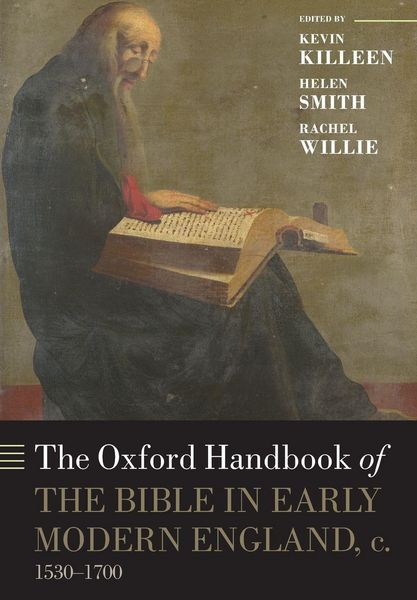
Produktbild: The Oxford Handbook of the Bible in Early Modern England, c. 1530-1700

The Oxford Handbook of the Bible in Early Modern England, c. 1530-1700

Aus der Reihe Oxford Handbooks

76,99 €

inkl. gesetzl. MwSt., Versandkostenfrei


Beschreibung

The Bible was, by any measure, the most important book in early modern England. It preoccupied the scholarship of the era, and suffused the idioms of literature and speech. Political ideas rode on its interpretation and deployed its terms. It was intricately related to the project of natural philosophy....

Beschreibung

The Bible was, by any measure, the most important book in early modern England. It preoccupied the scholarship of the era, and suffused the idioms of literature and speech. Political ideas rode on its interpretation and deployed its terms. It was intricately related to the project of natural philosophy. And it was central to daily life at all levels of society from parliamentarian to preacher, from the 'boy that driveth the plough', famously invoked by Tyndale, to women across the social scale. It circulated in texts ranging from elaborate folios to cheap catechisms; it was mediated in numerous forms, as pictures, songs, and embroideries, and as proverbs, commonplaces, and quotations.
Bringing together leading scholars from a range of fields, The Oxford Handbook of the Bible in Early Modern England, 1530-1700 explores how the scriptures served as a generative motor for ideas, and a resource for creative and political thought, as well as for domestic and devotional life.
Sections tackle the knotty issues of translation, the rich range of early modern biblical scholarship, Bible dissemination and circulation, the changing political uses of the Bible, literary appropriations and responses, and the reception of the text across a range of contexts and media. Where existing scholarship focuses, typically, on Tyndale and the King James Bible of 1611, The Oxford Handbook of the Bible in England, 1530-1700 goes further, tracing the vibrant and shifting landscape of biblical culture in the two centuries following the Reformation.

Produktdetails

Einband

Taschenbuch

Erscheinungsdatum

16.08.2018

Abbildungen

25 black-and-white halftones

Herausgeber Killeen Kevin + weitere

Produktdetails

Einband

Taschenbuch

Erscheinungsdatum

16.08.2018

Abbildungen

25 black-and-white halftones

Herausgeber
Verlag Oxford University Press
Seitenzahl

808

Maße (L/B/H)

24,4/17/4,3 cm

Gewicht

1366 g

Sprache

Englisch

ISBN

978-0-19-882822-8

Herstelleradresse

Libri GmbH
Europaallee 1
36244 Bad Hersfeld
DE

Email: gpsr@libri.de

Ein neues Kapitel für Ihre Bücher

Ein neues Kapitel für Ihre Bücher

Schenken Sie Ihren alten Schätzen ein zweites Leben und erhalten Sie dafür eine Thalia Geschenkkarte.

Jetzt verkaufen
Jetzt verkaufen

Noch keine Bewertungen vorhanden

Verfassen Sie die erste Bewertung zu diesem Artikel

Helfen Sie anderen Kundinnen und Kunden durch Ihre Meinung.

Kundinnen und Kunden meinen

Bewertungen (0)

Die Leseprobe wird geladen.
  • Produktbild: The Oxford Handbook of the Bible in Early Modern England, c. 1530-1700
    • Acknowledgements
    • List of Illustrations
    • Note to the Reader
    • Introduction: 'All other bookes ... are but Notes upon this': The Early Modern Bible
    • Part I: Translations
    • Part One Introduction
    • 1: Susan Wabuda: 'A day after doomsday': Cranmer and the Bible Translations of the 1530s
    • 2: Femke Molekamp: Genevan Legacies: The Making of the English Geneva Bible
    • 3: Katrin Ettenhuber: 'A comely gate to so rich and glorious a citie': The Paratextual Architecture of the Rheims New Testament and the King James Bible
    • 4: Karen L. Edwards: The King James Bible and Biblical Images of Desolation
    • 5: Jamie H. Ferguson: The Roman Inkhorn: Religious Resistance to Latinism in Early Modern England
    • 6: Nigel Smith: Retranslating the Bible in the English Revolution
    • Part II: Scholarship
    • Part Two Introduction
    • 7: Nicholas Hardy: The Septuagint and the Transformation of Biblical Scholarship in England, from the King James Bible (1611) to the London Polyglot (1657)
    • 8: Ariel Hessayon: The Apocrypha in Early Modern England
    • 9: Debora Shuger: Isaiah 63 and the Literal Senses of Scripture
    • 10: Torrance Kirby: The 'sundrie waies of Wisdom': Richard Hooker on the Authority of Scripture and Reason
    • 11: Scott Mandelbrote: 'The doors shall fly open': Chronology and Biblical Interpretation in England, c. 1630-c.1730
    • 12: Zur Shalev: Early Modern geographia sacra in the Context of Early Modern Scholarship
    • 13: Neil Forsyth: Milton's Corrupt Bible
    • 14: Crawford Gribben: The Commodification of Scripture, 1640-1660: Politics, Ecclesiology, and the Cultures of Print
    • 15: Nicholas McDowell: Self-Defeating Scholarship? Antiscripturism and Anglican Apologetics from Hooker to the Latitudinarians
    • Part III: Spreading the Word
    • Part Three Introduction
    • 16: Lori Anne Ferrell: The Church of England and the English Bible, 1559-1640
    • 17: Ian Green: 'Hearing' and 'Reading': Disseminating Bible Knowledge and Fostering Bible Understanding in Early Modern England
    • 18: Rachel Willie: 'All Scripture is given by inspiration of God': Dissonance and Psalmody
    • 19: Mary Morrissey: Ornament and Repetition: Biblical Interpretation in Early Modern English Preaching
    • 20: Alasdair Raffe: Preaching, Reading, and Publishing the Word in Protestant Scotland
    • 21: Marc Caball: The Bible in Early Modern Gaelic Ireland: Tradition, Collaboration, and Alienation
    • 22: Helen Smith: 'Wilt thou not read me, Atheist?': The Bible and Conversion
    • Part IV: The Political Bible
    • Part Four Introduction
    • 23: Jane Rickard: Mover and Author: King James VI and I and the Political Use of the Bible
    • 24: Kim Ian Parker: 'A king like other nations': Political Theory and the Hebrew Republic in the Early Modern Age
    • 25: Andrew Bradstock: Digging, Levelling, and Ranting: The Bible and the Civil War Sects
    • 26: Anne Lake Prescott: A Year in the Life of King Saul: 1643
    • 27: Emma Major: 'That glory may dwell in our land': The Bible, Britannia, and the Glorious Revolution
    • Part V: The Bible and Literature
    • Part Five Introduction
    • 28: Helen Wilcox: The King James Bible in its Cultural Moment
    • 29: Hannibal Hamlin: The Noblest Composition in the Universe or Fit for the Flames? The Literary Style of the King James Bible
    • 30: Sarah C. E. Ross: Epic, Meditation, or Sacred History? Women and Biblical Verse Paraphrase in Seventeenth-Century England
    • 31: Russ Leo: Scripture and Tragedy in the Reformation
    • 32: Alison Knight: 'This verse marks that': George Herbert's The Temple and Scripture in Context
    • 33: Nancy Rosenfeld: 'Blessed Joseph! I would thou hadst more fellows': John Bunyan's Joseph
    • 34: Barbara K. Lewalski: Paradise Lost, the Bible, and Biblical Epic
    • Part VI: Reception Histories
    • Part Six Introduction
    • 35: Emma Rhatigan: Donne's Biblical Encounters
    • 36: Andrew Morrall: Domestic Decoration and the Bible in the Early Modern Home
    • 37: Kevin Killeen: 'My exquisite copies for action': John Saltmarsh and the Machiavellian Bible
    • 38: Roger Pooley: Unbelief and the Bible
    • 39: Erica Longfellow: Inwardness and English Bible Translations
    • 40: Yvonne Sherwood: Early Modern Davids: From Sin to Critique
    • Chronology
    • Bibliography
    • Index