
On the Daily Work of Psychodynamic Psychotherapy
-
- Taschenbuch ausgewählt
- eBook
-
Sprache:Englisch
65,99 €
inkl. gesetzl. MwSt.,
Beschreibung
Produktdetails
Einband
Taschenbuch
Erscheinungsdatum
06.03.2018
Verlag
Taylor & FrancisSeitenzahl
240
Maße (L/B/H)
22,9/15,2/1,3 cm
Gewicht
317 g
Sprache
Englisch
ISBN
978-1-78220-564-7
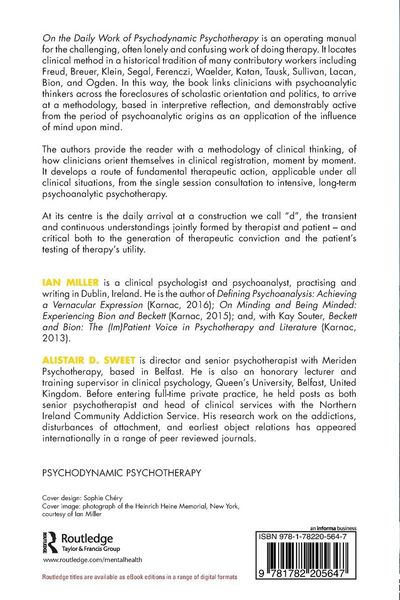
On the Daily Work of Psychodynamic Psychotherapy is an operating manual for the challenging, often lonely and confusing work of doing therapy. It locates clinical method in a historical tradition of many contributory workers including Freud, Breuer, Klein, Segal, Ferenczi, Waelder, Katan, Tausk, Sullivan, Lacan, Bion, and Ogden.
Ein neues Kapitel für Ihre Bücher
Ein neues Kapitel für Ihre Bücher
Schenken Sie Ihren alten Schätzen ein zweites Leben: Einfach Barcode scannen, Versandetikett ausdrucken, Bücher verschicken und Thalia Geschenkkarte erhalten.
Jetzt verkaufenKundinnen und Kunden meinen
Verfassen Sie die erste Bewertung zu diesem Artikel
Helfen Sie anderen Kund*innen durch Ihre Meinung
Kurze Frage zu unserer Seite
Vielen Dank für Ihr Feedback
Wir nutzen Ihr Feedback, um unsere Produktseiten zu verbessern. Bitte haben Sie Verständnis, dass wir Ihnen keine Rückmeldung geben können. Falls Sie Kontakt mit uns aufnehmen möchten, können Sie sich aber gerne an unseren Kund*innenservice wenden.
zum Kundenservice