















































KI-Beratung Beta

Gutscheinbedingungen

Gültig bis 30.11.2026 | Gültig für nicht preisgebundene fremdsprachige Bücher | Einzelne Artikel können ausgeschlossen sein | Online auf thalia.de und in der Thalia App einlösbar | Click & Collect nur mit Online-Zahlung (Paypal/Kreditkarte) vorab | Nicht kombinierbar mit anderen Gutscheinen oder Preisaktionen | Nur einmal pro Einkauf einlösbar | Gutschein wird auf max. 500€ Bestellwert angerechnet | Keine Barauszahlung | Nicht gültig für Versandkosten und Services

  • Produktbild: Harmony, Counterpoint, Partimento
  • Produktbild: Harmony, Counterpoint, Partimento

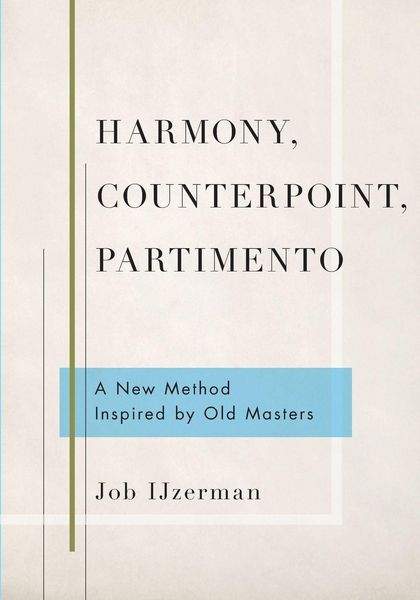
Harmony, Counterpoint, Partimento A New Method Inspired by Old Masters

Aus der Reihe Print on demand

88,99 €

inkl. gesetzl. MwSt., Versandkostenfrei


Beschreibung

A new method of music theory education for undergraduate music students, Harmony, Counterpoint, Partimento is grounded in schema theory and partimento, and takes an integrated, hands-on approach to the teaching of harmony and counterpoint in today's classrooms and studios. A textbook in three parts,...

Beschreibung

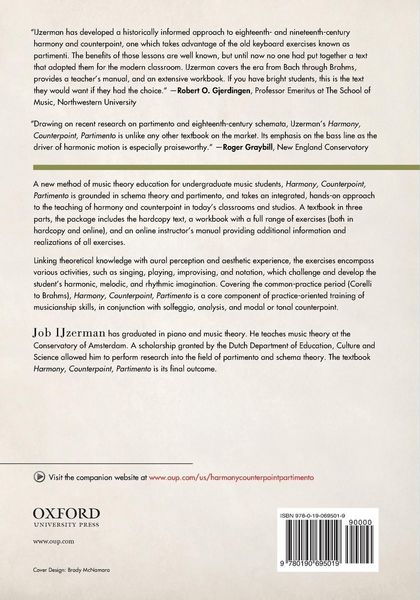
A new method of music theory education for undergraduate music students, Harmony, Counterpoint, Partimento is grounded in schema theory and partimento, and takes an integrated, hands-on approach to the teaching of harmony and counterpoint in today's classrooms and studios. A textbook in three parts, the package includes: - the hardcopy text, providing essential stylistic and technical information and repertoire discussion; - an online workbook with a full range of exercises, including partimenti by Fenaroli, Sala, and others, along with arrangements of eighteenth- and nineteenth-century compositions; - an online instructor's manual providing additional information and realizations of all exercises. Linking theoretical knowledge with aural perception and aesthetic experience, the exercises encompass various activities, such as singing, playing, improvising, and notation, which challenge and develop the student's harmonic, melodic, and rhythmic imagination. Covering the common-practice period (Corelli to Brahms), Harmony, Counterpoint, Partimento is a core component of practice-oriented training of musicianship skills, in conjunction with solfeggio, analysis, and modal or tonal counterpoint.

Produktdetails

Einband

Taschenbuch

Erscheinungsdatum

01.12.2018

Abbildungen

511 line

Verlag Oxford Academic

Produktdetails

Einband

Taschenbuch

Erscheinungsdatum

01.12.2018

Abbildungen

511 line

Verlag Oxford Academic
Seitenzahl

414

Maße (L/B/H)

25,4/17,8/2,3 cm

Gewicht

775 g

Sprache

Englisch

ISBN

978-0-19-069501-9

Herstelleradresse

Libri GmbH
Europaallee 1
36244 Bad Hersfeld
DE

Email: gpsr@libri.de

Ein neues Kapitel für Ihre Bücher

Ein neues Kapitel für Ihre Bücher

Schenken Sie Ihren alten Schätzen ein zweites Leben und erhalten Sie dafür eine Thalia Geschenkkarte.

Jetzt verkaufen
Jetzt verkaufen

Noch keine Bewertungen vorhanden

Verfassen Sie die erste Bewertung zu diesem Artikel

Helfen Sie anderen Kundinnen und Kunden durch Ihre Meinung.

Kundinnen und Kunden meinen

Bewertungen (0)

Die Leseprobe wird geladen.
  • Produktbild: Harmony, Counterpoint, Partimento
  • Produktbild: Harmony, Counterpoint, Partimento
    • Contents
    • Preface
    • Part 1 Harmony in Two and Three Parts
    • Chapter 1 Two-Part Scale Realization
    • 1.1 Parallel Thirds and Parallel Sixths
    • 1.2 Alternation of Thirds and Sixths
    • 1.3 Suspensions: Sevenths and Seconds
    • 1.4 Alternative Voice Leading of Suspension Patterns
    • Chapter 2 Three-Part Scale Realization
    • 2.1 The Fauxbourdon
    • 2.2 The Monte and the 7-6 Fauxbourdon
    • 2.3 The Stepwise Romanesca
    • 2.4 Fifth Down Fourth Up
    • 2.5 The Tied Bass
    • Chapter 3 The Three-Part Cadence
    • 3.1 The Simple Cadence
    • 3.2 The Compound Cadence
    • 3.3 The Double Cadence
    • 3.4 The Galant Cadence
    • 3.5 The Neapolitan Cadence
    • Chapter 4 The Rule of the Octave
    • 4.1 The Ascending Pentachord
    • 4.2 The Descending Pentachord
    • 4.3 The Ascending Tetrachord
    • 4.4 The Descending Tetrachord
    • Chapter 5 Galant Schemata
    • 5.1 The Leaping Romanesca
    • 5.2 The Quiescenza
    • 5.3 The Prinner
    • 5.4 The Monte Romanesca
    • 5.5 The Fenaroli
    • 5.6 The Folia
    • Part Two Harmony in Four Parts
    • Chapter 6 Fundamentals of Four-Part Harmony
    • 6.1 The Compound Cadence (II)
    • 6.2 The Galant Cadence (II)
    • 6.3 The Discant Cadence
    • 6.4 The Dominant Seventh Chord
    • 6.5 The Dominant Seventh Family
    • 6.6 The Four-Part Rule of the Octave
    • Chapter 7 Beyond the Rule of the Octave
    • 7.1 The Diminished Seventh Family
    • 7.2 Fifth Down Fourth Up and Third Down Second Up
    • 7.3 The Tied Bass (II)
    • 7.4 Descending Thirds
    • 7.5 The Folia (II)
    • Chapter 8 Chromaticism
    • 8.1. The Fonte
    • 8.2 The Chromatic Monte
    • 8.3 Tonicization in Descending Thirds
    • 8.4 The Chromatic Tetrachord: The Lamento
    • 8.5 The Chromatic Tetrachord: Advanced Realizations
    • 8.6 The Chain of Dominants
    • Chapter 9 Enharmonization
    • 9.1 The Minor Seventh and the Augmented Sixth
    • 9.2 The Augmented Sixth and the Minor Seventh
    • 9.3 Enharmonizations of the Diminished Seventh Chord
    • 9.4 Enharmonizations of the Augmented-Fifth Triad
    • 9.5 The Omnibus
    • Appendix I Chord Construction
    • Appendix II Cadences
    • Online Supplements:
    • Workbook
    • Realizations of the Exercises
    • Manual for Teachers
    • Midi Sound Files of the Examples
    • Preface