















































KI-Beratung Beta

Gutscheinbedingungen

Gültig bis 30.11.2026 | Gültig für nicht preisgebundene fremdsprachige Bücher | Einzelne Artikel können ausgeschlossen sein | Online auf thalia.de und in der Thalia App einlösbar | Click & Collect nur mit Online-Zahlung (Paypal/Kreditkarte) vorab | Nicht kombinierbar mit anderen Gutscheinen oder Preisaktionen | Nur einmal pro Einkauf einlösbar | Gutschein wird auf max. 500€ Bestellwert angerechnet | Keine Barauszahlung | Nicht gültig für Versandkosten und Services

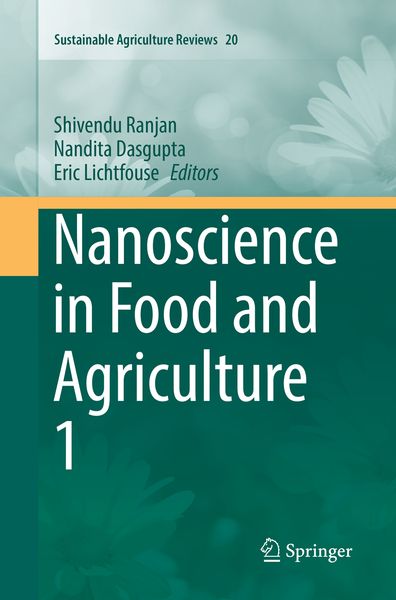
Produktbild: Nanoscience in Food and Agriculture 1
Band 20

Nanoscience in Food and Agriculture 1

159,99 €

inkl. gesetzl. MwSt., Versandkostenfrei


Beschreibung

Nanotechnology is a fast-evolving discipline that already produces outstanding basic knowledge and industrial applications for the benefit of society. Whereas the first applications of nanotechnology have been developed mainly in material sciences, applications in the agriculture and food sectors are...

Beschreibung

Nanotechnology is a fast-evolving discipline that already produces outstanding basic knowledge and industrial applications for the benefit of society. Whereas the first applications of nanotechnology have been developed mainly in material sciences, applications in the agriculture and food sectors are still emerging. Due to a rapid population growth there is a need to produce food and beverages in a more efficient, safe and sustainable way. Here, nanotechnology is a promising way to improve crop production, water quality, nutrition, packaging, and food security. There are actually few comprehensive reviews and clear textbooks on nanotechnology in agriculture, water, and food. In this book there are 10 chapters describing the synthesis and application of nanomaterials for health, food, and agriculture are presented.
Nanomaterials with unique properties will dramatically improve agriculture and food production. Applications will include nanofertilisers to enhance plantgrowth and nanosensors to detect food contamination. An overall view of nanotechnology applications in agriculture, food, water, and environment are described in the first two chapters by Dasgupta et al. and Singh. Health and environmental applications of nanotechnology are presented in chapters 3-5. Shukla and Iravani review green methods to synthesize metal nanoparticles, and give applications to water purification, in chapter 3. The removal of up to 95% of contaminants by nanoparticles, nanotubes and nanostructured membranes is described by Naghdi et al. in chapter 4. Yoti et al. then review nanosensors for the detection of pathogenic bacteria in chapter 5. Those nanosensors can be used as biodiagnostics to control food and water quality. Food applications of nanoscience are presented in chapters 6 and 7 by Kuswandi and Sarkhar et al. Kuswandi explain in chapter 6 that nanomaterials can improve packaging quality and that nanosensors can detect freshness and contanimants. The use ofnanoparticles to protect ingredients such as vitamins, flavours, and antimicrobials is reviewed by Sarkhar et al. in chapter 7.

Produktdetails

Einband

Taschenbuch

Erscheinungsdatum

14.06.2018

Abbildungen

XIX, 324 p. 48 illus.

Herausgeber Shivendu Ranjan + weitere

Produktdetails

Einband

Taschenbuch

Erscheinungsdatum

14.06.2018

Abbildungen

XIX, 324 p. 48 illus.

Herausgeber
Verlag Springer
Seitenzahl

324

Maße (L/B/H)

23,5/15,5/1,9 cm

Gewicht

522 g

Sprache

Englisch

ISBN

978-3-319-81862-7

Herstelleradresse

Springer-Verlag KG
Sachsenplatz 4-6
1201 Wien
AT

Email: ProductSafety@springernature.com

Ein neues Kapitel für Ihre Bücher

Ein neues Kapitel für Ihre Bücher

Schenken Sie Ihren alten Schätzen ein zweites Leben und erhalten Sie dafür eine Thalia Geschenkkarte.

Jetzt verkaufen
Jetzt verkaufen

Noch keine Bewertungen vorhanden

Verfassen Sie die erste Bewertung zu diesem Artikel

Helfen Sie anderen Kundinnen und Kunden durch Ihre Meinung.

Kundinnen und Kunden meinen

Bewertungen (0)

  • Produktbild: Nanoscience in Food and Agriculture 1
  •  Table Preface.- Chap. 1: Nanoagriculture and water quality management.- Chap. 2: Nanotechnology definitions, research, industry and property rights.- Chap. 3: Green synthesis and spectroscopic characterization of nanoparticles.- Chap. 4: Nanotechnology to remove contaminants.- Chap. 5: Nanosensors for the detection of pathogenic bacteria.- Chap. 6: Nanotechnology in food packaging.- Chap. 7: Nanotechnology in food processing and packaging.- Chap. 8: Nanomaterials for soil fertilisation and contaminant removal.- Chap. 9: Nanofertilisers, nanopesticides and nanosensors in agriculture.- Chap. 10: Nanoparticles, soils, plants and sustainable agriculture.