















































KI-Beratung Beta

Gutscheinbedingungen

Gültig bis 30.11.2026 | Gültig für nicht preisgebundene fremdsprachige Bücher | Einzelne Artikel können ausgeschlossen sein | Online auf thalia.de und in der Thalia App einlösbar | Click & Collect nur mit Online-Zahlung (Paypal/Kreditkarte) vorab | Nicht kombinierbar mit anderen Gutscheinen oder Preisaktionen | Nur einmal pro Einkauf einlösbar | Gutschein wird auf max. 500€ Bestellwert angerechnet | Keine Barauszahlung | Nicht gültig für Versandkosten und Services

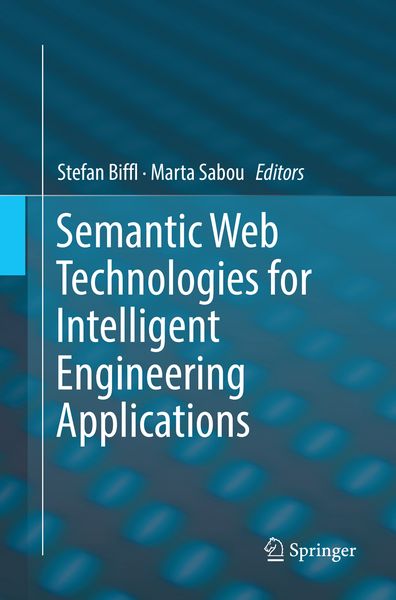
  • Produktbild: Semantic Web Technologies for Intelligent Engineering Applications
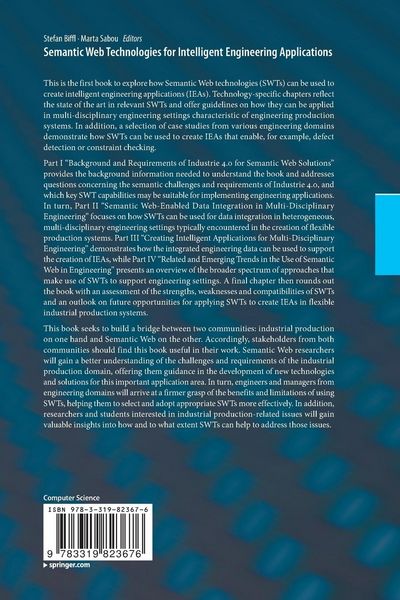
  • Produktbild: Semantic Web Technologies for Intelligent Engineering Applications

Semantic Web Technologies for Intelligent Engineering Applications

124,99 €

inkl. gesetzl. MwSt., Versandkostenfrei


Beschreibung

This is the first book to explore how Semantic Web technologies (SWTs) can be used to create intelligent engineering applications (IEAs).  Technology-specific chapters reflect the state of the art in relevant SWTs and offer guidelines on how they can be applied in multi-disciplinary engineering settings...

Beschreibung

This is the first book to explore how Semantic Web technologies (SWTs) can be used to create intelligent engineering applications (IEAs).  Technology-specific chapters reflect the state of the art in relevant SWTs and offer guidelines on how they can be applied in multi-disciplinary engineering settings characteristic of engineering production systems. In addition, a selection of case studies from various engineering domains demonstrate how SWTs can be used to create IEAs that enable, for example, defect detection or constraint checking.

Part I “Background and Requirements of Industrie 4.0 for Semantic Web Solutions” provides the background information needed to understand the book and addresses questions concerning the semantic challenges and requirements of Industrie 4.0, and which key SWT capabilities may be suitable for implementing engineering applications. In turn, Part II “Semantic Web-Enabled Data Integration in Multi-Disciplinary Engineering” focuses on how SWTs can be used for data integration in heterogeneous, multi-disciplinary engineering settings typically encountered in the creation of flexible production systems. Part III “Creating Intelligent Applications for Multi-Disciplinary Engineering” demonstrates how the integrated engineering data can be used to support the creation of IEAs, while Part IV “Related and Emerging Trends in the Use of Semantic Web in Engineering” presents an overview of the broader spectrum of approaches that make use of SWTs to support engineering settings. A final chapter then rounds out the book with an assessment of the strengths, weaknesses and compatibilities of SWTs and an outlook on future opportunities for applying SWTs to create IEAs in flexible industrial production systems.

This book seeks to build a bridge between two communities: industrial production on one hand and Semantic Web on the other. Accordingly, stakeholders from both communities should find this book useful in their work. Semantic Web researchers will gain a better understanding of the challenges and requirements of the industrial production domain, offering them guidance in the development of new technologies and solutions for this important application area. In turn, engineers and managers from engineering domains will arrive at a firmer grasp of the benefits and limitations of using SWTs, helping them to select and adopt appropriate SWTs more effectively. In addition, researchers and students interested in industrial production-related issues will gain valuable insights into how and to what extent SWTs can help to address those issues. 

Portrait

About the Editors:

Marta Sabou is Senior Researcher at the Vienna University of Technology, where she leads a group of researchers in the area of semantic representation and integration of engineering data in the context of automation systems. She has a broad expertise in several Semantic Web research topics ranging from ontology engineering tasks (ontology creation, mapping, modularization) to the creation of intelligent systems that benefit from semantic information in domains as varied as tourism, climate change or open government. Her current interest is on data integration issues, with a special focus on the domain of industrial automation and Industrie 4.0 .

Stefan Biffl is Associate Professor of Software Engineering at the Institute of Software Technology and Interactive Systems, Vienna University of Technology. He is the head of the Christian Doppler research laboratory “Software Engineering Integration for Flexible Automation Systems”, which investigates concepts, methods, and tools for improving production systems engineering processes based on better integration of data in multi-disciplinary engineering projects. Stefan Biffl is also a supervisor in the doctoral college on "Cyber-Physical Production Systems" at the Vienna University of Technology. His current research interests include software and systems engineering, and product and process improvement.


Produktdetails

Einband

Taschenbuch

Erscheinungsdatum

23.06.2018

Abbildungen

XX, 405 p. 116 illus., 40 illus. in color.

Herausgeber Stefan Biffl + weitere

Produktdetails

Einband

Taschenbuch

Erscheinungsdatum

23.06.2018

Abbildungen

XX, 405 p. 116 illus., 40 illus. in color.

Herausgeber
Verlag Springer
Seitenzahl

405

Maße (L/B/H)

23,5/15,5/2,4 cm

Gewicht

645 g

Auflage

Softcover reprint of the original 1st ed. 2016

Sprache

Englisch

ISBN

978-3-319-82367-6

Herstelleradresse

Springer-Verlag GmbH
Tiergartenstr. 17
69121 Heidelberg
DE

Email: ProductSafety@springernature.com

Ein neues Kapitel für Ihre Bücher

Ein neues Kapitel für Ihre Bücher

Schenken Sie Ihren alten Schätzen ein zweites Leben und erhalten Sie dafür eine Thalia Geschenkkarte.

Jetzt verkaufen
Jetzt verkaufen

Noch keine Bewertungen vorhanden

Verfassen Sie die erste Bewertung zu diesem Artikel

Helfen Sie anderen Kundinnen und Kunden durch Ihre Meinung.

Kundinnen und Kunden meinen

Bewertungen (0)

  • Produktbild: Semantic Web Technologies for Intelligent Engineering Applications
  • Produktbild: Semantic Web Technologies for Intelligent Engineering Applications
  • Part I: Background and Requirements of Industrie 4.0 for Semantic Web Solutions.- Part II: Semantic Web Enabled Data Integration in Multi-Disciplinary Engineering.- Part III: Intelligent Applications for Multi-Disciplinary Engineering.- Part IV: Related and Emerging Trends in the use of Semantic Web in Engineering.