















































KI-Beratung Beta

Gutscheinbedingungen

Gültig bis 30.11.2026 | Gültig für nicht preisgebundene fremdsprachige Bücher | Einzelne Artikel können ausgeschlossen sein | Online auf thalia.de und in der Thalia App einlösbar | Click & Collect nur mit Online-Zahlung (Paypal/Kreditkarte) vorab | Nicht kombinierbar mit anderen Gutscheinen oder Preisaktionen | Nur einmal pro Einkauf einlösbar | Gutschein wird auf max. 500€ Bestellwert angerechnet | Keine Barauszahlung | Nicht gültig für Versandkosten und Services

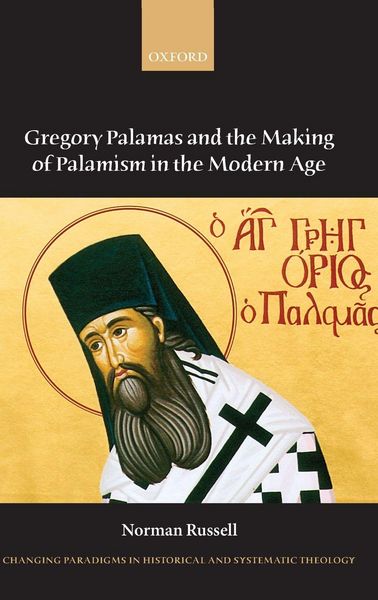
Produktbild: Gregory Palamas and the Making of Palamism in the Modern Age

Gregory Palamas and the Making of Palamism in the Modern Age

139,99 €

inkl. gesetzl. MwSt., Versandkostenfrei


Beschreibung

The fourteenth-century Greek hesychast and controversialist, Gregory Palamas, has been so successfully cast as 'the other' in Western theological discourse that it can be difficult to gain a sympathetic hearing for him. In the first part of this book, Norman Russell traces the historical reception of...

Beschreibung

The fourteenth-century Greek hesychast and controversialist, Gregory Palamas, has been so successfully cast as 'the other' in Western theological discourse that it can be difficult to gain a sympathetic hearing for him. In the first part of this book, Norman Russell traces the historical reception of Palamite thought in Orthodoxy and in the West, and investigates how 'Palamism' was constructed in the early twentieth century by both Western and Eastern theologians (principally Martin Jugie and John Meyendorff) for polemical or apologetic purposes. Russell argues that we need to go behind these ideological constructions in order to gain a true perception of the teaching of Gregory Palamas. In his recent survey of Palamite scholarship, Robert Sinkewicz noted that it is now time to raise the larger questions. The second part of the book attempts to do this, following the contours of Palamas' thinking in three areas: his relationship to tradition, his philosophy, and his theology. Russell shows that Palamite thought, when freed of misunderstanding and misrepresentation, has the potential to enrich our understanding of divine-human communion. This study contributes to the changing paradigm of scholarship on Palamas, nudging it towards the point at which Palamite thought can be used fruitfully by contemporary Western and Eastern theologians without the need to subscribe to what has been regarded as 'Palamism'.

Rezension

...provides a comprehensive overview of the historical reception of and reaction to Gregory Palamas, beginning with the era im-mediately following his death (1357) through the present century. Father Demetios Harper, Journal of Orthodox Christian Studies

Produktdetails

Einband

Gebundene Ausgabe

Erscheinungsdatum

01.05.2019

Verlag Oxford University Press
Seitenzahl

288

Produktdetails

Einband

Gebundene Ausgabe

Erscheinungsdatum

01.05.2019

Verlag Oxford University Press
Seitenzahl

288

Maße (L/B/H)

24/16,1/2 cm

Gewicht

599 g

Sprache

Englisch

ISBN

978-0-19-964464-3

Herstelleradresse

Libri GmbH
Europaallee 1
36244 Bad Hersfeld
DE

Email: gpsr@libri.de

Ein neues Kapitel für Ihre Bücher

Ein neues Kapitel für Ihre Bücher

Schenken Sie Ihren alten Schätzen ein zweites Leben und erhalten Sie dafür eine Thalia Geschenkkarte.

Jetzt verkaufen
Jetzt verkaufen

Noch keine Bewertungen vorhanden

Verfassen Sie die erste Bewertung zu diesem Artikel

Helfen Sie anderen Kundinnen und Kunden durch Ihre Meinung.

Kundinnen und Kunden meinen

Bewertungen (0)

Die Leseprobe wird geladen.
  • Produktbild: Gregory Palamas and the Making of Palamism in the Modern Age
    • Bibliographical Abbreviations
    • Introduction
    • Part I THE HISTORICAL RECEPTION OF PALAMITE THEOLOGY
    • 1: The Orthodox Struggle to Assimilate Palamite Thinking
    • 2: Martin Jugie and the invention of Palamism
    • 3: John Meyendorff's Response to Jugie
    • 4: New Directions since Meyendorff
    • Part II RAISING THE LARGER QUESTIONS
    • 5: What Does Doctrinal Development Mean?
    • 6: How is a Participatory Understanding of the Divine Mystery to be Attained?
    • 7: What is the Reality of Divine-Human Communion?
    • 8: Could Palamas Become 'the Inheritance of all Christians'?
    • Concluding Reflections
    • Select Bibliography