















































KI-Beratung Beta

Gutscheinbedingungen

Gültig bis 30.11.2026 | Gültig für nicht preisgebundene fremdsprachige Bücher | Einzelne Artikel können ausgeschlossen sein | Online auf thalia.de und in der Thalia App einlösbar | Click & Collect nur mit Online-Zahlung (Paypal/Kreditkarte) vorab | Nicht kombinierbar mit anderen Gutscheinen oder Preisaktionen | Nur einmal pro Einkauf einlösbar | Gutschein wird auf max. 500€ Bestellwert angerechnet | Keine Barauszahlung | Nicht gültig für Versandkosten und Services

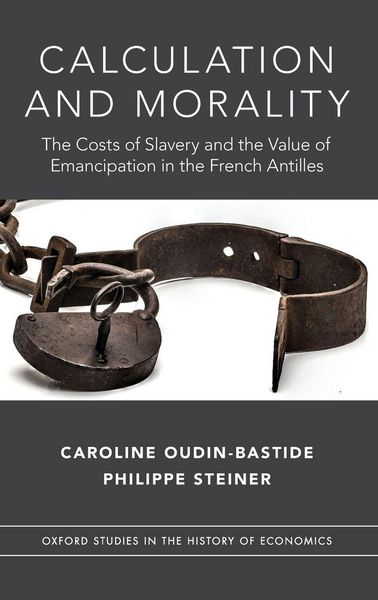
Produktbild: Calculation and Morality

Calculation and Morality The Costs of Slavery and the Value of Emancipation in the French Antilles

176,99 €

inkl. gesetzl. MwSt., Versandkostenfrei


Beschreibung

Debates about whether to maintain or abolish slavery revolved around two key values: the morality of enslaving other human beings and the economic benefits and costs of slavery as compared to free labor. Various and conflicting arguments were presented by abolitionists, colonists, and administrators...

Beschreibung

Debates about whether to maintain or abolish slavery revolved around two key values: the morality of enslaving other human beings and the economic benefits and costs of slavery as compared to free labor. Various and conflicting arguments were presented by abolitionists, colonists, and administrators in slave-holding societies, all of whom used calculations about the relative cost and productivity of slavery to defend their own point of view in an impassioned debate. In Calculation and Morality, Caroline Oudin-Bastide and Philippe Steiner consider how economic calculations, estimations, and arguments informed the long debate over French slavery between 1771 and 1848. They show how calculation was introduced into moral debate and became a critical social object in regard both to its consistency and its manifest effects. To do so they trace a process in which phenomena were classified into groups, becoming a category, and then how metrics and calculations were used to analyze the possible effects of emancipating slaves in French colonies. Abolitionists sought to demonstrate that it was in the interest of slaveowners and/or the entire nation to employ free labour in the colonies, and to show the irrationality of the colonial and metropolitan defenders of servitude; their aim was to enlighten various parties as to their real interest, and how that real interest coincided with justice. In turn, colonists accused those opposed to slavery of being blinded by their own philanthropic principles and insisted on the rationality of the slave system as the only means of meeting the interests of everyone, including slaves, at least in the short and medium term. Oudin-Bastide and Steiner closely examine the positions and reasoning of such influential French thinkers as Pierre Samuel Du Pont de Nemours, Anne Robert Jacques Turgot, Antoine Nicolas de Condorcet, Simonde de Sismondi, Jean Baptiste Say, and Alexis de Tocqueville. In doing so they shed light on the interaction of moral precepts and econonomic calculations in a trenchant study in the history of ideas.

Produktdetails

Einband

Gebundene Ausgabe

Erscheinungsdatum

07.02.2019

Verlag Oxford Academic
Seitenzahl

264

Produktdetails

Einband

Gebundene Ausgabe

Erscheinungsdatum

07.02.2019

Verlag Oxford Academic
Seitenzahl

264

Maße (L/B/H)

24/16,1/1,9 cm

Gewicht

514 g

Übersetzt von

Keith Tribe

Sprache

Englisch

ISBN

978-0-19-085685-4

Herstelleradresse

Libri GmbH
Europaallee 1
36244 Bad Hersfeld
DE

Email: gpsr@libri.de

Ein neues Kapitel für Ihre Bücher

Ein neues Kapitel für Ihre Bücher

Schenken Sie Ihren alten Schätzen ein zweites Leben und erhalten Sie dafür eine Thalia Geschenkkarte.

Jetzt verkaufen
Jetzt verkaufen

Noch keine Bewertungen vorhanden

Verfassen Sie die erste Bewertung zu diesem Artikel

Helfen Sie anderen Kundinnen und Kunden durch Ihre Meinung.

Kundinnen und Kunden meinen

Bewertungen (0)

Die Leseprobe wird geladen.
  • Produktbild: Calculation and Morality
    • Introduction
    • Chapter 1. Du Pont: or, the Economic Error of Slavery, as Demonstrated by Calculation
    • Chapter 2. The Proliferating Use of Calculation among Eighteenth-century Abolitionists
    • Chapter 3. Colonists also Calculate
    • Chapter 4. Moving Away from the Rhetoric of Calculation
    • Chapter 5. The Institutional Inscription of Calculation
    • Chapter 6. Another Form of Calculation: Productivity
    • Chapter 7. Self-interest and Needs
    • Chapter 8. Status and Interest
    • Chapter 9. Justice and Utility
    • Conclusion. Freeing the Slaves
    • References
    • Index of names