















































KI-Beratung Beta

Gutscheinbedingungen

Gültig bis 30.11.2026 | Gültig für nicht preisgebundene fremdsprachige Bücher | Einzelne Artikel können ausgeschlossen sein | Online auf thalia.de und in der Thalia App einlösbar | Click & Collect nur mit Online-Zahlung (Paypal/Kreditkarte) vorab | Nicht kombinierbar mit anderen Gutscheinen oder Preisaktionen | Nur einmal pro Einkauf einlösbar | Gutschein wird auf max. 500€ Bestellwert angerechnet | Keine Barauszahlung | Nicht gültig für Versandkosten und Services

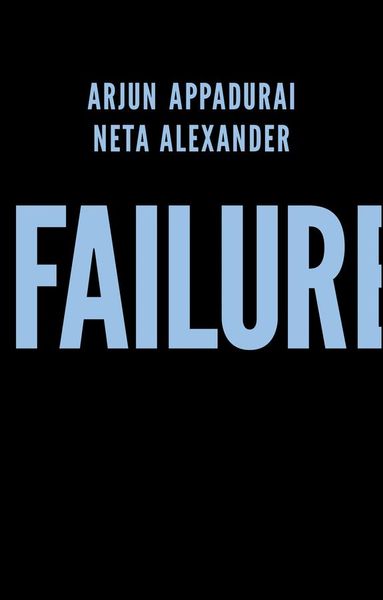
Produktbild: Failure

Failure

18,99 €

inkl. gesetzl. MwSt., Versandkostenfrei


Beschreibung

Wall Street and Silicon Valley - the two worlds this book examines - promote the illusion that scarcity can and should be eliminated in the age of seamless "flow." Instead, Appadurai and Alexander propose a theory of habitual and strategic failure by exploring debt, crisis, digital divides, and (dis)connectivity....

Beschreibung

Wall Street and Silicon Valley - the two worlds this book examines - promote the illusion that scarcity can and should be eliminated in the age of seamless "flow." Instead, Appadurai and Alexander propose a theory of habitual and strategic failure by exploring debt, crisis, digital divides, and (dis)connectivity. Moving between the planned obsolescence and deliberate precariousness of digital technologies and the "too big to fail" logic of the Great Recession, they argue that the sense of failure is real in that it produces disappointment and pain. Yet, failure is not a self-evident quality of projects, institutions, technologies, or lives. It requires a new and urgent understanding of the conditions under which repeated breakdowns and collapses are quickly forgotten. By looking at such moments of forgetfulness, this highly original book offers a multilayered account of failure and a general theory of denial, memory, and nascent systems of control.

Rezension

"Failure is an extraordinarily incisive and insightful work of contemporary social theory. The book unravels an infuriating paradox: Silicon Valley and Wall Street companies that move fast, break things, and ruin lives, justify their disastrous performance as a necessary step toward a glorious future. Appadurai and Alexander debunk this naïve narrative of progress, while exposing how important it is to superficially respectable social science. Their critical theory illuminates key trends of our time."
Frank Pasquale, University of Maryland Carey School of Law
 
"Appadurai and Alexander's Failure exacts a scathing critique of how digital capitalism reorganizes time, the social, and the self. It is a stockpile of insights, an academic arsenal for overthrowing today's 'regimes of failure.'"
John Cheney-Lippold, University of Michigan

Produktdetails

Einband

Taschenbuch

Erscheinungsdatum

04.11.2019

Verlag John Wiley & Sons Inc
Seitenzahl

120

Produktdetails

Einband

Taschenbuch

Erscheinungsdatum

04.11.2019

Verlag John Wiley & Sons Inc
Seitenzahl

120

Maße (L/B/H)

21,2/13,7/1,1 cm

Gewicht

218 g

Auflage

1. Auflage

Sprache

Englisch

ISBN

978-1-5095-0472-5

Herstelleradresse

Libri GmbH
Europaallee 1
36244 Bad Hersfeld
DE

Email: gpsr@libri.de

Ein neues Kapitel für Ihre Bücher

Ein neues Kapitel für Ihre Bücher

Schenken Sie Ihren alten Schätzen ein zweites Leben und erhalten Sie dafür eine Thalia Geschenkkarte.

Jetzt verkaufen
Jetzt verkaufen

Noch keine Bewertungen vorhanden

Verfassen Sie die erste Bewertung zu diesem Artikel

Helfen Sie anderen Kundinnen und Kunden durch Ihre Meinung.

Kundinnen und Kunden meinen

Bewertungen (0)

Die Leseprobe wird geladen.
  • Produktbild: Failure
  • Acknowledgements

    1. Introduction: The Difference that Doesn't Make a Difference

    2. Chapter 1: The Promise Machine: Between "Techno-failure" and Market Failure

    3. Chapter 2: Creative Destruction and the New Socialities

    4. Chapter 3: Failure, Forgotten: On Buffering, Latency, and the Monetization of Waiting

    5. Chapter 4: Too Big to Fail: Banks, Derivatives, and Market Collapse

    6. Conclusion: Failure, Remembered

    7. References