















































KI-Beratung Beta

Gutscheinbedingungen

Gültig bis 30.11.2026 | Gültig für nicht preisgebundene fremdsprachige Bücher | Einzelne Artikel können ausgeschlossen sein | Online auf thalia.de und in der Thalia App einlösbar | Click & Collect nur mit Online-Zahlung (Paypal/Kreditkarte) vorab | Nicht kombinierbar mit anderen Gutscheinen oder Preisaktionen | Nur einmal pro Einkauf einlösbar | Gutschein wird auf max. 500€ Bestellwert angerechnet | Keine Barauszahlung | Nicht gültig für Versandkosten und Services

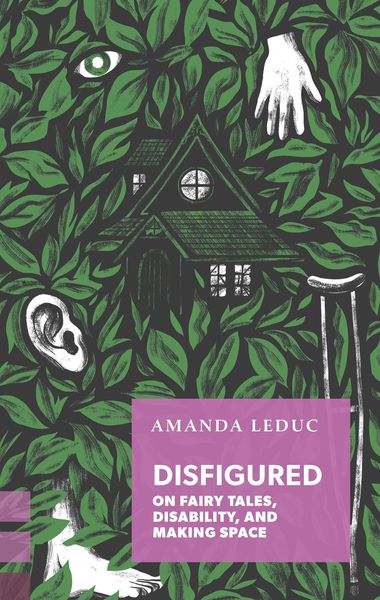
Produktbild: Disfigured

Disfigured On Fairy Tales, Disability, and Making Space

1

17,99 €

inkl. gesetzl. MwSt., Versandkostenfrei


Produktdetails

Einband

Taschenbuch

Erscheinungsdatum

03.03.2020

Verlag Ingram Publishers Services
Seitenzahl

160

Produktdetails

Einband

Taschenbuch

Erscheinungsdatum

03.03.2020

Verlag Ingram Publishers Services
Seitenzahl

160

Maße (L/B/H)

19/11,8/2 cm

Gewicht

274 g

Farbe

Grau

Sprache

Englisch

ISBN

978-1-55245-395-7

Herstelleradresse

Libri GmbH
Europaallee 1
36244 Bad Hersfeld
DE

Email: gpsr@libri.de

Ein neues Kapitel für Ihre Bücher

Ein neues Kapitel für Ihre Bücher

Schenken Sie Ihren alten Schätzen ein zweites Leben und erhalten Sie dafür eine Thalia Geschenkkarte.

Jetzt verkaufen
Jetzt verkaufen

Kundinnen und Kunden meinen

Informationen zu Bewertungen

Zur Abgabe einer Bewertung ist eine Anmeldung im Konto notwendig. Die Authentizität der Bewertungen wird von uns nicht überprüft. Wir behalten uns vor, Bewertungstexte, die unseren Richtlinien widersprechen, entsprechend zu kürzen oder zu löschen.

Die Bewertungen sind nach Format, Anzahl Sterne und Datum sortiert.

  • Tessa

    3/5

    22.09.2021

    Buch (Taschenbuch)

    Leduc certainly makes a lot…

    Leduc certainly makes a lot of interesting and important points, especially for those who, like me, haven't thought about disfigurement and disability and their presentation in media to such an extent. Her points on the social model of disability, where society needs to change to accommodate the disabled instead of the disabled doing everything in their power to fit society, are absolutely vital to hear for an able bodied person. Especially since society at large still doesn't act or even think that way. Disabled people aren't getting "special treatment" when there is a ramp for accessibility or an interpreter, it's quite simply exactly what is needed for them to be part of the action. It's insane how we as a society have managed to exclude so many people from so many things and whenever they get one stop closer to achieving equality people are like "okay, but do you deserve it? Have you killed yourself getting here? Are you worthy of having this same right? Do I need to make room for you, because if so then that is special treatment and I will not do it." As if we loose anything instead of gaining something. Anyway, like I said, Leduc asks a lot of interesting questions as well, includes some of her own medical history, what her parents and doctors thought, and she even includes some interviews with other disabled or disfigured folk, which was also super interesting and engaging. Like a lot of other reviewers said, I think this is a great book to start the conversation and to start thinking about how much the stories oh so far removed from reality still form our reality, but I think it's not without flaws. Leduc kinda moves the goalposts for her criticism whenever it fit her and while I mostly understood where she came from, it still frustrates a little when there would still be room for valid criticisms without having to move the goalposts. There are also some structural issues, I remember one time towards the end of the book she suddenly picks up a point she made at least 100 pages earlier, out of nowhere. I also think she sometimes overgeneralizes a little bit too much, she acts like disability is the only reason you get bullied in school, she heavily insinuates that trying to heal (in the real world) or having a magical cure for disability (in your book/movie) is inherently ableist and she kinda lost me on the whole superhero tangent. I think I even sometimes struggled with who or what exactly she characterizes as disabled or as a disability, because those definitions seemed to change as well. As other reviewers have pointed out Leduc focusses mostly on Ariel's lack of legs as her disability instead of her muteness, which didn't make much sense to me since Ariel was never supposed to have legs and she wasn't disabled in the environment she was born (and supposed to be) in. Overall I definitely think this is an important book that will hopefully start the important discussions we need to have to finally make our world(s) more inclusive.

Kundinnen und Kunden meinen

5

0

4

0

3

1

2

0

1

0

Bewertungen (1)

Weitere Artikel finden Sie in

  • Produktbild: Disfigured