















































KI-Beratung Beta

Gutscheinbedingungen

Gültig bis 30.11.2026 | Gültig für nicht preisgebundene fremdsprachige Bücher | Einzelne Artikel können ausgeschlossen sein | Online auf thalia.de und in der Thalia App einlösbar | Click & Collect nur mit Online-Zahlung (Paypal/Kreditkarte) vorab | Nicht kombinierbar mit anderen Gutscheinen oder Preisaktionen | Nur einmal pro Einkauf einlösbar | Gutschein wird auf max. 500€ Bestellwert angerechnet | Keine Barauszahlung | Nicht gültig für Versandkosten und Services

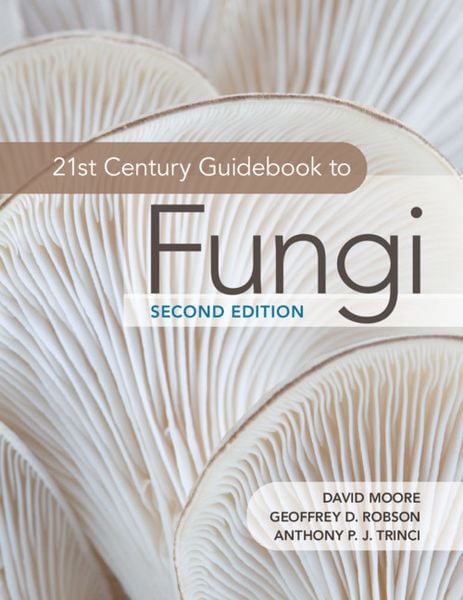
Produktbild: 21st Century Guidebook to Fungi

21st Century Guidebook to Fungi

124,99 €

inkl. gesetzl. MwSt., Versandkostenfrei


Beschreibung

The mysterious world of fungi is once again unearthed in this expansive second edition. This textbook provides readers with an all-embracing view of the kingdom fungi, ranging in scope from ecology and evolution, diversity and taxonomy, cell biology and biochemistry, to genetics and genomics, biotechnology...

Beschreibung

The mysterious world of fungi is once again unearthed in this expansive second edition. This textbook provides readers with an all-embracing view of the kingdom fungi, ranging in scope from ecology and evolution, diversity and taxonomy, cell biology and biochemistry, to genetics and genomics, biotechnology and bioinformatics. Adopting a unique systems biology approach - and using explanatory figures and colour illustrations - the authors emphasise the diverse interactions between fungi and other organisms. They outline how recent advances in molecular techniques and computational biology have fundamentally changed our understanding of fungal biology, and have updated chapters and references throughout the book in light of this. This is a fascinating and accessible guide, which will appeal to a broad readership - from aspiring mycologists at undergraduate and graduate level to those studying related disciplines. Online resources are hosted on a complementary website.

Rezension

'21st Century Guidebook to Fungi describes the fungal story with art and excellence. This guidebook is authored by three recognized fungal experts to whom I was privileged to meet. It has everything one wants to find in a book; it is easy to read, it has informative headings, well-organized tables and illustrative figures, and it contains all one wants to know about the matter. Definitely, this is an invaluable book that all those passionate about fungi must have!' Carmen Sánchez, Autonomous University of Tlaxcala, Mexico

Produktdetails

Einband

Taschenbuch

Erscheinungsdatum

11.06.2020

Abbildungen

170 b/w illus. 160 colour illus. 49 tables

Verlag Cambridge University Press

Produktdetails

Einband

Taschenbuch

Erscheinungsdatum

11.06.2020

Abbildungen

170 b/w illus. 160 colour illus. 49 tables

Verlag Cambridge University Press
Seitenzahl

612

Maße (L/B/H)

28/21,6/3,3 cm

Gewicht

1516 g

Farbe

Seidengrau

Auflage

2., überarbeitete Auflage

Sprache

Englisch

ISBN

978-1-108-74568-0

Herstelleradresse

Libri GmbH
Europaallee 1
36244 Bad Hersfeld
DE

Email: gpsr@libri.de

Ein neues Kapitel für Ihre Bücher

Ein neues Kapitel für Ihre Bücher

Schenken Sie Ihren alten Schätzen ein zweites Leben und erhalten Sie dafür eine Thalia Geschenkkarte.

Jetzt verkaufen
Jetzt verkaufen

Noch keine Bewertungen vorhanden

Verfassen Sie die erste Bewertung zu diesem Artikel

Helfen Sie anderen Kundinnen und Kunden durch Ihre Meinung.

Kundinnen und Kunden meinen

Bewertungen (0)

Die Leseprobe wird geladen.
  • Produktbild: 21st Century Guidebook to Fungi
  • 1. Twenty-first century fungal communities; 2. Evolutionary origins; 3. Natural classification of fungi; 4. Hyphal cell biology and growth on solid substrates; 5. Fungal cell biology; 6. Fungal genetics: from gene segregation to gene editing; 7. Structure and synthesis of fungal cell walls; 8. From the haploid to the functional diploid: homokaryons, heterokaryons, dikaryons and compatibility; 9. Sexual reproduction: the basis of diversity and taxonomy; 10. Continuing the diversity theme: cell and tissue differentiation; 11. Fungi in ecosystems; 12. Exploiting fungi for food; 13. Development and morphogenesis; 14. Ecosystem mycology: saprotrophs, and mutualisms between plants and fungi; 15. Fungi as symbionts and predators of animals; 16. Fungi as pathogens of plants; 17. Fungi as pathogens of animals, including humans; 18. Killing fungi: antifungals and fungicides; 19. Whole organism biotechnology of fungi.