















































KI-Beratung Beta

  • Produktbild: Lao She's Teahouse and Its Two English Translations
  • Produktbild: Lao She's Teahouse and Its Two English Translations

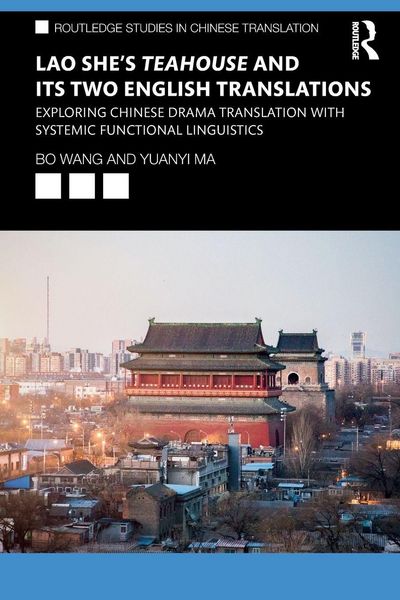
Lao She's Teahouse and Its Two English Translations Exploring Chinese Drama Translation with Systemic Functional Linguistics

67,99 €

inkl. gesetzl. MwSt., Versandkostenfrei


Beschreibung

Produktdetails

Einband

Taschenbuch

Erscheinungsdatum

30.04.2020

Abbildungen

17 SW-Abb., 1 SW-Fotos, 16 SW-Zeichn., 43 Tabellen

Verlag

Taylor & Francis

Seitenzahl

156

Maße (L/B/H)

23,4/15,6/0,9 cm

Gewicht

248 g

Sprache

Englisch

ISBN

978-0-367-26191-7

Beschreibung

Produktdetails

Einband

Taschenbuch

Erscheinungsdatum

30.04.2020

Abbildungen

17 SW-Abb., 1 SW-Fotos, 16 SW-Zeichn., 43 Tabellen

Verlag

Taylor & Francis

Seitenzahl

156

Maße (L/B/H)

23,4/15,6/0,9 cm

Gewicht

248 g

Sprache

Englisch

ISBN

978-0-367-26191-7

EU-Ansprechpartner

Taylor & Francis Verlag GmbH
Kaufingerstraße 24
80331 München
DE
GPSR@taylorandfrancis.com

Herstelleradresse

Taylor & Francis Group
5 Howick Place
SW1P 1WG London
UK
GPSR@taylorandfrancis.com

Ein neues Kapitel für Ihre Bücher

Ein neues Kapitel für Ihre Bücher

Schenken Sie Ihren alten Schätzen ein zweites Leben und erhalten Sie dafür eine Thalia Geschenkkarte.

Jetzt verkaufen
Jetzt verkaufen

Noch keine Bewertungen vorhanden

Verfassen Sie die erste Bewertung zu diesem Artikel

Helfen Sie anderen Kundinnen und Kunden durch Ihre Meinung.

Kundinnen und Kunden meinen

Bewertungen (0)

Die Leseprobe wird geladen.
  • Produktbild: Lao She's Teahouse and Its Two English Translations
  • Produktbild: Lao She's Teahouse and Its Two English Translations
  • Contents

    Foreword

    List of Figures

    List of Tables

    Abbreviations and Symbols

    Abbreviations for Interlinear Glossing

    Acknowledgements

    Preface

    Chapter 1 Mapping and Approaching Systemic Functional Linguistics and Translation

    1.1 Systemic Functional Linguistics and Translation

    1.1.1 Early Studies before the 1970s

    1.1.2 Studies from the 1970s to the Millennium

    1.1.3 Studies after the Millennium

    1.2 Three Kinds of Text in Lao She's Teahouse

    1.3 Analytical Framework and Data Size

    Chapter 2 Re-enacting Interpersonal Meaning in Dramatic Dialogue

    2.1 A Description of Mood in Systemic Functional Terms

    2.2 Analysis of Mood in Dramatic Dialogue

    2.2.1 A Quantitative Profile of Mood Distribution in Dramatic Dialogue

    2.2.2 Mood Analysis of Pock-Mark Liu's Lines

    2.2.3 Mood Analysis of Wang Lifa's Lines

    2.2.4 Mood Analysis of Master Chang's Lines

    2.2.5 Mood Analysis of Qin Zhongyi's Lines

    2.2.6 Mood Analysis of Kang Liu's Lines

    2.2.7 Mood Analysis of Master Song's Lines

    2.2.8 Mood Analysis of Eunuch Pang's Lines

    2.2.9 Mood Analysis of Tang the Oracle's Lines

    2.2.10 Mood Analysis of Erdez's Lines

    2.2.11 Mood Analysis of Song Enz and Wu Xiangz's Lines

    2.2.12 Mood Analysis of Li San's Lines

    2.2.13 Analysis of Moodtags

    2.3 Mood Shift in Dramatic Dialogue

    2.4 Summary

    Chapter 3 Re-presenting Textual Meaning in Dramatic Monologue

    3.1 A Description of Theme in Systemic Functional Terms

    3.2 Analysis of Theme in Dramatic Monologue

    3.2.1 Analysis of Textual Theme in Dramatic Monologue

    3.2.2 Analysis of Interpersonal Theme in Dramatic Monologue

    3.2.3 Analysis of Topical Theme in Dramatic Monologue

    3.3 Theme Shift in Dramatic Monologue

    3.3.1 Theme Addition in Dramatic Monologue

    3.3.2 Theme Omission in Dramatic Monologue

    3.3.3 Theme Substitution in Dramatic Monologue

    3.4 Summary

    Chapter 4 Re-construing Logical Meaning in Stage Direction

    4.1 A Description of Taxis and Logico-semantic Type in Systemic Functional Terms

    4.2 Analysis of Taxis and Logico-semantic Type in Stage Direction

    4.3 Tactic and Logico-semantic Type Shift in Stage Direction

    4.3.1 Tactic Shift in Stage Direction

    4.3.2 Logico-semantic Type Shift in Stage Direction

    4.4 Summary

    Chapter 5 Analyzing Field, Tenor, and Mode: Perspectives from Context

    5.1 The Three Contextual Parameters in Systemic Functional Linguistics

    5.2 Contextual Analysis of Dramatic Dialogue

    5.2.1 Field of Dramatic Dialogue

    5.2.2 Tenor of Dramatic Dialogue

    5.2.2.1 Tenor between the Playwright/Translators and the Readers

    5.2.2.2 Tenor between Characters in the Play

    5.2.3 Mode of Dramatic Dialogue

    5.3 Contextual Analysis of Dramatic Monologue

    5.3.1 Field of Dramatic Monologue

    5.3.2 Tenor of Dramatic Monologue

    5.3.3 Mode of Dramatic Monologue

    5.4 Contextual Analysis of Stage Direction

    5.4.1 Field of Stage Direction

    5.4.2 Tenor of Stage Direction

    5.4.3 Mode of Stage Direction

    Chapter 6 Conclusion: Towards a Systemic Functional Account of Drama Translation

    6.1 Application of the Theoretical Framework in this Book

    6.2 Significance of the Study

    6.3 Some Thoughts for Future Work

    References

    Index