















































KI-Beratung Beta

Gutscheinbedingungen

Gültig bis 30.11.2026 | Gültig für nicht preisgebundene fremdsprachige Bücher | Einzelne Artikel können ausgeschlossen sein | Online auf thalia.de und in der Thalia App einlösbar | Click & Collect nur mit Online-Zahlung (Paypal/Kreditkarte) vorab | Nicht kombinierbar mit anderen Gutscheinen oder Preisaktionen | Nur einmal pro Einkauf einlösbar | Gutschein wird auf max. 500€ Bestellwert angerechnet | Keine Barauszahlung | Nicht gültig für Versandkosten und Services

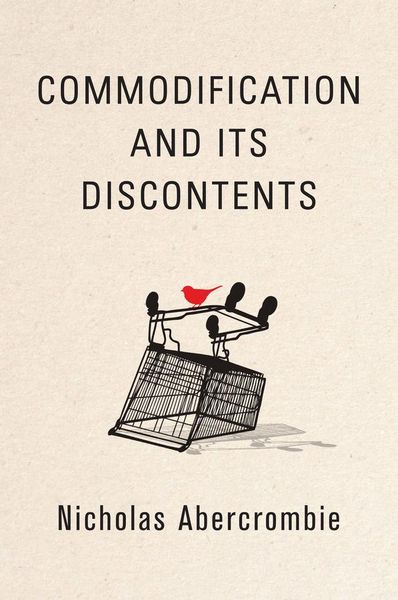
Produktbild: Commodification and Its Discontents

Commodification and Its Discontents

79,99 €

inkl. gesetzl. MwSt., Versandkostenfrei


Beschreibung

Should human organs be bought and sold? Is it right that richer people should be able to pay poorer people to wait in a queue for them? Should objects in museums ever be sold? The assumption underlying such questions is that there are things that should not be bought and sold because it would give them...

Beschreibung

Should human organs be bought and sold? Is it right that richer people should be able to pay poorer people to wait in a queue for them? Should objects in museums ever be sold? The assumption underlying such questions is that there are things that should not be bought and sold because it would give them a financial value that would replace some other, and dearly held, human value. Those who ask questions of this kind often fear that the replacement of human by money values - a process of commodification - is sweeping all before it. However, as Nicholas Abercrombie argues, commodification can be, and has been, resisted by the development of a moral climate that defines certain things as outside a market. That resistance, however, is never complete because the two regimes of value - human and money - are both necessary for the sustainability of society. His analysis of these processes offers a thought-provoking read that will appeal to students and scholars interested in market capitalism and culture.

Rezension

"As ever-wider domains of social life are relentlessly subject to the brutality of the price mechanism, populaces increasingly aspire to a new moral economy. In this deeply researched historical sociology, Abercrombie identifies the mechanisms, practices, and contingent conditions necessary to successfully defy commodification and establish alternative "regimes of value". The result makes an essential contribution to the urgent task of establishing a new social justice economy."
Margaret Somers, University of Michigan
 
"This book shows that contrary to many theoretical accounts of modern economies 'commodification' need not be an all-or-nothing affair. Through illuminating analyses of concrete examples, Nick Abercrombie shows how in practice there are often degrees of commodification and moral regulation and explains how the relations between them have been constructed."
Andrew Sayer, Lancaster University

Produktdetails

Einband

Gebundene Ausgabe

Erscheinungsdatum

07.12.2020

Verlag John Wiley & Sons Inc
Seitenzahl

224

Produktdetails

Einband

Gebundene Ausgabe

Erscheinungsdatum

07.12.2020

Verlag John Wiley & Sons Inc
Seitenzahl

224

Maße (L/B/H)

21,6/14,2/1,8 cm

Gewicht

363 g

Auflage

1. Auflage

Sprache

Englisch

ISBN

978-1-5095-2981-0

Herstelleradresse

Libri GmbH
Europaallee 1
36244 Bad Hersfeld
DE

Email: gpsr@libri.de

Ein neues Kapitel für Ihre Bücher

Ein neues Kapitel für Ihre Bücher

Schenken Sie Ihren alten Schätzen ein zweites Leben und erhalten Sie dafür eine Thalia Geschenkkarte.

Jetzt verkaufen
Jetzt verkaufen

Noch keine Bewertungen vorhanden

Verfassen Sie die erste Bewertung zu diesem Artikel

Helfen Sie anderen Kundinnen und Kunden durch Ihre Meinung.

Kundinnen und Kunden meinen

Bewertungen (0)

Die Leseprobe wird geladen.
  • Produktbild: Commodification and Its Discontents
  • 1. Money Talk
     
    Part One: Case-Studies
     
    2. Land
     
    3. Bodies
     
    4. Books
     
    Part Two: Resistance to Commodification
     
    5. Sacredness and Property
     
    6. Moral Regulation
     
    7. Moral Climate, Ideology and Intellectuals
     
    8. Moral Complexity
     
    References