















































KI-Beratung Beta

  • Produktbild: The Anthem Handbook of Screen Theory
  • Produktbild: The Anthem Handbook of Screen Theory
Band 1

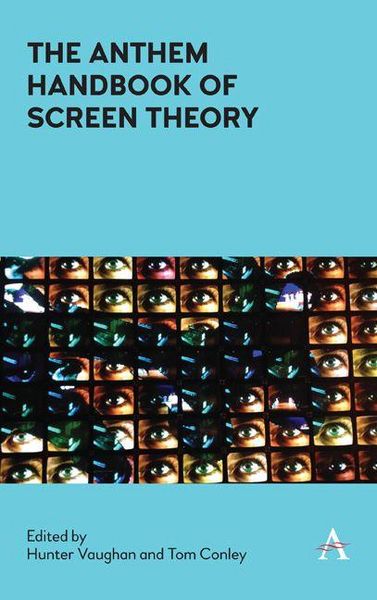
The Anthem Handbook of Screen Theory

Aus der Reihe Anthem Handbooks

92,99 €

inkl. gesetzl. MwSt., Versandkostenfrei


Beschreibung

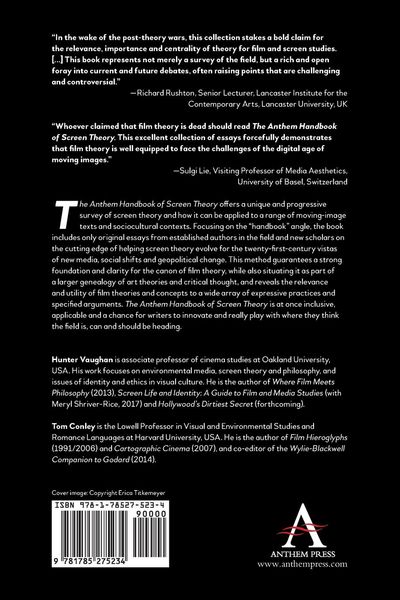
'The Anthem Handbook of Screen Theory' offers readers a unique survey of the new horizons of film and media theory, focusing on the applicability of screen theories and updating the field for new social, cultural and geopolitical contexts.

Beschreibung

'The Anthem Handbook of Screen Theory' offers readers a unique survey of the new horizons of film and media theory, focusing on the applicability of screen theories and updating the field for new social, cultural and geopolitical contexts.

Produktdetails

Einband

Taschenbuch

Erscheinungsdatum

30.07.2020

Herausgeber Hunter Vaughan + weitere
Verlag Ingram Publishers Services

Produktdetails

Einband

Taschenbuch

Erscheinungsdatum

30.07.2020

Herausgeber
Verlag Ingram Publishers Services
Seitenzahl

372

Maße (L/B/H)

22,9/15,2/2,2 cm

Gewicht

603 g

Sprache

Englisch

ISBN

978-1-78527-523-4

Herstelleradresse

Libri GmbH
Europaallee 1
36244 Bad Hersfeld
DE

Email: gpsr@libri.de

Ein neues Kapitel für Ihre Bücher

Ein neues Kapitel für Ihre Bücher

Schenken Sie Ihren alten Schätzen ein zweites Leben und erhalten Sie dafür eine Thalia Geschenkkarte.

Jetzt verkaufen
Jetzt verkaufen

Noch keine Bewertungen vorhanden

Verfassen Sie die erste Bewertung zu diesem Artikel

Helfen Sie anderen Kundinnen und Kunden durch Ihre Meinung.

Kundinnen und Kunden meinen

Bewertungen (0)

Die Leseprobe wird geladen.
  • Produktbild: The Anthem Handbook of Screen Theory
  • Produktbild: The Anthem Handbook of Screen Theory
  • List of Figures; Preface, Hunter Vaughan; Acknowledgments; Introduction Post- , Grand, Classical or "So- Called": What Is, and Was, Film Theory?, Francesco Casetti; Part I What We Are; Chapter One The Brain's Labor: On Marxism and the Movies, Pasi Väliaho; Chapter Two Racial Being, Aff ect and Media Cultures, Camilla Fojas; Chapter Three Thinking Sex, Doing Gender, Watching Film, Theresa L. Geller; Chapter Four "Complicated Negotiations": Reception and Audience Studies into the Digital Age, Brendan Kredell; Chapter Five World Cinema and Its Worlds, James Tweedie; Chapter Six Screen Theory Beyond the Human: Toward an Ecomaterialism of the Moving Image, Hunter Vaughan; Chapter Seven "We Will Exchange Your Likeness and Recreate You in What You Will Not Know": Transcultural Process Philosophy and the Moving Image, Laura U. Marks; Part II What Screen Culture Is; Chapter Eight Apparatus Theory, Plain and Simple, Tom Conley; Chapter Nine Properties of Film Authorship, Codrüa Morari; Chapter Ten "Deepest Ecstasy" Meets Cinema's Social Subjects: Theorizing the Screen Star, Mary R. Desjardins; Chapter Eleven Rethinking Genre Memory: Hitchcock's Vertigo and Its Revision, Elisabeth Bronfen; Chapter Twelve Digital Technologies and the End(s) of Film Theory, Trond Lundemo; Chapter Thirteen How John the Baptist Kept His Head: My Life in Film Philosophy, William Rothman; Part III How We Understand Screen Texts; Chapter Fourteen The Expressive Sign: Cinesemiotics, Enunciation and Screen Art, Daniel Yacavone; Chapter Fifteen Narratology in Motion: Causality, Puzzles and Narrative Twists, Warren Buckland; Chapter Sixteen He(u)retical Film Theory: When Cognitivism Meets Theory, William Brown; Chapter Seventeen Philosophy Encounters the Moving Image: From Film Philosophy to Cinematic Thinking, Robert Sinnerbrink; Chapter Eighteen Screen Perception and Event: Beyond the Formalist/ Realist Divide, Nadine Boljkovac; Postface, Tom Conley; Notes on Contributors; Filmography; Index.