















































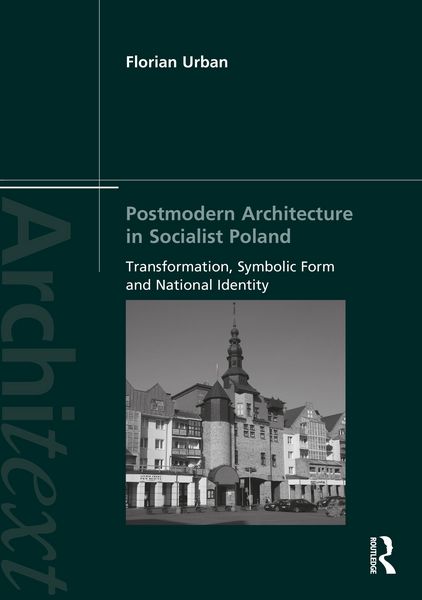
Postmodern Architecture in Socialist Poland Transformation, Symbolic Form and National Identity
-
- Einzelkauf Download ausgewählt
-
Sprache:Englisch
-
eBook Format:PDF
- PDF 57,49 € ausgewählt
- ePUB 57,49 €
57,49 €
inkl. gesetzl. MwSt.Beschreibung
Produktdetails
Format
Kopierschutz
Ja
Family Sharing
Nein
Text-to-Speech
Nein
Erscheinungsdatum
13.12.2020
Verlag
Taylor & Francis eBooksSeitenzahl
238 (Printausgabe)
Auflage
1. Auflage
Sprache
Englisch
EAN
9781000291933
Garish churches, gabled panel blocks, neo-historical tenements-this book is about these and other architectural oddities that emerged in Poland between 1975 and 1989, a period characterised by the decline of the authoritarian socialist regime and waves of political protest. During that period, committed architects defied repressive politics and persistent shortages, and designed houses and churches which adapted eclectic historical forms and geometric volumes, and were based on traditional typologies.
These buildings show a very different background of postmodernism, far removed from the debates over Robert Venturi, Philip Johnson, or Prince Charles in Western Europe and North America-a context in which postmodern architecture stood not for world-weary irony in an economically saturated society, but for individualised counter-propositions to a collectivist ideology, for a yearning for truth and spiritual values, and for a discourse on distinctiveness and national identity.
Postmodern Architecture in Socialist Poland argues that this new architecture marked the beginning of socio-political transformation and at the same time showed postmodernism's reconciliatory potential. In light of massive historical ruptures and wartime destruction, these buildings successfully responded to the contradictory desires for historical continuity and acknowledgment of rupture and loss. Next to international ideas, the architects took up domestic traditions, such as the ideas of the Polish school of historic conservation and long-standing national-patriotic narratives. They thus contributed to the creation of a built environment and intellectual climate that have been influential to date.
This book will be of great interest to students and scholars interested in postmodern architecture and urban design, as well as in the socio-cultural background and transformative potential of architecture under socialism.
Noch keine Bewertungen vorhanden
Verfassen Sie die erste Bewertung zu diesem Artikel
Helfen Sie anderen Kundinnen und Kunden durch Ihre Meinung.
Kurze Frage zu unserer Seite
Vielen Dank für Ihr Feedback
Wir nutzen Ihr Feedback, um unsere Produktseiten zu verbessern. Bitte haben Sie Verständnis, dass wir Ihnen keine Rückmeldung geben können. Falls Sie Kontakt mit uns aufnehmen möchten, können Sie sich aber gerne an unseren Kund*innenservice wenden.
zum Kundenservice