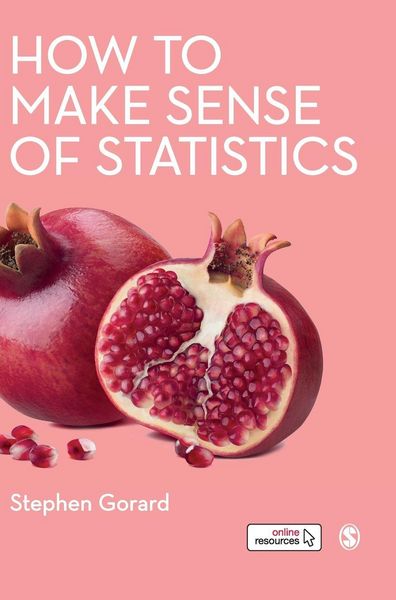
• Produktbild: How to Make Sense of Statistics
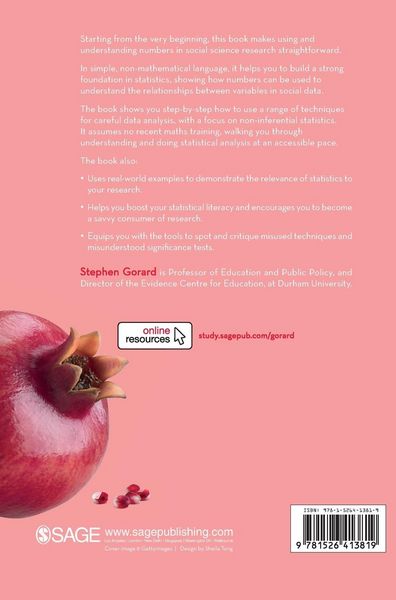
  • Produktbild: How to Make Sense of Statistics
- 21%

How to Make Sense of Statistics

21% sparen

133,99 € UVP 169,90 €

inkl. gesetzl. MwSt., Versandkostenfrei


Beschreibung

Produktdetails

Einband

Gebundene Ausgabe

Erscheinungsdatum

17.02.2021

Verlag

Sage Publications

Seitenzahl

320

Maße (L/B/H)

25/17,5/2,2 cm

Gewicht

670 g

Sprache

Englisch

ISBN

978-1-5264-1381-9

Beschreibung

Rezension

This book takes beginner students hand-in-hand through a journey in the world of statistics without dumbing down the concepts, just making them very accessible. It teaches the basics (and beyond) by stimulating critical thinking. Luana Russo

Produktdetails

Einband

Gebundene Ausgabe

Erscheinungsdatum

17.02.2021

Verlag

Sage Publications

Seitenzahl

320

Maße (L/B/H)

25/17,5/2,2 cm

Gewicht

670 g

Sprache

Englisch

ISBN

978-1-5264-1381-9

EU-Ansprechpartner

Zeitfracht Medien GmbH
Ferdinand-Jühlke-Straße 7
99095 Erfurt
DE

Herstelleradresse

SAGE Publications
1 Oliver's Yard 55 City Road
EC1Y 1SP London
GB

Ein neues Kapitel für Ihre Bücher

Ein neues Kapitel für Ihre Bücher

Schenken Sie Ihren alten Schätzen ein zweites Leben und erhalten dafür eine Thalia Geschenkkarte.

Jetzt verkaufen
Jetzt verkaufen

Noch keine Bewertungen vorhanden

Verfassen Sie die erste Bewertung zu diesem Artikel

Helfen Sie anderen Kundinnen und Kunden durch Ihre Meinung.

Kundinnen und Kunden meinen

Bewertungen (0)

Die Leseprobe wird geladen.
  • Produktbild: How to Make Sense of Statistics
  • Produktbild: How to Make Sense of Statistics
  • Part I: Introduction
    Chapter 1: Why we use numbers in research
    Chapter 2: What is a number?: Issues of measurement
    Part II: Basic analyses
    Chapter 3: Working with one variable
    Chapter 4: Working with tables of categorical variables
    Chapter 5: Examining differences between real numbers
    Chapter 6: Significance tests: how to conduct them and what they do not mean
    Chapter 7: Significance tests: why we should not report them
    Part III: Advanced issues for analysis
    Chapter 8: The role of judgement in analysis
    Chapter 9: Research designs
    Chapter 10: Sampling and populations
    Chapter 11: What is randomness?
    Chapter 12: Handling missing data: The importance of what we don't know
    Chapter 13: Handling missing data: more complex issues
    Part IV: Modelling with data
    Chapter 14: Errors in measurements
    Chapter 15: Correlating two real numbers
    Chapter 16: Predicting measurements using simple linear regression
    Chapter 17: Predicting measurements using multiple linear regression
    Chapter 18: Assumptions and limitations in regression
    Chapter 19: Predicting outcomes using logistic regression
    Chapter 20: Data reduction techniques
    Part V: Conclusion
    Chapter 21: Presenting data for your audience