















































KI-Beratung Beta

  • Produktbild: Management of Complex Treatment-resistant Psychotic Disorders
  • Produktbild: Management of Complex Treatment-resistant Psychotic Disorders

Management of Complex Treatment-resistant Psychotic Disorders

115,99 €

inkl. gesetzl. MwSt., Versandkostenfrei


Beschreibung

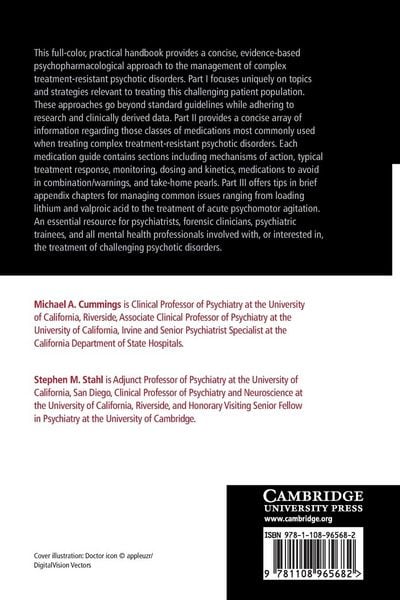
An accessible, evidence-based guide for psychiatrists and mental health professionals involved in the treatment of patients with challenging psychotic disorders. Includes chapters on treating psychosis and bipolar diathesis, along with essential information on treatment strategies, pharmacological information,...

Beschreibung

An accessible, evidence-based guide for psychiatrists and mental health professionals involved in the treatment of patients with challenging psychotic disorders. Includes chapters on treating psychosis and bipolar diathesis, along with essential information on treatment strategies, pharmacological information, and tips for managing common issues.

Produktdetails

Einband

Taschenbuch

Erscheinungsdatum

02.10.2023

Herausgeber Michael Cummings + weitere
Verlag Cambridge Academic

Produktdetails

Einband

Taschenbuch

Erscheinungsdatum

02.10.2023

Herausgeber
Verlag Cambridge Academic
Seitenzahl

546

Maße (L/B/H)

22,9/15,2/3 cm

Gewicht

880 g

Sprache

Englisch

ISBN

978-1-108-96568-2

Herstelleradresse

Libri GmbH
Europaallee 1
36244 Bad Hersfeld
DE

Email: gpsr@libri.de

Ein neues Kapitel für Ihre Bücher

Ein neues Kapitel für Ihre Bücher

Schenken Sie Ihren alten Schätzen ein zweites Leben und erhalten Sie dafür eine Thalia Geschenkkarte.

Jetzt verkaufen
Jetzt verkaufen

Noch keine Bewertungen vorhanden

Verfassen Sie die erste Bewertung zu diesem Artikel

Helfen Sie anderen Kundinnen und Kunden durch Ihre Meinung.

Kundinnen und Kunden meinen

Bewertungen (0)

Die Leseprobe wird geladen.
  • Produktbild: Management of Complex Treatment-resistant Psychotic Disorders
  • Produktbild: Management of Complex Treatment-resistant Psychotic Disorders
  • Part I. Treatment Strategies: 1.01. Approaches to positive Psychotic symptoms; 1.02. Use of plasma levels in Antipsychotic and Mood Stabilizer treatment; 1.03. Advantages of long-acting injectable Antipsychotics; 1.04. Approach to Schizophrenia Spectrum treatment-resistant patients; 1.05. Approach to depressed or suicidal Schizophrenia Spectrum patients; 1.06. Approach to persistent aggression and violence in Schizophrenia Spectrum Disorders; 1.07. Approach to treatment of Bipolar Diathesis in Schizophrenia Spectrum patients; 1.08. Approach to Anxiety in Schizophrenia Spectrum patients; 1.09. Approach to Insomnia and Sleep Disturbance in Schizophrenia Spectrum disorders; 1.10. Approach to Psychosis in children and adolescents; 1.11. Electro-convulsive therapy and other Non-pharmacological treatments; 1.12. Approach to substance use disorders in Schizophrenia Spectrum Disorders; 1.13. Approaches to Behavioral Disturbances and Dementia and TBI patients; Part II. Medication Reference Tables: First-generation (Typical) Antipsychotics: 2.01. Chlorpromazine; 2.02. Fluphenazine; 2.03. Haloperidol; 2.04. Loxapine; 2.05. Perphenazine; 2.06. Thiothixene; 2.07. Trifluoperazine; Second-generation (Atypical) Antipsychotics: 2.08. Asenapine; 2.09. Clozapine; 2.10. Iloperidone; 2.11. Lumateperone; 2.12. Lurasidone; 2.13. Olanzapine; 2.14. Paliperidone; 2.15. Quetiapine; 2.16. Risperidone; 2.17. Ziprasidone; Dopamine Partial Agonist Antipsychotics (Arias): 2.18. Aripiprazole; 2.19. Brexpiprazole; 2.20. Cariprazine; Medications for Motor/Neurologic Adverse Effects: 2.21. Amantadine; 2.22. Benztropine; 2.23. Diphenhydramine; 2.24. Trihexyphenidyl; Mood Stabilizers: 2.25. Carbamazepine; 2.26. Lamotrigine ; 2.27. Lithium; 2.28. Valproic Acid; Selective Serotonin Reuptake Inhibitor (SSRI) Antidepressants: 2.29. Citalopram; 2.30. Escitalopram; 2.31. Fluoxetine; 2.32. Fluvoxamine; 2.33. Paroxetine; 2.34. Sertraline: SSRI/5HT-1 Partial Agonist Antidepressants: 2.35. Vilazodone; 2.36. Vortioxetine; Serotonin/Norepinephrine Reuptake Inhibitor (SNRI) Antidepressants; 2.37. Desvenlafaxine; 2.38. Duloxetine; 2.39. Levomilnacipran; 2.40. Venlafaxine; Mixed Mechanism Antidepressants: 2.41. Bupropion; 2.42. Mirtazapine; 2.43. Trazodone; Tricyclic Antidepressants: 2.44. Amitriptyline; 2.45. Clomipramine; 2.46. Desipramine; 2.47. Doxepin; 2.48. Imipramine; 2.49. Nortriptyline; Monoamine Oxidase Inhibitor (MAOI) Antidepressants: 2.50. Isocarboxazid; 2.51. Moclobemide; 2.52. Phenelzine; 2.53. Transdermal Segeliline; 2.54. Tranylcypromine; Anxiolytics: 2.55. Alprazolam; 2.56. Buspirone; 2.57. Clonazepam; 2.58. Diazepam; 2.59. Hydroxyzine; 2.60. Lorazepam; Sedatives: 2.61. Diphenhydramine; 2.62. Eszopiclone; 2.63. Hydroxyzine; 2.64. Lorazepam; 2.65. Oxazepam; 2.66. Temazepam; 2.67. Zaleplon; 2.68. Zolpidem; Circadian Regulators: 2.69. Melatonin; 2.70. Ramelteon; 2.71. Tasimelteon; Stimulants: 2.72. Atomoxetine; 2.73. Dextroamphetamine; 2.74. Lisdexamphetamine; 2.75. Methylphenidate; 2.76. Mixed Amphetamine Salts: Histaminic Stimulants: 2.77. Armodafinil; 2.78. Modafinil; Cognitive Agents: 2.79. Dextromethorphan/quinidine; 2.80. Donepizil; 2.81. Galantamine; 2.82. Memantine; 2.83. Rivastigmine; Alpha2-adrenergic Agonists: 2.84. Clonidine; 2.85. Guanfacine; Appendices: 3.01. Optimal Antipsychotic Plasma Concentration Ranges; 3.02. Optimal Mood Stabilizer Plasma Concentration Ranges; 3.03. Formulas for QT Interval Correction; 3.04. Common Cytochrome P-450 Inducers and Inhibitors; 3.05. Management of Constipation; 3.06. Child-Pugh Hepatic Function Scoring; 3.07. Loading of Lithium and Valproic Acid; 3.08. Treatment of Prolactin Elevation; 3.09. A Select List of Foods High in Tyramine; 3.10. Medications that Present Risk for Serotonin Syndrome when Combined with MAOIs; 3.11. Selected Treatment of Psychomotor Agitation.