KI-Beratung Beta

Gutscheinbedingungen

Gültig bis 30.11.2026 | Gültig für nicht preisgebundene fremdsprachige Bücher | Einzelne Artikel können ausgeschlossen sein | Online auf thalia.de und in der Thalia App einlösbar | Click & Collect nur mit Online-Zahlung (Paypal/Kreditkarte) vorab | Nicht kombinierbar mit anderen Gutscheinen oder Preisaktionen | Nur einmal pro Einkauf einlösbar | Gutschein wird auf max. 500€ Bestellwert angerechnet | Keine Barauszahlung | Nicht gültig für Versandkosten und Services

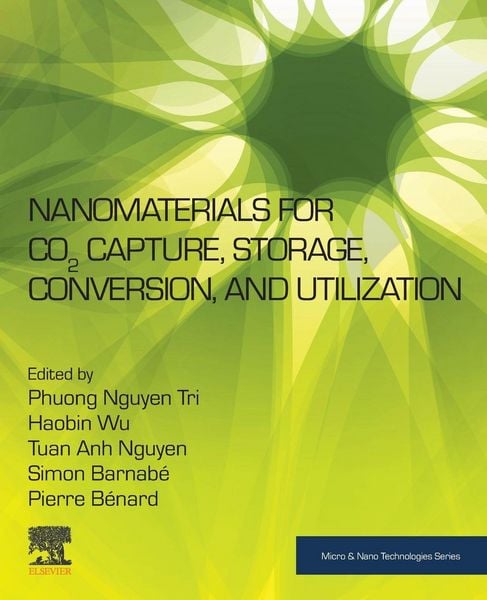
  • Produktbild: Nanomaterials for CO2 Capture, Storage, Conversion and Utili
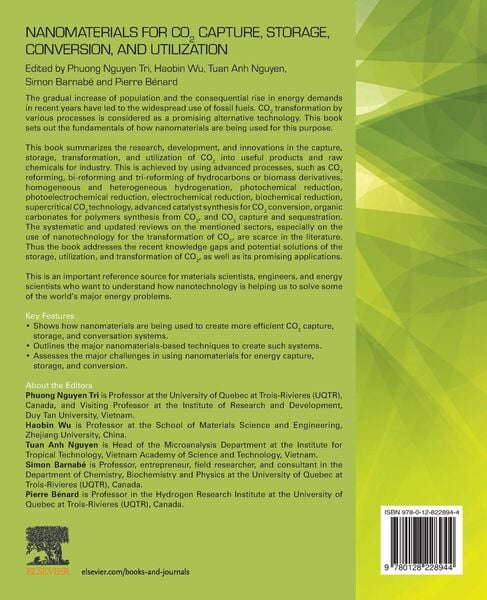
  • Produktbild: Nanomaterials for CO2 Capture, Storage, Conversion and Utili

Nanomaterials for CO2 Capture, Storage, Conversion and Utili

233,99 €

inkl. gesetzl. MwSt., Versandkostenfrei


Beschreibung

The gradual increase of population and the consequential rise in the energy demands in recent years have led to the widespread use of fossil fuels. CO2 transformation by various processes is considered as a promising alternative technology. This book sets out the fundaments of how nanomaterials are being...

Beschreibung

The gradual increase of population and the consequential rise in the energy demands in recent years have led to the widespread use of fossil fuels. CO2 transformation by various processes is considered as a promising alternative technology. This book sets out the fundaments of how nanomaterials are being used for this purpose.

Nanomaterials for CO2 Capture, Storage, Conversion and Utilization summarizes the research, development and innovations in the capture, storage, transformation and utilization of CO2 into useful products and raw chemicals for industry. This is achieved by using advanced processes such as CO2 reforming, bi-reforming and tri-reforming of hydrocarbons or biomass derivatives; homogeneous and heterogeneous hydrogenation; photochemical reduction; photoelectrochemical reduction; electrochemical reduction; biochemical reduction; supercritical CO2 technology; advanced catalyst synthesis for CO2 conversion; organic carbonates for polymers synthesis from CO2, and CO2 capture and sequestration. The systematic and updated reviews on the mentioned sectors, especially on the use of nanotechnology for the transformation of CO2 is scarce in the literature. Thus, the book addresses the recent knowledge gaps and potential solutions of the storage, utilization and transformation of CO2 as well as its promising applications.

This is an important reference source for materials scientists, engineers and energy scientists who want to understand how nanotechnology is helping us to solve some of the world's major energy problems.

Portrait

Phuong Nguyen-Tri is a full professor and director of the graduate program in energies and material science at the Department of Chemistry, Biochemistry and Physics, Université du Québec à Trois-Rivières (UQTR), Québec, Canada. He is the founder of the Laboratory of Advanced Materials for Energy and Environment (Nguyen-Tri Lab) at UQTR and holds the UQTR Research Chair of Advanced Materials for Health and Security at Work. His main research interests are nanomaterials, hybrid nanoparticles, innovative coatings, polymer crystallization, polymer aging, and polymer blends and composites.

Haobin Wu is a Professor at the School of Materials Science and Engineering, Zhejiang University, China. His research interests are metal-organic framework-related materials for sustainable energy, designed synthesis of micro-/nanostructured materials, electrochemical energy storage technologies, and electrocatalysis and electrochemical production of fuels.
Simon Barnabé is a Professor, entrepreneur, field researcher, and consultant in the Department of Chemistry, Biochemistry and Physics, at the University of Quebec, Trois-Rivières, Canada. His areas of research interest are applied microbiology (industrial and environmental); recovery of residues by fermentation; pretreatment of residues; community biorefinery, reactive biomass fractionation, biofuels, bio-ingredients for eco-materials, local or local co-products; microalgae production and algorinage.
Pierre Bénard is a Professor in the Hydrogen Research Institute, at the University of Quebec at Trois-Rivières, Canada. His research focuses on microporous adsorbers, supercritical adsorption, mechanics of computational fluids, simulation methods in statistical physics, thermodynamic modeling, carbon nanostructures, condensed matter physics, and statistical physics of inhomogeneous fluids.
Tuan Anh Nguyen is a Senior Principal Research Scientist at the Institute for Tropical Technology, Vietnam Academy of Science and Technology, Hanoi, Vietnam. He received a BS in physics from Hanoi University in 1992, a BS in economics from Hanoi National Economics University in 1997, and a PhD in chemistry from the Paris Diderot University, France, in 2003. He was a Visiting Scientist at Seoul National University, South Korea, in 2004, and the University of Wollongong, Australia, in 2005. He then worked as a Postdoctoral Research Associate and Research Scientist at Montana State University, United States in 2006-09. In 2012 he was appointed as the Head of the Microanalysis Department at the Institute for Tropical Technology. His research areas of interest include smart sensors, smart networks, smart hospitals, smart cities, complexiverse, and digital twins. He has edited more than 74 books for Elsevier, 12 books for CRC Press, 1 book for Springer, 1 book for RSC, and 2 books for IGI Global. He is the Editor-in-Chief of Kenkyu Journal of Nanotechnology & Nanoscience.


Produktdetails

Einband

Taschenbuch

Erscheinungsdatum

15.04.2021

Herausgeber Phuong Nguyen Tri + weitere
Verlag Elsevier Science & Technology

Produktdetails

Einband

Taschenbuch

Erscheinungsdatum

15.04.2021

Herausgeber
Verlag Elsevier Science & Technology
Seitenzahl

396

Maße (L/B/H)

23,5/19,1/2,1 cm

Gewicht

680 g

Sprache

Englisch

ISBN

978-0-12-822894-4

Ein neues Kapitel für Ihre Bücher

Ein neues Kapitel für Ihre Bücher

Schenken Sie Ihren alten Schätzen ein zweites Leben und erhalten Sie dafür eine Thalia Geschenkkarte.

Jetzt verkaufen
Jetzt verkaufen

Noch keine Bewertungen vorhanden

Verfassen Sie die erste Bewertung zu diesem Artikel

Helfen Sie anderen Kundinnen und Kunden durch Ihre Meinung.

Kundinnen und Kunden meinen

Bewertungen (0)

Die Leseprobe wird geladen.
  • Produktbild: Nanomaterials for CO2 Capture, Storage, Conversion and Utili
  • Produktbild: Nanomaterials for CO2 Capture, Storage, Conversion and Utili
  • 1. CO2 capture, storage, transformation and utilization: an introduction
    2. Photoelectrochemical reduction of carbon dioxide
    3. Nanocatalyst for CO2 hydrogenation
    4. Porous polymers based adsorbent materials for CO2 capture
    5. From Nanoparticle to Single Atom catalyst for Electrocatalytic Reduction of Carbon dioxide
    6. Nanomaterials for photocatalytic reduction of carbon dioxide
    7. Nanomaterials for CO2 conversion to valuable compounds
    8. Nanomaterials for photocatalytic and cold plasma catalytic hydrogenation of CO2 to CO, CH4 and CH3OH
    9. Electrochemical reduction of CO2 using shape-controlled nanoparticles
    10. Conversion CO2 towards valuable compounds
    11. Nanomaterials for photocatalytic reduction of carbon dioxide
    12. CO2 adsorption with Covalent Organic Frameworks (COF)
    13. Reduction of carbon dioxide using nanophotocatalysts
    14. 2D nanomaterials for CO2 Reduction and transformation