KI-Beratung Beta

Gutscheinbedingungen

Gültig bis 11.11.2026 | Gültig für Spielzeug, Filme, Musik, Software, Games, Geschenke & Trends, Schreibwaren, Hörbücher und Hörbuch-Downloads (außer Abo & Shelfies), gebrauchte Bücher, nicht preisgebundene Bücher und Kalender | Einlösbar unter thalia.de und in der Thalia App | Click & Collect nur mit Online-Zahlung (Paypal/Kreditkarte) vorab | Einzelne Artikel können ausgeschlossen sein | Nicht kombinierbar mit anderen Gutscheinen oder Preisaktionen | Nur einmal pro Einkauf einlösbar | Gutschein wird auf max. 500€ Bestellwert angerechnet | Keine Barauszahlung | Digitale Hörbücher nur für Android  | Nicht gültig für preisgebundene Artikel (aufgrund der Buchpreisbindung sind Gutscheine nicht auf Bücher, eBooks, Presse einlösbar), tolino eReader & Zubehör, Abonnements & Flatrates, Geschenkkarten, Versandkosten und Services

Produktbild: The Human Hypothalamus

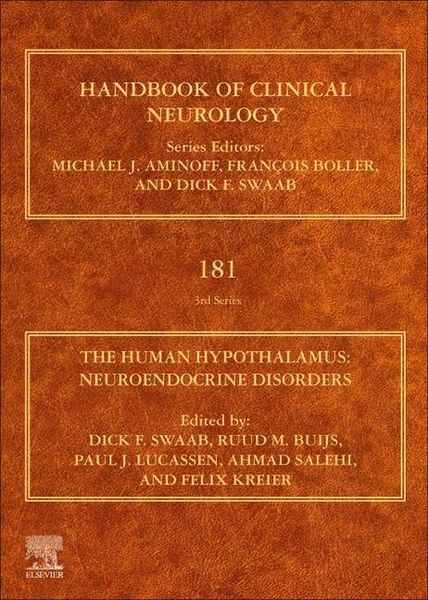
The Human Hypothalamus Neuroendocrine Disorders Volume 181

262,99 €

inkl. gesetzl. MwSt., Versandkostenfrei


Beschreibung

The Human Hypothalamus: Neuroendocrine Disorders, Volume 181 in the Handbook of Clinical Neurology series, provides comprehensive summaries of recent research on the brain and nervous system as they relate to clinical neurology. This volume summarizes the role of the hypothalamus in neuroendocrine disorders,...

Beschreibung

The Human Hypothalamus: Neuroendocrine Disorders, Volume 181 in the Handbook of Clinical Neurology series, provides comprehensive summaries of recent research on the brain and nervous system as they relate to clinical neurology. This volume summarizes the role of the hypothalamus in neuroendocrine disorders, identifying the mechanism of action, disorder etiology, and best practices for assessment and treatment. Disorders covered include pituitary hypothalamic disorders of development and growth, hypothalamic tumor related disorders, hypothalamic autoimmune disorders and infection, disorders of vasopressin, water and sodium homeostasis, eating disorders, and gonadotropic hormone regulation disorders.

Portrait

Dick Swaab (1944) earned his medical and doctoral degrees at the University of Amsterdam, where he became involved in brain research during his third year of medical school. He was Director of the Netherlands Institute for Brain Research from 1978 to 2005. Since 1979 he is Professor of Neurobiology at the Medical Faculty, University of Amsterdam.

In 1985, Dr. Swaab founded the Netherlands Brain Bank (NBB) to serve as a source of clinically and neuropathologically well-documented research tissue. Since its founding, the Brain Bank has provided samples from more than 4,000 autopsies to 500 research groups in 25 countries. He was director of the NBB until 2005.

He is Leader Research team Neuropsychiatric Disorders, Neth. Inst for Neuroscience, an institute of the Royal Netherlands Academy of Arts and Sciences (KNAW). Swaab is also appointed for 2011-2017 Chao Kuang Piu Chair of Zhejiang University, Hangzhou, P.R. China.

His major research interests focus on, sexual differentiation of the human brain in relation to gender identity and sexual orientation, aging of the brain, Alzheimer's disease, the neurobiological basis of depression, suicide and eating disorders. He has published over 540 papers in SCI journals, authored more than 200 chapters in books, and edited more than 60 books. Swaab mentored 84 PhD students from which 16 are now full professor. He is "Companion in the Order of the Dutch Lion”, bestowed by her Royal Majesty Queen Beatrix of the Netherlands. In 2008 Swaab obtained the Academy medal for his role in national and international neuroscience.

Dick Swaab is author of the 2 volume monograph The Human Hypothalamus that appeared in the Handbook of Clinical Neurology series, Elsevier, Amsterdam (1000 pp) and the Dutch best seller We are our Brains (450.000 copies sold), that is translated in 14 languages. A children's version of the book (You are your brains) has also appeared in Dutch in 2013 and Russian (2014). Swaab's H-factor is 76.

Dr. Ruud M. Buijs is head of the Physiology department of the I.I.Biomedicas at the UNAM university and leader of the group Hypothalamic Integration Mechanisms. In that group, the scientists study how the brain and body interact with each other, and hereby the attention is focussed on autonomic and hormonal regulation of body functions under the influence of the biological clock of the brain.Paul J. Lucassen did his PhD in 1995 on Alzheimer's Disease at the Netherlands Institute for Brain Research in Amsterdam.
After a.o. a postdoc in Leiden, he became Full Professor of Brain Plasticity in 2011 at the Swammerdam Institute for Life Sciences (SILS) of the University of Amsterdam, The Netherlands.
His group studies molecular, nutritional, pharmacological and environmental regulation of brain plasticity. They combine molecular tools, in vitro/vivo model systems, human brain tissue, cohort studies and brain imaging. A major focus is on adult neurogenesis and cognition in relation to; (early life) stress, exercise, enrichment, depression, brain insults and dementia.Ahmad Salehi is affiliated with Stanford Medical School, Department of Psychiatry & Behavioral Sciences, in Palo Alto, CA, United States.Felix Kreier is a pediatrician and affiliated with OLVG Hospitals in Amsterdam, The Netherlands.


Produktdetails

Einband

Gebundene Ausgabe

Erscheinungsdatum

14.09.2021

Herausgeber Dick F. Swaab + weitere

Verlag Elsevier Science & Technology

Produktdetails

Einband

Gebundene Ausgabe

Erscheinungsdatum

14.09.2021

Herausgeber
Verlag Elsevier Science & Technology
Seitenzahl

566

Maße (L/B/H)

26,4/19,3/3,3 cm

Gewicht

1520 g

Sprache

Englisch

ISBN

978-0-12-820683-6

Herstelleradresse

Libri GmbH
Europaallee 1
36244 Bad Hersfeld
DE

Email: gpsr@libri.de

Ein neues Kapitel für Ihre Bücher

Ein neues Kapitel für Ihre Bücher

Schenken Sie Ihren alten Schätzen ein zweites Leben und erhalten Sie dafür eine Thalia Geschenkkarte.

Jetzt verkaufen
Jetzt verkaufen

Noch keine Bewertungen vorhanden

Verfassen Sie die erste Bewertung zu diesem Artikel

Helfen Sie anderen Kundinnen und Kunden durch Ihre Meinung.

Kundinnen und Kunden meinen

Bewertungen (0)

Die Leseprobe wird geladen.
  • Produktbild: The Human Hypothalamus
  • 1. Introduction: The human hypothalamus and neuroendocrine disorders
    SECTION 15  Structural disorders of the hypothalamo-pituitary region
    2. Pituitary stalk interruption syndrome 
    3. Empty sella syndrome: Multiple endocrine disorders 
    4. Pituitary dysfunction after aneurysmal subarachnoidal hemorrhage
    5. Septo-optic dysplasia 
    SECTION 16  Tumors of the hypothalamus
    6. Hypothalamic hormone-producing tumors 
    7. Craniopharyngiomas primarily affecting the hypothalamus 
    SECTION 17  Neuroimmunological disorders
    8. The stress-axis in multiple sclerosis: Clinical, cellular, and molecular aspects 
    9. Neuroendocrine manifestations of Langerhans cell histiocytosis 
    10. Neuroendocrine manifestations of Erdheim-Chester disease
    11. Hypothalamitis and pituitary atrophy 
    12. Narcolepsy Type I as an autoimmune disorder 
    13. Neuromyelitis optica, aquaporin-4 antibodies, and neuroendocrine disorders
    14. Antibodies against the pituitary and hypothalamus in boxers
    15. Autoimmune diabetes insipidus 
    SECTION 18  Drinking disorders
    16. Neuroimaging of central diabetes insipidus 
    17. Differential diagnosis of familial diabetes insipidus
    18. The vasopressin-aquaporin-2 pathway syndromes 
    19. Adipsic diabetes insipidus 
    20. Animal models for diabetes insipidus 
    21. Nocturnal enuresis in children: The role of arginine-vasopressin
    SECTION 19  Eating disorders
    22. Monogenic human obesity syndromes
    23. Hypothalamic microinflammation 
    24. Glucose and fat sensing in the human hypothalamus 
    25. Hypothalamus and neuroendocrine diseases: The use of human-induced pluripotent stem cells for disease modeling 
    26. Prader-Willi syndrome: Hormone therapies
    27. Transcriptomics of the Prader-Willi syndrome hypothalamus 
    28. Disorders of hypothalamic function: Insights from Prader-Willi syndrome and the effects of craniopharyngioma 
    29. Animal models for Prader-Willi syndrome 
    30. Is there a hypothalamic basis for anorexia nervosa? 
    SECTION 20   Reproduction, olfaction and sexual behavior
    31. Sexual differentiation of the human hypothalamus: Relationship to gender identity and sexual orientation
    32. Klinefelter syndrome or testicular dysgenesis: Genetics, endocrinology, and neuropsychology
    33. Neurobiology of puberty and its disorders