















































KI-Beratung Beta

Gutscheinbedingungen

Gültig bis 30.11.2026 | Gültig für nicht preisgebundene fremdsprachige Bücher | Einzelne Artikel können ausgeschlossen sein | Online auf thalia.de und in der Thalia App einlösbar | Click & Collect nur mit Online-Zahlung (Paypal/Kreditkarte) vorab | Nicht kombinierbar mit anderen Gutscheinen oder Preisaktionen | Nur einmal pro Einkauf einlösbar | Gutschein wird auf max. 500€ Bestellwert angerechnet | Keine Barauszahlung | Nicht gültig für Versandkosten und Services

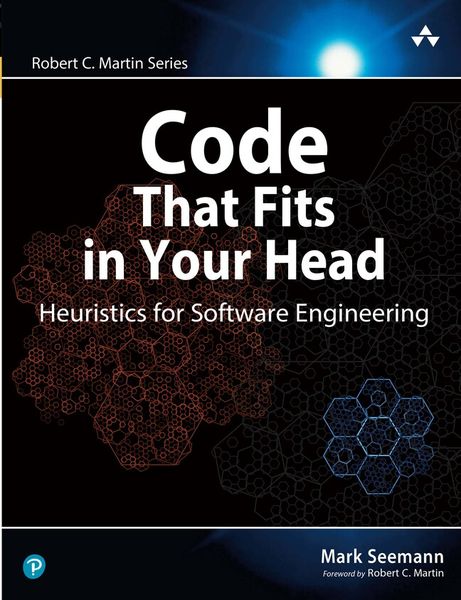
Produktbild: Code That Fits in Your Head: Heuristics for Software Engineering

Code That Fits in Your Head: Heuristics for Software Engineering

32,99 €

inkl. gesetzl. MwSt., Versandkostenfrei


Beschreibung

How to Reduce Code Complexity and Develop Software More Sustainably"Mark Seemann is well known for explaining complex concepts clearly and thoroughly. In this book he condenses his wide-ranging software development experience into a set of practical, pragmatic techniques for writing sustainable and human-friendly...

Beschreibung

How to Reduce Code Complexity and Develop Software More Sustainably"Mark Seemann is well known for explaining complex concepts clearly and thoroughly. In this book he condenses his wide-ranging software development experience into a set of practical, pragmatic techniques for writing sustainable and human-friendly code. This book will be a must-read for every programmer." --Scott Wlaschin, author of Domain Modeling Made FunctionalCode That Fits in Your Head offers indispensable, practical advice for writing code at a sustainable pace and controlling the complexity that causes projects to spin out of control. Reflecting decades of experience helping software teams succeed, Mark Seemann guides you from zero (no code) to deployed features and shows how to maintain a good cruising speed as you add functionality, address cross-cutting concerns, troubleshoot, and optimize. You'll find valuable ideas, practices, and processes for key issues ranging from checklists to teamwork, encapsulation to decomposition, API design to unit testing.Seemann illuminates his insights with code examples drawn from a complete sample project. Written in C#, they're designed to be clear and useful to anyone who uses any object-oriented language including Java , C++, and Python. To facilitate deeper exploration, all code and extensive commit messages are available for download.Choose mindsets and processes that work, and escape bad metaphors that don'tUse checklists to liberate yourself, improving outcomes with the skills you already haveGet past analysis paralysis by creating and deploying a vertical slice of your applicationCounteract forces that lead to code rot and unnecessary complexityMaster better techniques for changing code behaviorDiscover ways to solve code problems more quickly and effectivelyThink more productively about performance and securityIf you've ever suffered through bad projects or had to cope with unmaintainable legacy code, this guide will help you make things better next time and every time. Register your book for convenient access to downloads, updates, and/or corrections as they become available. See inside book for details.

Produktdetails

Einband

Taschenbuch

Erscheinungsdatum

15.11.2021

Verlag Pearson
Seitenzahl

416

Produktdetails

Einband

Taschenbuch

Erscheinungsdatum

15.11.2021

Verlag Pearson
Seitenzahl

416

Maße (L/B/H)

23,2/17,8/2,3 cm

Gewicht

711 g

Farbe

Schwarz / Cool Grey

Auflage

1

Sprache

Englisch

ISBN

978-0-13-746440-1

Herstelleradresse


Email: info@bod.de

Ein neues Kapitel für Ihre Bücher

Ein neues Kapitel für Ihre Bücher

Schenken Sie Ihren alten Schätzen ein zweites Leben und erhalten Sie dafür eine Thalia Geschenkkarte.

Jetzt verkaufen
Jetzt verkaufen

Noch keine Bewertungen vorhanden

Verfassen Sie die erste Bewertung zu diesem Artikel

Helfen Sie anderen Kundinnen und Kunden durch Ihre Meinung.

Kundinnen und Kunden meinen

Bewertungen (0)

Die Leseprobe wird geladen.
  • Produktbild: Code That Fits in Your Head: Heuristics for Software Engineering
  • Series Editor Foreword xix

    Preface xxiii

    About the Author xxix


    Part I: Acceleration 1


    Chapter 1: Art or Science? 3


    1.1 Building a House 4

    1.2 Growing a Garden 7

    1.3 Towards Engineering 8

    1.4 Conclusion 14


    Chapter 2: Checklists 15

    2.1 An Aid to Memory 15

    2.2 Checklist for a New Code Base 17

    2.3 Adding Checks to Existing Code Bases 29

    2.4 Conclusion 32


    Chapter 3: Tackling Complexity 33

    3.1 Purpose 34

    3.2 Why Programming Is Difficult 38

    3.3 Towards Software Engineering 44

    3.4 Conclusion 46


    Chapter 4: Vertical Slice 49

    4.1 Start with Working Software 50

    4.2 Walking Skeleton 53

    4.3 Outside-in 60

    4.4 Complete the Slice 77

    4.5 Conclusion 85


    Chapter 5: Encapsulation 87

    5.1 Save the Data 87

    5.2 Validation 92

    5.3 Protection of Invariants 105

    5.4 Conclusion 108


    Chapter 6: Triangulation 111

    6.1 Short-Term versus Long-Term Memory 111

    6.2 Capacity 114

    6.3 Conclusion 127


    Chapter 7: Decomposition 129

    7.1 Code Rot 129

    7.2 Code That Fits in Your Brain 136

    7.3 Conclusion 153


    Chapter 8: API Design 155

    8.1 Principles of API Design 156

    8.2 API Design Example 168

    8.3 Conclusion 176


    Chapter 9: Teamwork 177

    9.1 Git 178

    9.2 Collective Code Ownership 187

    9.3 Conclusion 199


    Part II: Sustainability 201


    Chapter 10: Augmenting Code 203


    10.1 Feature Flags 204

    10.2 The Strangler Pattern 209

    10.3 Versioning 218

    10.4 Conclusion 220


    Chapter 11: Editing Unit Tests 223

    11.1 Refactoring Unit Tests 223

    11.2 See Tests Fail 233

    11.3 Conclusion 234


    Chapter 12: Troubleshooting 235

    12.1 Understanding 235

    12.2 Defects 240

    12.3 Bisection 250

    12.4 Conclusion 255


    Chapter 13: Separation of Concerns 257

    13.1 Composition 258

    13.2 Cross-Cutting Concerns 267

    13.3 Conclusion 274


    Chapter 14: Rhythm 275

    14.1 Personal Rhythm 276

    14.2 Team Rhythm 282

    14.3 Conclusion 285


    Chapter 15: The Usual Suspects 287

    15.1 Performance 288

    15.2 Security 292

    15.3 Other Techniques 300

    15.4 Conclusion 308


    Chapter 16: Tour 309

    16.1 Navigation 309

    16.2 Architecture 318

    16.3 Usage 323

    16.4 Conclusion 326


    Appendix A: List of Practices 329

    A.1 The 50/72 Rule 329

    A.2 The 80/24 Rule 330

    A.3 Arrange Act Assert 330

    A.4 Bisection 330

    A.5 Checklist for A New Code Base 331

    A.6 Command Query Separation 331

    A.7 Count the Variables 331

    A.8 Cyclomatic Complexity 331

    A.9 Decorators for Cross-Cutting Concerns 332

    A.10 Devil's Advocate 332

    A.11 Feature Flag 332

    A.12 Functional Core, Imperative Shell 333

    A.13 Hierarchy of Communication 333

    A.14 Justify Exceptions from the Rule 333

    A.15 Parse, Don't Validate 334

    A.16 Postel's Law 334

    A.17 Red Green Refactor 334

    A.18 Regularly Update Dependencies 335

    A.19 Reproduce Defects as Tests 335

    A.20 Review Code 335

    A.21 Semantic Versioning 335

    A.22 Separate Refactoring of Test and Production Code 335

    A.23 Slice 336

    A.24 Strangler 336

    A.25 Threat-Model 337

    A.26 Transformation Priority Premise 337

    A.27 X-driven Development 337

    A.28 X Out Names 338


    Bibliography 339

    Index 349