















































KI-Beratung Beta

Gutscheinbedingungen

Gültig bis 11.11.2026 | Gültig für Spielzeug, Filme, Musik, Software, Games, Geschenke & Trends, Schreibwaren, Hörbücher und Hörbuch-Downloads (außer Abo & Shelfies), gebrauchte Bücher, nicht preisgebundene Bücher und Kalender | Einlösbar unter thalia.de und in der Thalia App | Click & Collect nur mit Online-Zahlung (Paypal/Kreditkarte) vorab | Einzelne Artikel können ausgeschlossen sein | Nicht kombinierbar mit anderen Gutscheinen oder Preisaktionen | Nur einmal pro Einkauf einlösbar | Gutschein wird auf max. 500€ Bestellwert angerechnet | Keine Barauszahlung | Digitale Hörbücher nur für Android  | Nicht gültig für preisgebundene Artikel (aufgrund der Buchpreisbindung sind Gutscheine nicht auf Bücher, eBooks, Presse einlösbar), tolino eReader & Zubehör, Abonnements & Flatrates, Geschenkkarten, Versandkosten und Services

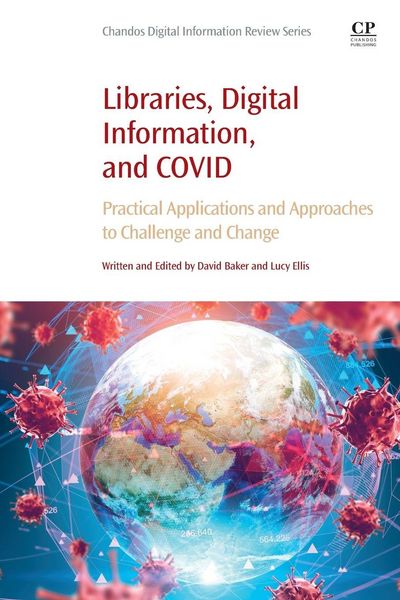
  • Produktbild: Libraries, Digital Information, and COVID
  • Produktbild: Libraries, Digital Information, and COVID

Libraries, Digital Information, and COVID Practical Applications and Approaches to Challenge and Change

Aus der Reihe Chandos Publishing

92,99 €

inkl. gesetzl. MwSt., Versandkostenfrei


Beschreibung

COVID-19 is profoundly affecting the ways in which we live, learn, plan, and develop. What does COVID-19 mean for the future of digital information use and delivery, and for more traditional forms of library provision? Libraries, Digital Information, and COVID gives immediate and long-term solutions...

Beschreibung

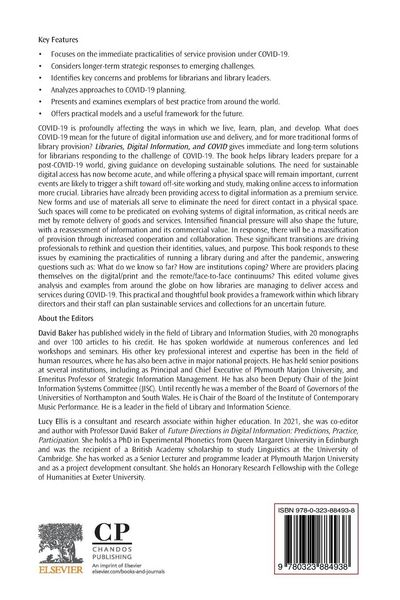
COVID-19 is profoundly affecting the ways in which we live, learn, plan, and develop. What does COVID-19 mean for the future of digital information use and delivery, and for more traditional forms of library provision? Libraries, Digital Information, and COVID gives immediate and long-term solutions for librarians responding to the challenge of COVID-19. The book helps library leaders prepare for a post-COVID-19 world, giving guidance on developing sustainable solutions. The need for sustainable digital access has now become acute, and while offering a physical space will remain important, current events are likely to trigger a shift toward off-site working and study, making online access to information more crucial. Libraries have already been providing access to digital information as a premium service. New forms and use of materials all serve to eliminate the need for direct contact in a physical space. Such spaces will come to be predicated on evolving systems of digital information, as critical needs are met by remote delivery of goods and services. Intensified financial pressure will also shape the future, with a reassessment of information and its commercial value. In response, there will be a massification of provision through increased cooperation and collaboration. These significant transitions are driving professionals to rethink and question their identities, values, and purpose. This book responds to these issues by examining the practicalities of running a library during and after the pandemic, answering questions such as: What do we know so far? How are institutions coping? Where are providers placing themselves on the digital/print and the remote/face-to-face continuums? This edited volume gives analysis and examples from around the globe on how libraries are managing to deliver access and services during COVID-19. This practical and thoughtful book provides a framework within which library directors and their staff can plan sustainable services and collections for an uncertain future.

Rezension

".different sectors responded to the challenges of COVID; their views are presented in Chapters 1 and 31. These two chapters also report the results of a Delphi exercise involving 23 panellists from the Asia-Pacific region. The 11 questions they answered (Appendix A) covered the main themes of the book. Thus the 31 chapters give a multinational perspective on the constraints and challenges of COVID responses. Chapters 2 to 30 consist of case studies and thought pieces presented in three parts: immediate challenges of the pandemic; analysis and opportunities for new behaviours; and re-shaping society and the future. These chapters are a rich resource of information and for reflection. The detailed Contents list is helpful to the reader. this is a valuable collection of essays which documents how our profession responded to the pandemic, analyses what was learned, and considers change and future opportunities. This book is recommended for readers interested in crisis management and who wish to investigate what we learned from the pandemic and how it might affect our future practices and services.” --Sherrey Quin, Journal of the Australian Library and Information Association

Portrait

David Baker has published widely in the field of Library and Information Studies, with 19 monographs and over 100 articles to his credit. He has spoken worldwide at numerous conferences and led workshops and seminars. His other key professional interest and expertise has been in the field of human resources, where he has also been active in major national projects. He has held senior positions at several institutions, including as Principal and Chief Executive of Plymouth Marjon University, and Emeritus Professor of Strategic Information Management. He has also been Deputy Chair of the Joint Information Systems Committee (Jisc). Until recently he was a member of the Board of Governors of the Universities of Northampton and South Wales. He is Chair of the Board of the Institute of Contemporary Music Performance. He is a leader in the field of library and information science.Dr Lucy Ellis is Senior Associate of David Baker Consulting and Honorary Research Fellow at the University of Exeter, UK. She is currently working as a consultant with a number of HE and FE institutions to transform their governance, research and scholarly activity. Along with David Baker she is Editor-in-Chief of the Elsevier Major Reference Work Encyclopedia of Libraries, Librarianship and Information Science (Elseiver, 2025) and Series Editor for two Elsevier book series dealing with information structures in HE titled Digital Information Reviews and Advances in Information. Her background is as a lecturer, research scientist and project development consultant

Produktdetails

Einband

Taschenbuch

Erscheinungsdatum

12.07.2021

Herausgeber David Baker + weitere
Verlag Elsevier Science & Technology

Produktdetails

Einband

Taschenbuch

Erscheinungsdatum

12.07.2021

Herausgeber
Verlag Elsevier Science & Technology
Seitenzahl

420

Maße (L/B/H)

22,9/15,2/2,2 cm

Gewicht

560 g

Sprache

Englisch

ISBN

978-0-323-88493-8

EU-Ansprechpartner

Elsevier B.V.
Radarweg 29
1043 NX Amsterdam
NL
productsafety@elsevier.com

Herstelleradresse

Elsevier Science & Technology
London Wall 125
EC2Y 5AS London
GB
tradeorders@elsevier.com

Ein neues Kapitel für Ihre Bücher

Ein neues Kapitel für Ihre Bücher

Schenken Sie Ihren alten Schätzen ein zweites Leben und erhalten Sie dafür eine Thalia Geschenkkarte.

Jetzt verkaufen
Jetzt verkaufen

Noch keine Bewertungen vorhanden

Verfassen Sie die erste Bewertung zu diesem Artikel

Helfen Sie anderen Kundinnen und Kunden durch Ihre Meinung.

Kundinnen und Kunden meinen

Bewertungen (0)

Die Leseprobe wird geladen.
  • Produktbild: Libraries, Digital Information, and COVID
  • Produktbild: Libraries, Digital Information, and COVID
  • 1. Libraries, digital information, and COVID: Practical applications and approaches to challenge and change
    Part One: Immediate challenges
    2. Working towards a "new normal?: HKUST's innovations and adaptations in response to COVID-19
    3. Back to the future? Practical consequences and strategic implications of a UK academic library's COVID response
    4. Teaching librarians' experiences in the first months of system change
    5. How the Corona pandemic has influenced public libraries in Denmark
    6. Digital information services provided by libraries during the COVID-19 pandemic: Case studies from the viewpoint of supply chain management
    7. COVID-19: Libraries' responses to the global health emergency
    8. The role of research libraries in promoting open-access resources and maintaining online community
    9. Project and programme delivery in a pandemic setting
    Part Two: Analysis and opportunities for new behaviours
    Section A: How we learn?

    10. Acceleration of digital learning and what it means for libraries
    11. Libraries, learning, and porous boundaries: Reimagining the library landscape and its inhabitants
    12. Digital-first approaches and the library brand in a post-pandemic world
    13. During COVID-19: Emerging themes in higher education
    14. Student satisfaction with library resources in the COVID-19 era: A case study of Portuguese academic libraries
    15. No one left behind
    16. COVID-19 and the digital divide in higher education: A Commonwealth perspective
    Section B: Supply of information
    17. The use of data in publishing and acquisition strategies
    18. Trustworthy or not? Research data on COVID-19 in data repositories
    19. Impact of the COVID-19 pandemic on scientific production
    Section C: Psychological effects-Adjustment or radical alteration?
    20. Something old, something new
    21. Library space and COVID-19: Re-thinking of place and re-designing of digital space
    22. Online misinformation, its influence on the student body, and institutional responsibilities
    23. Crowdsourcing COVID-19: A brief analysis of librarian posts on Reddit
    24. No child ignored
    Part Three: Re-shaping society and the future
    25. "Normalizing? the online/blended delivery method into a lasting cultural shift
    26. The battered library-Navigating the future in a new reality
    27. Look to the future now, it's only just begun. The changing role of libraries during and after COVID-19
    28. After COVID? Classical mechanics
    29. The times they are a-changin': But how fundamentally and how rapidly? Academic library services post-pandemic
    30. Envisioning opportunities and movement for the future of academic libraries
    31. A framework for sustainable success
    Appendix A: Delphi questions