















































KI-Beratung Beta

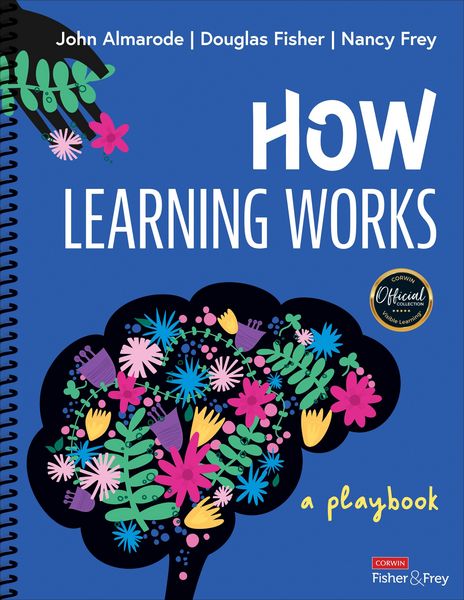
Produktbild: Fisher, D: How Learning Works

Fisher, D: How Learning Works A Playbook

39,99 €

inkl. gesetzl. MwSt., Versandkostenfrei


Beschreibung

Produktdetails

Einband

Taschenbuch

Erscheinungsdatum

14.02.2022

Verlag

SAGE Publications

Seitenzahl

240

Maße (L/B/H)

23,1/28,2/2,4 cm

Gewicht

678 g

Sprache

Englisch

ISBN

978-1-07-185663-5

Beschreibung

Rezension

Easy to understand, yet covers many important concepts. Spiral binding constitutes its use over many years, hopefully. Dr Betty Hubschman 20210910

Produktdetails

Einband

Taschenbuch

Erscheinungsdatum

14.02.2022

Verlag

SAGE Publications

Seitenzahl

240

Maße (L/B/H)

23,1/28,2/2,4 cm

Gewicht

678 g

Sprache

Englisch

ISBN

978-1-07-185663-5

Ein neues Kapitel für Ihre Bücher

Ein neues Kapitel für Ihre Bücher

Schenken Sie Ihren alten Schätzen ein zweites Leben und erhalten Sie dafür eine Thalia Geschenkkarte.

Jetzt verkaufen
Jetzt verkaufen

Noch keine Bewertungen vorhanden

Verfassen Sie die erste Bewertung zu diesem Artikel

Helfen Sie anderen Kundinnen und Kunden durch Ihre Meinung.

Kundinnen und Kunden meinen

Bewertungen (0)

  • Produktbild: Fisher, D: How Learning Works
  • Acknowledgments
    INTRODUCTION
    The Purpose of This Learning Playbook
    The Learning Plan With the Modules
    Learning Within the Modules
    Collaborating for Great Learning
    PART I
    CHAPTER 1. WHAT DOES LEARNING LOOK LIKE IN YOUR CLASSROOM?
    A Definition of Learning
    Checks for Understanding
    CHAPTER 2. WHAT ARE DIFFERENT WAYS TO THINK ABOUT LEARNING?
    Three Different Types of Knowledge
    Three Parts of the Learning Process
    Checks for Understanding
    CHAPTER 3. WHAT ARE THE BARRIERS TO LEARNING?
    Acquisition
    Consolidation
    Storage
    Challenges to Learning by Design
    Checks for Understanding
    CHAPTER 4. HOW DO STUDENTS LEARN?
    Learning Myths
    The Science of Learning
    Checks for Understanding
    PART II
    CHAPTER 5. PROMISING PRINCIPLE 1: MOTIVATION
    What Is Motivation?
    What Does This Principle or Practice Look Like in the Classroom?
    How Do We Implement This Principle and Practice Into Our Classrooms?
    Checks for Understanding
    CHAPTER 6. PROMISING PRINCIPLE 2: ATTENTION
    What Is Attention?
    Factors Influencing Attention
    What Does This Principle or Practice Look Like in the Classroom?
    How Do We Implement This Principle and Practice Into Our Classrooms?
    Checks for Understanding
    CHAPTER 7. PROMISING PRINCIPLE 3: ELABORATE ENCODING
    What Is Elaborate Encoding?
    Components of Elaborate Encoding
    Approaches to Promoting Elaborate Encoding
    What Does This Principle or Practice Look Like in the Classroom?
    How Do We Implement This Principle and Practice Into Our Classrooms?
    Checks for Understanding
    CHAPTER 8. PROMISING PRINCIPLE 4: RETRIEVAL AND PRACTICE
    What Is Retrieval and Practice?
    Timing of Retrieval
    Types of Retrieval Practice
    What Does This Principle or Practice Look Like in the Classroom?
    How Do We Implement This Principle and Practice Into Our Classrooms?
    Checks for Understanding
    CHAPTER 9. PROMISING PRINCIPLE 5: COGNITIVE LOAD
    What Is Cognitive Load?
    What Does This Principle or Practice Look Like in the Classroom?
    How Do We Implement This Principle and Practice Into Our Classrooms?
    Checks for Understanding
    CHAPTER 10. PROMISING PRINCIPLE 6: PRODUCTIVE STRUGGLE
    What Is Productive Struggle?
    What Does This Principle or Practice Look Like in the Classroom?
    How Do We Implement This Principle and Practice Into Our Classrooms?
    Checks for Understanding
    CHAPTER 11. PROMISING PRINCIPLE 7: FEEDBACK
    What Is Feedback and What Makes It Effective?
    What Does This Principle or Practice Look Like in the Classroom?
    How Do We Implement This Principle and Practice Into Our Classrooms?
    Checks for Understanding
    Where to Next?
    PART III
    CHAPTER 12. EXPLICIT STRATEGY INSTRUCTION
    The Gradual Release of Responsibility
    Effective Learning Practices
    A Return to Germane Cognitive Load
    Checks for Understanding
    CHAPTER 13. LEARNING STRATEGY 1: GOAL SETTING
    The Benefits of Goal Setting
    Getting Ready for Goal Setting
    The Process of Goal Setting
    Checks for Understanding
    CHAPTER 14. LEARNING STRATEGY 2: INTEGRATING PRIOR KNOWLEDGE
    The Benefits of Integrating Prior Knowledge
    Getting Ready to Integrate Prior Knowledge
    A Process for Integrating Prior Knowledge
    Bonus Material: Annotated Reading
    Checks for Understanding
    CHAPTER 15. LEARNING STRATEGY 3: SUMMARIZING
    Essential Characteristics of Summarizing
    Getting Ready to Summarize
    A Process for the Explicit Instruction of Summarizing
    Checks for Understanding
    CHAPTER 16. LEARNING STRATEGY 4: MAPPING
    Three Different Ways to Map
    Getting Ready for Mapping
    A Process for the Explicit Instruction of Summarizing
    Checks for Understanding
    CHAPTER 17. LEARNING STRATEGY 5: SELF-TESTING
    Benefits of Self-Testing
    What if Learners Make Mistakes?
    Getting Ready to Implement Self-Testing
    A Process for Implementing Self-Testing
    Bonus Material: Cooperative Learning
    Checks for Understanding
    CHAPTER 18. LEARNING STRATEGY 6: ELABORATIVE INTERROGATION
    Benefits of Elaborative Interrogation
    Getting Ready to Implement Elaborative Interrogation
    Bonus Material: Jigsaw
    A Process for Implementing Elaborative Interrogation
    Checks for Understanding
    PART IV
    CHAPTER 19. GENERATING AND GATHERING EVIDENCE
    Planning for Evaluation
    Success Criteria and Evaluation
    Planning to Gather Evidence
    Planning to Collect and Organize Evidence
    Making Sense of the Evidence
    Conclusion
    References
    Index
    About the Authors