















































KI-Beratung Beta

Gutscheinbedingungen

Gültig bis 11.11.2026 | Gültig für Spielzeug, Filme, Musik, Software, Games, Geschenke & Trends, Schreibwaren, Hörbücher und Hörbuch-Downloads (außer Abo & Shelfies), gebrauchte Bücher, nicht preisgebundene Bücher und Kalender | Einlösbar unter thalia.de und in der Thalia App | Click & Collect nur mit Online-Zahlung (Paypal/Kreditkarte) vorab | Einzelne Artikel können ausgeschlossen sein | Nicht kombinierbar mit anderen Gutscheinen oder Preisaktionen | Nur einmal pro Einkauf einlösbar | Gutschein wird auf max. 500€ Bestellwert angerechnet | Keine Barauszahlung | Digitale Hörbücher nur für Android  | Nicht gültig für preisgebundene Artikel (aufgrund der Buchpreisbindung sind Gutscheine nicht auf Bücher, eBooks, Presse einlösbar), tolino eReader & Zubehör, Abonnements & Flatrates, Geschenkkarten, Versandkosten und Services

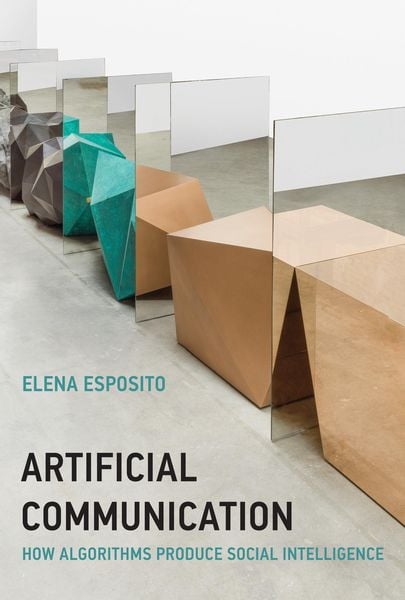
Produktbild: Artificial Communication

Artificial Communication How Algorithms Produce Social Intelligence

Aus der Reihe Strong Ideas

26,99 €

inkl. gesetzl. MwSt., Versandkostenfrei


Beschreibung

A proposal that we think about digital technologies such as machine learning not in terms of artificial intelligence but as artificial communication. Algorithms that work with deep learning and big data are getting so much better at doing so many things that it makes us uncomfortable. How can a device...

Beschreibung

A proposal that we think about digital technologies such as machine learning not in terms of artificial intelligence but as artificial communication.
Algorithms that work with deep learning and big data are getting so much better at doing so many things that it makes us uncomfortable. How can a device know what our favorite songs are, or what we should write in an email? Have machines become too smart? In Artificial Communication, Elena Esposito argues that drawing this sort of analogy between algorithms and human intelligence is misleading. If machines contribute to social intelligence, it will not be because they have learned how to think like us but because we have learned how to communicate with them. Esposito proposes that we think of smart machines not in terms of artificial intelligence but in terms of artificial communication.
 
To do this, we need a concept of communication that can take into account the possibility that a communication partner may be not a human being but an algorithm which is not random and is completely controlled, although not by the processes of the human mind. Esposito investigates this by examining the use of algorithms in different areas of social life. She explores the proliferation of lists (and lists of lists) online, explaining that the web works on the basis of lists to produce further lists; the use of visualization; digital profiling and algorithmic individualization, which personalize a mass medium with playlists and recommendations; and the implications of the right to be forgotten. Finally, she considers how photographs today seem to be used to escape the present rather than to preserve a memory.

Rezension

"Thought-provoking and profoundly relevant." E&T Magazine

Produktdetails

Einband

Gebundene Ausgabe

Erscheinungsdatum

24.05.2022

Abbildungen

1 B&W PHOTO

Verlag The MIT Press

Produktdetails

Einband

Gebundene Ausgabe

Erscheinungsdatum

24.05.2022

Abbildungen

1 B&W PHOTO

Verlag The MIT Press
Seitenzahl

184

Maße (L/B/H)

23,3/16/2,7 cm

Gewicht

452 g

Sprache

Englisch

ISBN

978-0-262-04666-4

Herstelleradresse

Libri GmbH
Europaallee 1
36244 Bad Hersfeld
DE

Email: gpsr@libri.de

Ein neues Kapitel für Ihre Bücher

Ein neues Kapitel für Ihre Bücher

Schenken Sie Ihren alten Schätzen ein zweites Leben und erhalten Sie dafür eine Thalia Geschenkkarte.

Jetzt verkaufen
Jetzt verkaufen

Noch keine Bewertungen vorhanden

Verfassen Sie die erste Bewertung zu diesem Artikel

Helfen Sie anderen Kundinnen und Kunden durch Ihre Meinung.

Kundinnen und Kunden meinen

Bewertungen (0)

Die Leseprobe wird geladen.
  • Produktbild: Artificial Communication
  • Introduction IX
    1 Artificial Communication? Algorithms as Interaction Partners 1
    2 Organizing without Understanding: Lists in Ancient and Digital Cultures 19
    3 Reading Images: Visualization and Interpretation in Digital Text Analysis 31
    4 Getting Personal with Algorithms 47
    5 Algorithmic Memory and the Right to be Forgotten 65
    6 Forgetting Pictures 79
    7 The Future of Prediction: From Statistical Uncertainty to Algorithmic Forecasts 87
    Conclusion 107
    Acknowledgments 113
    Notes 115
    Bibliography 147
    Index 181