















































KI-Beratung Beta

Gutscheinbedingungen

Gültig bis 30.11.2026 | Gültig für nicht preisgebundene fremdsprachige Bücher | Einzelne Artikel können ausgeschlossen sein | Online auf thalia.de und in der Thalia App einlösbar | Click & Collect nur mit Online-Zahlung (Paypal/Kreditkarte) vorab | Nicht kombinierbar mit anderen Gutscheinen oder Preisaktionen | Nur einmal pro Einkauf einlösbar | Gutschein wird auf max. 500€ Bestellwert angerechnet | Keine Barauszahlung | Nicht gültig für Versandkosten und Services

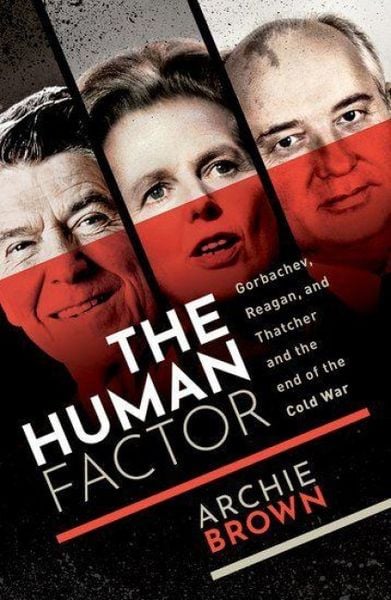
Produktbild: The Human Factor

The Human Factor Gorbachev, Reagan, and Thatcher and the End of the Cold War

19,99 €

inkl. gesetzl. MwSt., Versandkostenfrei


Beschreibung

How the Cold War ended - and the people who made it happen In this penetrating analysis of the role of political leadership in the Cold War's ending, Archie Brown shows why the popular view that Western economic and military strength left the Soviet Union with no alternative but to admit defeat is wrong....

Beschreibung

How the Cold War ended - and the people who made it happen In this penetrating analysis of the role of political leadership in the Cold War's ending, Archie Brown shows why the popular view that Western economic and military strength left the Soviet Union with no alternative but to admit defeat is wrong. To understand the significance of the parts played by Mikhail Gorbachev, Ronald Reagan and Margaret Thatcher in East-West relations in the second half of the 1980s, Brown addresses several specific questions: What were the values and assumptions of these leaders, and how did their perceptions evolve? What were the major influences on them? To what extent were they reflecting the views of their own political establishment or challenging them? How important for ending the East-West standoff were their interrelations? Would any of the realistically alternative leaders of their countries at that time have pursued approximately the same policies? The Cold War got colder in the early 1980s and the relationship between the two military superpowers, the USA and the Soviet Union, each of whom had the capacity to annihilate the other, was tense. By the end of the decade, East-West relations had been utterly transformed, with most of the dividing lines -including the division of Europe- removed. Engagement between Gorbachev and Reagan was a crucial part of that process of change. More surprising was Thatcher's role. Regarded by Reagan as his ideological and political soulmate, she formed also a strong and supportive relationship with Gorbachev (beginning three months before he came to power). Promoting Gorbachev in Washington as a man to do business with, she became, in the words of her foreign policy adviser Sir Percy Cradock, an agent of influence in both directions.

Produktdetails

Einband

Taschenbuch

Erscheinungsdatum

24.03.2022

Abbildungen

23 black and white illustrations

Verlag Oxford Academic

Produktdetails

Einband

Taschenbuch

Erscheinungsdatum

24.03.2022

Abbildungen

23 black and white illustrations

Verlag Oxford Academic
Seitenzahl

516

Maße (L/B/H)

23,4/15,5/4,2 cm

Gewicht

625 g

Sprache

Englisch

ISBN

978-0-19-285653-1

Herstelleradresse

Libri GmbH
Europaallee 1
36244 Bad Hersfeld
DE

Email: gpsr@libri.de

Ein neues Kapitel für Ihre Bücher

Ein neues Kapitel für Ihre Bücher

Schenken Sie Ihren alten Schätzen ein zweites Leben und erhalten Sie dafür eine Thalia Geschenkkarte.

Jetzt verkaufen
Jetzt verkaufen

Noch keine Bewertungen vorhanden

Verfassen Sie die erste Bewertung zu diesem Artikel

Helfen Sie anderen Kundinnen und Kunden durch Ihre Meinung.

Kundinnen und Kunden meinen

Bewertungen (0)

Die Leseprobe wird geladen.
  • Produktbild: The Human Factor
    • Introduction
    • PART 1
    • 1: The Cold War and its Dangers
    • 2: The Making of Mikhail Gorbachev
    • 3: Gorbachev's Widening Horizons
    • 4: The Rise of Ronald Reagan
    • 5: Reagan's First Term
    • 6: Margaret Thatcher: The Moulding of the 'Iron Lady'
    • 7: Thatcher and the Turn to Engagement with Communist Europe
    • PART 2
    • 8: Breaking the ice (1985)
    • 9: Nuclear Fallout: Chernobyl and Reykjavik (1986)
    • 10: Building trust (1987)
    • 11: The End of the Ideological Divide (1988)
    • 12: The End of the Cold War (1989)
    • 13: Why the Cold War Ended When it Did
    • 14: Unintended Consequences (1990)
    • 15: Final Year - of the USSR and of Gorbachev's Power (1991)
    • 16: Political Leadership and the End of the Cold War: Concluding Reflections
    • Notes
    • Index