















































KI-Beratung Beta

Gutscheinbedingungen

Gültig bis 11.11.2026 | Gültig für Spielzeug, Filme, Musik, Software, Games, Geschenke & Trends, Schreibwaren, Hörbücher und Hörbuch-Downloads (außer Abo & Shelfies), gebrauchte Bücher, nicht preisgebundene Bücher und Kalender | Einlösbar unter thalia.de und in der Thalia App | Click & Collect nur mit Online-Zahlung (Paypal/Kreditkarte) vorab | Einzelne Artikel können ausgeschlossen sein | Nicht kombinierbar mit anderen Gutscheinen oder Preisaktionen | Nur einmal pro Einkauf einlösbar | Gutschein wird auf max. 500€ Bestellwert angerechnet | Keine Barauszahlung | Digitale Hörbücher nur für Android  | Nicht gültig für preisgebundene Artikel (aufgrund der Buchpreisbindung sind Gutscheine nicht auf Bücher, eBooks, Presse einlösbar), tolino eReader & Zubehör, Abonnements & Flatrates, Geschenkkarten, Versandkosten und Services

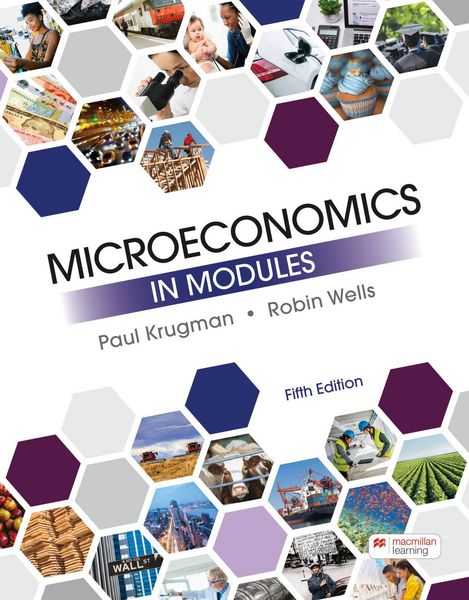
Produktbild: Microeconomics in Modules

Microeconomics in Modules

408,99 €

inkl. gesetzl. MwSt., Versandkostenfrei


Beschreibung

Produktdetails

Einband

Taschenbuch

Erscheinungsdatum

21.07.2021

Verlag

Macmillan Learning

Seitenzahl

492

Maße (L/B/H)

27,4/21,4/2 cm

Gewicht

1039 g

Auflage

5th edition

Sprache

Englisch

ISBN

978-1-319-24538-2

Beschreibung

Produktdetails

Einband

Taschenbuch

Erscheinungsdatum

21.07.2021

Verlag

Macmillan Learning

Seitenzahl

492

Maße (L/B/H)

27,4/21,4/2 cm

Gewicht

1039 g

Auflage

5th edition

Sprache

Englisch

ISBN

978-1-319-24538-2

Herstelleradresse

Libri GmbH
Europaallee 1
36244 Bad Hersfeld
DE

Email: gpsr@libri.de

Ein neues Kapitel für Ihre Bücher

Ein neues Kapitel für Ihre Bücher

Schenken Sie Ihren alten Schätzen ein zweites Leben und erhalten Sie dafür eine Thalia Geschenkkarte.

Jetzt verkaufen
Jetzt verkaufen

Noch keine Bewertungen vorhanden

Verfassen Sie die erste Bewertung zu diesem Artikel

Helfen Sie anderen Kundinnen und Kunden durch Ihre Meinung.

Kundinnen und Kunden meinen

Bewertungen (0)

  • Produktbild: Microeconomics in Modules
  • Section 1: Basic Economic Concepts
    Module 1: The Study of Economics
    Module 2: Models and the Production Possibility Frontier
    Module 3: Comparative Advantage and Trade
    Module 4: The Circular Flow Diagram
    Section 1A: Graphing Appendix

    Section 2: Supply and Demand
    Module 5: Demand
    Module 6: Supply and Equilibrium
    Module 7: Changes in Equilibrium

    Section 3: Market Efficiency and Government Policy
    Module 8: Consumer and Producer Surplus
    Module 9: Efficiency and Markets
    Module 10: Price Controls  (Ceilings and Floors)

    Section 4: Elasticity and Law of Demand
    Module 11: Defining and Measuring Elasticity
    Module 12: Interpreting Price Elasticity of Demand
    Module 13: Other Elasticities
    Module 14: The Benefits and Costs of Taxation

    Section 5: International Trade
    Module 15: Gains from Trade
    Module 16: Supply, Demand, and International Trade

    Section 6: Economics and Decision Making
    Module 17: Making Decisions
    Module 18: Behavioral Economics
    Module 19: Maximizing Utility

    Section 7: Production and Costs
    Module 20: The Production Function
    Module 21: Firm Costs
    Module 22: Long-Run Costs and Economies of Scale

    Section 8: Market Structure and Perfect Competition
    Module 23: Introduction to Market Structure
    Module 24: Perfect Competition
    Module 25: Graphing Perfect Competition
    Module 26: Long-Run Outcomes in Perfect Competition

    Section 9: Monopoly
    Module 27: Monopoly in Practice
    Module 28: Monopoly and Public Policy
    Module 29: Price Discrimination

    Section 10: Oligopoly and Monopolistic Competition
    Module 30: Oligopoly
    Module 31: Game Theory
    Module 32: Monopolistic Competition
    Module 33: Product Differentiation and Advertising

    Section 11: Market Failure and the Role of Government
    Module 34: Externalities
    Module 35: Externalities and Public Policy
    Module 36: Public Goods and Common Resources

    Section 12: Factor Markets and the Distribution of Income
    Module 37: Factor Markets
    Module 38: Marginal Productivity Theory
    Module 39: The Market for Labor
    Module 40: The Economics of the Welfare State