















































KI-Beratung Beta

  • Produktbild: Forgeries and Historical Writing in England, France, and Flanders, 900-1200
  • Produktbild: Forgeries and Historical Writing in England, France, and Flanders, 900-1200

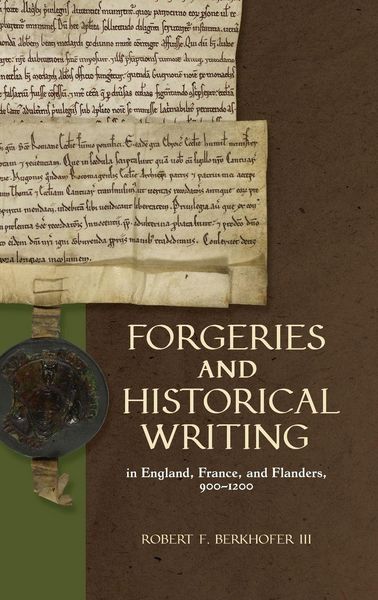
Forgeries and Historical Writing in England, France, and Flanders, 900-1200

121,99 €

inkl. gesetzl. MwSt., Versandkostenfrei


Beschreibung

What modern scholars call "forgeries" (be they texts, seals, coins, or relics) flourished in the central Middle Ages. Although lying was considered wrong throughout the period, such condemnation apparently did not extend to forgeries. Rewriting documents was especially common among monks, who exploited...

Beschreibung

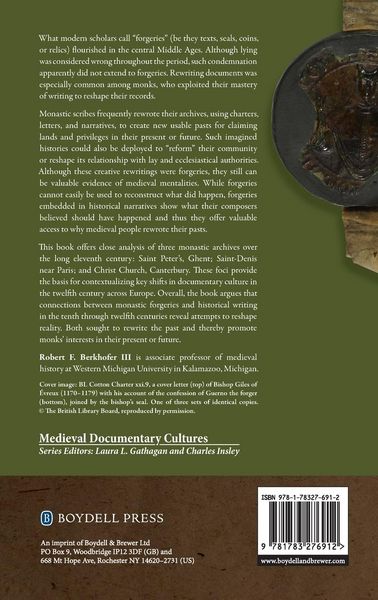
What modern scholars call "forgeries" (be they texts, seals, coins, or relics) flourished in the central Middle Ages. Although lying was considered wrong throughout the period, such condemnation apparently did not extend to forgeries. Rewriting documents was especially common among monks, who exploited their mastery of writing to reshape their records. Monastic scribes frequently rewrote their archives, using charters, letters, and narratives, to create new usable pasts for claiming lands and privileges in their present or future. Such imagined histories could also be deployed to "reform" their community or reshape its relationship with lay and ecclesiastical authorities. Although these creative rewritings were forgeries, they still can be valuable evidence of medieval mentalities. While forgeries cannot easily be used to reconstruct what did happen, forgeries embedded in historical narratives show what their composers believed should have happened and thus they offer valuable access to why medieval people rewrote their pasts. This book offers close analysis of three monastic archives over the long eleventh century: Saint Peter's, Ghent; Saint-Denis near Paris; and Christ Church, Canterbury. These foci provide the basis for contextualizing key shifts in documentary culture in the twelfth century across Europe. Overall, the book argues that connections between monastic forgeries and historical writing in the tenth through twelfth centuries reveal attempts to reshape reality. Both sought to rewrite the past and thereby promote monks' interests in their present or future.

Produktdetails

Einband

Gebundene Ausgabe

Erscheinungsdatum

19.04.2022

Verlag Boydell Press
Seitenzahl

344

Produktdetails

Einband

Gebundene Ausgabe

Erscheinungsdatum

19.04.2022

Verlag Boydell Press
Seitenzahl

344

Maße (L/B/H)

24/16,1/2,3 cm

Gewicht

631 g

Sprache

Englisch

ISBN

978-1-78327-691-2

Herstelleradresse

Libri GmbH
Europaallee 1
36244 Bad Hersfeld
DE

Email: gpsr@libri.de

Ein neues Kapitel für Ihre Bücher

Ein neues Kapitel für Ihre Bücher

Schenken Sie Ihren alten Schätzen ein zweites Leben und erhalten Sie dafür eine Thalia Geschenkkarte.

Jetzt verkaufen
Jetzt verkaufen

Noch keine Bewertungen vorhanden

Verfassen Sie die erste Bewertung zu diesem Artikel

Helfen Sie anderen Kundinnen und Kunden durch Ihre Meinung.

Kundinnen und Kunden meinen

Bewertungen (0)

  • Produktbild: Forgeries and Historical Writing in England, France, and Flanders, 900-1200
  • Produktbild: Forgeries and Historical Writing in England, France, and Flanders, 900-1200
  • PART I: UNDERSTANDING MEDIEVAL FORGERIES Introduction 1 Rethinking Medieval Forgeries PART II: TWICE TOLD TALES 2 Forgeries and Histories at Saint Peter's, Ghent 3 Forgeries and Histories at Saint-Denis 4 Forgeries and Histories at Christ Church, Canterbury Coda: Learning from Twice Told Tales PART III: FORGERIES AND HISTORIES IN THE TWELFTH CENTURY 5 Perpetration, Detection, and Prevention of Forgeries 6 Plausible Narratives and Convincing (Hi)stories Conclusion: Rewriting the Past Bibliography Index