














































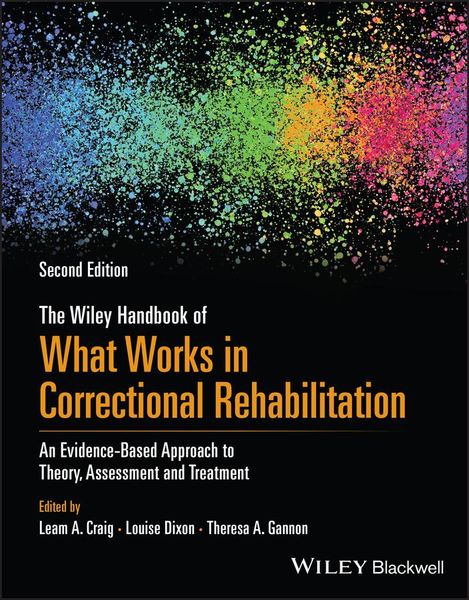
The Wiley Handbook of What Works in Correctional Rehabilitation An Evidence-Based Approach to Theory, Assessment and Treatment
-
- Taschenbuch ausgewählt
- eBook
-
Sprache:Englisch
69,99 €
inkl. gesetzl. MwSt.,
Beschreibung
Produktdetails
Einband
Taschenbuch
Erscheinungsdatum
21.10.2024
Herausgeber
Craig Leam A. + weitereVerlag
WileySeitenzahl
480
Maße (L/B/H)
27,4/21,6/2,4 cm
Gewicht
898 g
Auflage
2nd edition
Sprache
Englisch
ISBN
978-1-119-89304-2
Theory, assessment, and treatment strategies for offenders across forensic populations, with practical examples and discussion of often overlooked cultural considerations
The Wiley Handbook of What Works in the Rehabilitation of People Who Have Offended comprehensively outlines effective rehabilitation strategies for offenders while acknowledging the challenges in implementation and discussing ethical considerations, potential biases, and the need for ongoing evaluation. The book introduces the current state of effective practices, outlines up-to-date risk assessment processes for various crime types, investigates effective treatments for diverse forensic populations, explores treatments for those in prison and mental health settings, and examines the often-overlooked cultural factors influencing rehabilitation efforts.
This Second Edition, expanded from 25 to 32 chapters, has been written by leading researchers, seasoned professionals, and academics, providing a wealth of expertise and diverse perspectives. Each chapter offers a well-researched and balanced review of existing literature, laying a solid foundation for comprehending the effectiveness of various rehabilitation approaches. Practical examples enhance the content's applicability, emphasizing evidence-based practices crucial for accountability and effectiveness in the criminal justice system.
Some of the sample topics discussed in The Wiley Handbook of What Works in the Rehabilitation of People Who Have Offended include:
- Risk, Need, and Responsivity principles used in the assessment and triage of offenders and evidence for the Good Lives Model in supporting rehabilitation and desistance from offending
- Recidivism risk in people convicted of intimate partner violence and treatment of aggressive and problematic adjudicated youth in a secure psychiatric setting
- Treatment of persons convicted of sexual offenses in the community, including online offending
- Strategies to prevent and reduce gang involvement and rehabilitation of intellectually disabled individuals who have harmful sexual behavior
Offering a valuable evidence-based coverage in the pursuit of effective rehabilitation strategies, the Second Edition of The Wiley Handbook of What Works in the Rehabilitation of People Who Have Offended is an indispensable resource for anyone involved in the criminal justice system, including professionals, policymakers, researchers, and students.
Ein neues Kapitel für Ihre Bücher
Ein neues Kapitel für Ihre Bücher
Schenken Sie Ihren alten Schätzen ein zweites Leben und erhalten Sie dafür eine Thalia Geschenkkarte.
Noch keine Bewertungen vorhanden
Verfassen Sie die erste Bewertung zu diesem Artikel
Helfen Sie anderen Kundinnen und Kunden durch Ihre Meinung.
Kurze Frage zu unserer Seite
Vielen Dank für Ihr Feedback
Wir nutzen Ihr Feedback, um unsere Produktseiten zu verbessern. Bitte haben Sie Verständnis, dass wir Ihnen keine Rückmeldung geben können. Falls Sie Kontakt mit uns aufnehmen möchten, können Sie sich aber gerne an unseren Kund*innenservice wenden.
zum Kundenservice