Beschreibung
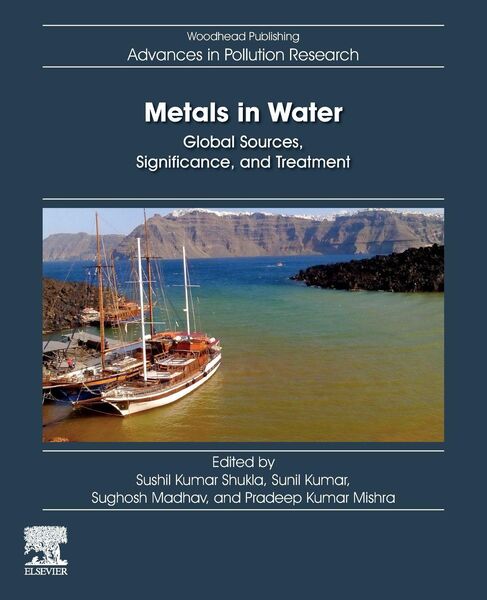
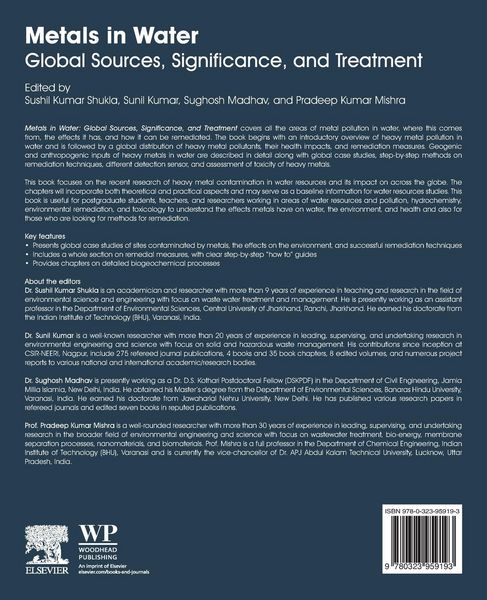
Metals in Water: Global Sources, Significance, and Treatment covers metal pollution in water, where they come from, their effects, and remediation processes. Sections overview heavy metals pollution, including their global health impacts and remediation measures. Geogenic and anthropogenic input of heavy metals in water are described, along with global case studies, step-by-step methods on remediation techniques, different detection sensors, and assessment practices of toxicity of heavy metals. The book focuses on recent research surrounding heavy metals' contamination in water resources and its impact across the globe. Chapters incorporate both theoretical and practical aspects and serve as baseline information for water resources studies.
This book is useful for postgraduate students, teachers and researchers working in areas of water resources and pollution, hydrochemistry, environmental remediation and toxicology who are looking to understand the affects metals have on water, the environment and health, and also those looking for methods for remediation.
Portrait
Dr. Sushil Kumar Shukla is an academician and researcher with more than 8 years of experience in teaching and research in the field of Environmental science and engineering with a focus on wastewater treatment and management. He is presently working as Assistant Professor in Department of Transport Science and Technology, Central University of Jharkhand, Ranchi, Jharkhand. He earned his doctorate from the Indian Institute of Technology, Banaras Hindu University, UP, India. The area of his doctoral research is the "Treatment of anaerobically digested distillery effluent. Dr. Shukla was awarded with the prestigious fellowship of UGC Research Fellowship for science meritorious student (UGC-RFSMS Fellowship). He has published various research papers and book chapters in the field of water and wastewater treatment, bioremediation, phytoremediation etc.
Dr. Sunil Kumar is a well-rounded researcher with more than 20 years of experience in leading, supervising and undertaking research in the broader field of Environmental Engineering and Science with focus on Solid and Hazardous Waste Management. He has contributed extensively to these fields and has h-index of 30 and i10-index of 43 (Google scholar); highly impressive for a non-academic researcher from India. His contributions since inception at CSIR-NEERI in 200 include 130 refereed journal publications, 04 books and 25 book chapters, 08 Edited volumes and numerous project reports to various governmental and private, local and International academic /research bodies. The list of his collaborations is long and includes key Indian universities, such as IIT Kharagpur, IIT Delhi and IIT Mumbai and prestigious regional institutes, such as Asian Institute of Technology (AIT) and Kasetsart University in Bangkok, Hong Baptist University as well as universities in US (Columbia, Texas A&M) and Europe (UN University and University of Uppsala).
Dr. Sughosh Madhav works as a Postdoctoral Fellow at the Department of Civil Engineering, Jamia Millia Islamia, New Delhi, India. He has obtained his master's degree from the Department of Environmental Science Banaras Hindu University, Varanasi, India. He earned his doctorate from Jawaharlal Nehru University, New Delhi, India. The area of his doctoral research is the environmental impact of textile effluents on groundwater and soil quality. He has published various research papers and book chapters in environmental geochemistry, water pollution, and wastewater remediation. He also edited 4 books related to water resource management in Elsevier, Springer, and Wiley publications.
Prof. Pradeep Kumar Mishra is a well-rounded researcher with more than 30 years of experience in leading, supervising, and undertaking research in the broader field of Environmental Engineering and Science with a focus on Wastewater Treatment (Bioremediation and Adsorption), Bio-energy, Nanomaterials, Membrane Separation Processes and Biomaterials. Prof Mishra is a full professor in the Department of Chemical Engineering, Indian Institute of Technology (BHU), Varanasi, and currently Vice Chancellor of Jharkhand Technical University, Jharkhand, India. He has published more than 60 research papers in reputed journals, 25 book chapters, and edited more than 15 books in various publications. He is an editor and reviewer of various journals. He also has 6 patents. He has earned various reputed awards and is a member of numerous reputed academic societies.