















































KI-Beratung Beta

Gutscheinbedingungen

Gültig bis 30.11.2026 | Gültig für nicht preisgebundene fremdsprachige Bücher | Einzelne Artikel können ausgeschlossen sein | Online auf thalia.de und in der Thalia App einlösbar | Click & Collect nur mit Online-Zahlung (Paypal/Kreditkarte) vorab | Nicht kombinierbar mit anderen Gutscheinen oder Preisaktionen | Nur einmal pro Einkauf einlösbar | Gutschein wird auf max. 500€ Bestellwert angerechnet | Keine Barauszahlung | Nicht gültig für Versandkosten und Services

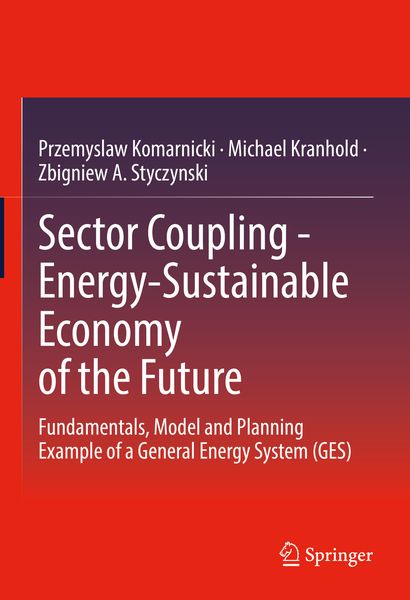
Produktbild: Sector Coupling - Energy-Sustainable Economy of the Future
- 12%

Sector Coupling - Energy-Sustainable Economy of the Future Fundamentals, Model and Planning Example of a General Energy System (GES)

12% sparen

121,99 € UVP 139,09 €

inkl. gesetzl. MwSt., Versandkostenfrei


Beschreibung

The core of the book is the presentation of a systematic, continuous and logical chain into the coupled total energy system (GES) of the future, which will lead to the fully sustainable use of renewable energies. Thus, unified models are proposed that are applicable to the subsystems/sectors throughout...

Beschreibung

The core of the book is the presentation of a systematic, continuous and logical chain into the coupled total energy system (GES) of the future, which will lead to the fully sustainable use of renewable energies. Thus, unified models are proposed that are applicable to the subsystems/sectors throughout and allow the optimization of the entire GES. Appropriate algorithms and approaches are illustrated with numerous examples. This is embedded in the context of efforts to fully integrate energy generated from renewable sources into the GES. The overarching role of IT systems for secure operations has been emphasized in the book. The relevance of the correct mapping of technologies to use cases is elaborated and necessary steps derived from this are considered technically and organizationally (standardization). Special attention is paid to the didactic presentation of the material in order to present this new, difficult and complex problem "as simple as possible, but not simpler" [according to Einstein].

Produktdetails

Einband

Gebundene Ausgabe

Erscheinungsdatum

30.11.2022

Abbildungen

XVIII, 209 p. 1 illus.

Verlag Springer Fachmedien Wiesbaden GmbH

Produktdetails

Einband

Gebundene Ausgabe

Erscheinungsdatum

30.11.2022

Abbildungen

XVIII, 209 p. 1 illus.

Verlag Springer Fachmedien Wiesbaden GmbH
Seitenzahl

209

Maße (L/B/H)

24,6/17,3/1,8 cm

Gewicht

509 g

Auflage

1st ed. 2023

Sprache

Englisch

ISBN

978-3-658-38110-3

Herstelleradresse

Springer-Verlag GmbH
Europaplatz 3
69115 Heidelberg
DE

Email: ProductSafety@springernature.com

Ein neues Kapitel für Ihre Bücher

Ein neues Kapitel für Ihre Bücher

Schenken Sie Ihren alten Schätzen ein zweites Leben und erhalten Sie dafür eine Thalia Geschenkkarte.

Jetzt verkaufen
Jetzt verkaufen

Noch keine Bewertungen vorhanden

Verfassen Sie die erste Bewertung zu diesem Artikel

Helfen Sie anderen Kundinnen und Kunden durch Ihre Meinung.

Kundinnen und Kunden meinen

Bewertungen (0)

  • Produktbild: Sector Coupling - Energy-Sustainable Economy of the Future

  • Climate policy goals of sustainable energy supply.- Why do we need an overall energy system.- Energy consumption and CO2 emissions.- Sector coupling.- Paradigm shift caused by renewable generation.- Potentials of renewable generation.- Methodology and model construction for sector coupling.- Modeling of an overall energy system.- Hub model.- Temporal resolution of energy flows.- Substitution of energy yields.- Optimization of an overall energy system.- Energy use sectors and their energy consumption.- Energy supply and the role of hydrogen.- Net-Zero-Factory.- Electric mobility.- Optimization of an overall energy system. Optimization of an overall energy system.- Optimization of an overall energy system.- Energy use sectors and their energy consumption.- Energy supply as well as the role of hydrogen.- Net-Zero-Factory.- Electromobility.- Methodology of modelling the energy hub components.- Modelling of generation sectors.- Flexibility of an overall energy system.- Role of information and communication technology.- Perspectives of the overall energy system.