
















































KI-Beratung Beta

Gutscheinbedingungen

Gültig bis 30.11.2026 | Gültig für nicht preisgebundene fremdsprachige Bücher | Einzelne Artikel können ausgeschlossen sein | Online auf thalia.de und in der Thalia App einlösbar | Click & Collect nur mit Online-Zahlung (Paypal/Kreditkarte) vorab | Nicht kombinierbar mit anderen Gutscheinen oder Preisaktionen | Nur einmal pro Einkauf einlösbar | Gutschein wird auf max. 500€ Bestellwert angerechnet | Keine Barauszahlung | Nicht gültig für Versandkosten und Services

  • Produktbild: Interurban Knowledge Exchange in Southern and Eastern Europe, 1870-1950
  • Produktbild: Interurban Knowledge Exchange in Southern and Eastern Europe, 1870-1950

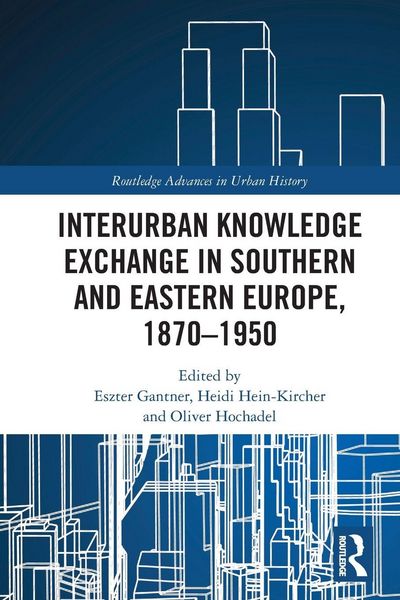
Interurban Knowledge Exchange in Southern and Eastern Europe, 1870-1950

74,99 €

inkl. gesetzl. MwSt., Versandkostenfrei


Beschreibung

Around 1900 cities in Southern and Eastern Europe were persistently labeled "backward" and "delayed." Allegedly, they had no alternative but to follow the role model of the metropolises, of London, Paris or Vienna. This edited volume fundamentally questions this assumption. It shows that cities as diverse...

Beschreibung

Around 1900 cities in Southern and Eastern Europe were persistently labeled "backward" and "delayed." Allegedly, they had no alternative but to follow the role model of the metropolises, of London, Paris or Vienna. This edited volume fundamentally questions this assumption. It shows that cities as diverse as Barcelona, Berdyansk, Budapest, Lviv, Milan, Moscow, Prague, Warsaw and Zagreb pursued their own agendas of modernization. In order to solve their pressing problems with respect to urban planning and public health, they searched for best practices abroad. The solutions they gleaned from other cities were eclectic to fit the specific needs of a given urban space and were thus often innovative. This applied urban knowledge was generated through interurban networks and multi-directional exchanges. Yet in the period around 1900, this transnational municipalism often clashed with the forging of urban and national identities, highlighting the tensions between the universal and the local.

This interurban perspective helps to overcome nationalist perspectives in historiography as well as outdated notions of "center and periphery." This volume will appeal to scholars from a large number of disciplines, including urban historians, historians of Eastern and Southern Europe, historians of science and medicine, and scholars interested in transnational connections.

Produktdetails

Einband

Taschenbuch

Erscheinungsdatum

01.08.2022

Abbildungen

27 SW-Abb., 27 SW-Fotos

Herausgeber Eszter Gantner + weitere

Produktdetails

Einband

Taschenbuch

Erscheinungsdatum

01.08.2022

Abbildungen

27 SW-Abb., 27 SW-Fotos

Herausgeber
Verlag Taylor & Francis
Seitenzahl

332

Maße (L/B/H)

22,9/15,2/1,8 cm

Gewicht

482 g

Sprache

Englisch

ISBN

978-0-367-60958-0

Herstelleradresse

Produktsicherheitsverantwortliche/r
Europaallee 1
36244 Bad Hersfeld
DE

Email: gpsr@libri.de

Ein neues Kapitel für Ihre Bücher

Ein neues Kapitel für Ihre Bücher

Schenken Sie Ihren alten Schätzen ein zweites Leben und erhalten Sie dafür eine Thalia Geschenkkarte.

Jetzt verkaufen
Jetzt verkaufen

Noch keine Bewertungen vorhanden

Verfassen Sie die erste Bewertung zu diesem Artikel

Helfen Sie anderen Kundinnen und Kunden durch Ihre Meinung.

Kundinnen und Kunden meinen

Bewertungen (0)

Die Leseprobe wird geladen.
  • Produktbild: Interurban Knowledge Exchange in Southern and Eastern Europe, 1870-1950
  • Produktbild: Interurban Knowledge Exchange in Southern and Eastern Europe, 1870-1950
  • Introduction: Searching for Best Practices in Interurban Networks Part I: Building a Modern City: Networks in Urban Planning 1. The Ghetto and the Castle: Modern Urban Design and Knowledge Transfer in Historic Prague Before and After 1918 2. In Search of Best Practices Within the Confines of the Russian Empire: The Port City of Berdyansk 3. Travelling Architecture: Géza Maróti's Art Between the Regional and the Global 4. The Exchange of Urban Planning Theory and Practice Along the Austro-Hungarian Periphery: Zagreb as a Case Study Part II: Aiming at the Healthy City: Experiments with Best Practices 5. Learning from Smaller Towns: Moscow in the International Urban Networks, 1870-1910 6. Best Practices from a Polish Perspective: Improving Health Conditions in Lviv Around 1900 7. Improving Health in a Mediterranean City: Barcelona and the European Network (1931-1937) Part III: The New Urban Space: Experiences and Institutions 8. A Discourse of Modernity?: Warsaw's Press on Urban Poverty (1880s-1910s) 9. Going East: Gustave Loisel and the Networks of Exchange Between Zoological Gardens Before 1914 10. Architectural Conversations Across Europe's Borderlands: Transnational Exchanges Between Barcelona and Bucharest in the 1920s 11. In the Driver's Seat of Modern Urbanization: A Case Study of Automotive Development in the Emerging City of Barcelona, c.1900-1950 12. Crossing the Iron Curtain: Milan's Museum of Technology and Transnational Exchanges Before and After World War II. Afterword: Goodbye to Center and Periphery