















































KI-Beratung Beta

Produktbild: Women in the Ottoman Empire

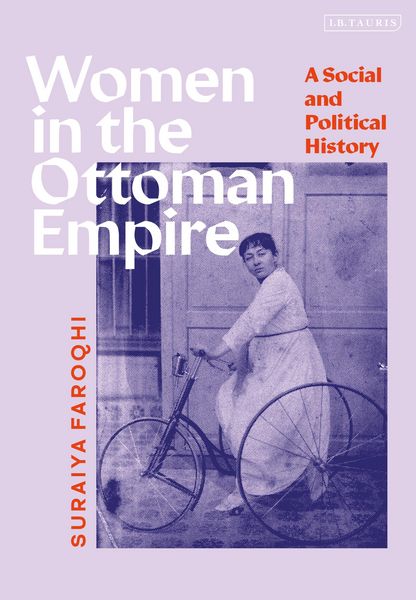
Women in the Ottoman Empire A Social and Political History

29,99 €

inkl. gesetzl. MwSt., Versandkostenfrei


Beschreibung

It is an often ignored but fundamental fact that in the Ottoman world, as in most empires, there were 'first-class' and 'second class' subjects. Among the townspeople, peasants and nomads subject to the sultans, who might be Muslims or non-Muslims, adult Muslim males were first-class subjects and all...

Beschreibung

It is an often ignored but fundamental fact that in the Ottoman world, as in most empires, there were 'first-class' and 'second class' subjects. Among the townspeople, peasants and nomads subject to the sultans, who might be Muslims or non-Muslims, adult Muslim males were first-class subjects and all others, including Muslim boys and women, were of the second class. As for the female members of the elite, while less privileged than the males, in some respects their life chances might be better than those of ordinary women. Even so, they shared the risks of pregnancy, childbirth and epidemic diseases with townswomen of the subject class and to a certain extent, with village women as well. Thus, the study of Ottoman women is indispensable for understanding Ottoman society in general.
In this book, the agency of women from a diverse range of class, religious, ethnic, and geographic backgrounds is, for the first time, woven into the social and political history of the Ottoman Empire, from the early-modern period to its dissolution in 1918. Suraiya Faroqhi charts the history of elite and non-elite women in thematic chapters concentrating on urban women, family life, work, slavery, education and survival in times of war. In the process the book introduces readers to the key sources, primary and secondary, necessary to reconstruct and understand the ways that females navigated social, legal and economic constraints, through the central prisms of family relations, work and charity. The first introductory social history of women in the Ottoman Empire, and including a timeline and extended further reading section, this book will be essential reading for scholars and students of Ottoman history and the history of women in the Middle East.

Produktdetails

Einband

Taschenbuch

Erscheinungsdatum

23.02.2023

Abbildungen

15 bw illus

Verlag Tauris, I.B.

Produktdetails

Einband

Taschenbuch

Erscheinungsdatum

23.02.2023

Abbildungen

15 bw illus

Verlag Tauris, I.B.
Seitenzahl

328

Maße (L/B/H)

24,1/16,9/2 cm

Gewicht

584 g

Sprache

Englisch

ISBN

978-0-7556-3826-0

Herstelleradresse

Libri GmbH
Europaallee 1
36244 Bad Hersfeld
DE

Email: gpsr@libri.de

Ein neues Kapitel für Ihre Bücher

Ein neues Kapitel für Ihre Bücher

Schenken Sie Ihren alten Schätzen ein zweites Leben und erhalten Sie dafür eine Thalia Geschenkkarte.

Jetzt verkaufen
Jetzt verkaufen

Noch keine Bewertungen vorhanden

Verfassen Sie die erste Bewertung zu diesem Artikel

Helfen Sie anderen Kundinnen und Kunden durch Ihre Meinung.

Kundinnen und Kunden meinen

Bewertungen (0)

Die Leseprobe wird geladen.
  • Produktbild: Women in the Ottoman Empire
  • List of Figures
    Acknowledgements
    A note on spelling and transliteration
    Introduction
    Prologue: A conspectus of Ottoman history

    1. Ottoman women, Ottoman history: Coping with a changing world

    Part I (1500s to about 1700)
    2. The legal framework of family life
    3. Dependent on work, investments and charity
    4. Exceptionally talented, exceptionally active: women of distinction

    Part II (about 1700-1870s)
    5. Ottoman diversity: Female agency and survival in Ottoman Syria and Egypt
    6. Ottoman diversity: Coping with relatives, the state and dependent capitalism

    Part III (1870-1918)
    7. Female teachers, journalists and actors: education as a source of survival skills
    8. Before 1912: Making a living through family relations, work and charity - and occasionally turning to crime
    9. In profound distress:Struggling to survive the disintegration of the empire (1912-18)
    Conclusion
    Suggestions for further reading: A bibliographical essay
    Notes
    Timeline
    Glossary