















































KI-Beratung Beta

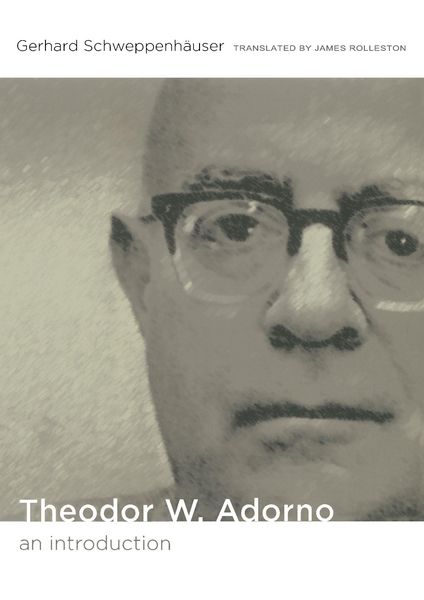
Produktbild: Theodor W. Adorno

Theodor W. Adorno An Introduction

195,99 €

inkl. gesetzl. MwSt.

Beschreibung

Theodor W. Adorno (1903-1969) was one of the twentieth century's most important thinkers. In light of two pivotal developments-the rise of fascism, which culminated in the Holocaust, and the standardization of popular culture as a commodity indispensable to contemporary capitalism-Adorno sought to evaluate...

Beschreibung

Theodor W. Adorno (1903-1969) was one of the twentieth century's most important thinkers. In light of two pivotal developments-the rise of fascism, which culminated in the Holocaust, and the standardization of popular culture as a commodity indispensable to contemporary capitalism-Adorno sought to evaluate and synthesize the essential insights of Western philosophy by revisiting the ethical and sociological arguments of his predecessors: Kant, Nietzsche, Hegel, and Marx. This book, first published in Germany in 1996, provides a succinct introduction to Adorno's challenging and far-reaching thought. Gerhard Schweppenhauser, a leading authority on the Frankfurt School of critical theory, explains Adorno's epistemology, social and political philosophy, aesthetics, and theory of culture.After providing a brief overview of Adorno's life, Schweppenhauser turns to the theorist's core philosophical concepts, including post-Kantian critique, determinate negation, and the primacy of the object, as well as his view of the Enlightenment as a code for world domination, his diagnosis of modern mass culture as a program of social control, and his understanding of modernist aesthetics as a challenge to conceive an alternative politics. Along the way, Schweppenhauser illuminates the works widely considered Adorno's most important achievements: Minima Moralia, Dialectic of Enlightenment (co-authored with Horkheimer), and Negative Dialectics. Adorno wrote much of the first two of these during his years in California (1938-49), where he lived near Arnold Schoenberg and Thomas Mann, whom he assisted with the musical aesthetics at the center of Mann's novel Doctor Faustus.

Produktdetails

Format

PDF

Kopierschutz

Ja

Family Sharing

Ja

Text-to-Speech

Nein

Produktdetails

Format

PDF

Format

eBooks im PDF-Format haben eine festgelegte Seitengröße und eignen sich daher nur bedingt zum Lesen auf einem tolino eReader oder Smartphone. Für den vollen Lesegenuss empfehlen wir Ihnen bei PDF-eBooks die Verwendung eines Tablets oder Computers.

Kopierschutz

Ja

Kopierschutz

Zum Lesen dieses eBooks auf Geräten der tolino Familie sowie auf sonstigen eReadern und am PC benötigen Sie eine Adobe ID. Weitere Hinweise zum Lesen von kopiergeschützten eBooks finden Sie unter Hilfe/Downloads.

Family Sharing

Ja

Family Sharing

Mit Family Sharing können Sie eBooks innerhalb Ihrer Familie (max. sechs Mitglieder im gleichen Haushalt) teilen. Sie entscheiden selbst, welches Buch Sie mit welchem Familienmitglied teilen möchten. Auch das parallele Lesen durch verschiedene Familienmitglieder ist durch Family Sharing möglich. Um eBooks zu teilen oder geteilt zu bekommen, muss jedes Familienmitglied ein Konto bei Thalia oder einem anderen tolino-Buchhändler haben. Weitere Informationen finden Sie unter Hilfe/Family-Sharing.

Text-to-Speech

Nein

Text-to-Speech

Bedeutet Ihnen Stimme mehr als Text? Mit der Funktion Text-to-Speech können Sie sich im tolino webReader und in der aktuellen Thalia – Lesen & Hören App das eBook vorlesen lassen. Weitere Informationen finden Sie unter Hilfe/Text-to-Speech.

Erscheinungsdatum

06.04.2009

Verlag Duke University Press
Seitenzahl

198 (Printausgabe)

Dateigröße

779 KB

Übersetzt von

Rolleston James Rolleston

Sprache

Englisch

EAN

9780822390725

Barrierefreiheit
  • keine Information zur Barrierefreiheit bekannt

Noch keine Bewertungen vorhanden

Verfassen Sie die erste Bewertung zu diesem Artikel

Helfen Sie anderen Kundinnen und Kunden durch Ihre Meinung.

Kundinnen und Kunden meinen

Bewertungen (0)

Weitere Artikel finden Sie in

Die Leseprobe wird geladen.
  • Produktbild: Theodor W. Adorno