















































KI-Beratung Beta

Gutscheinbedingungen

Gültig bis 11.11.2026 | Gültig für Spielzeug, Filme, Musik, Software, Games, Geschenke & Trends, Schreibwaren, Hörbücher und Hörbuch-Downloads (außer Abo & Shelfies), gebrauchte Bücher, nicht preisgebundene Bücher und Kalender | Einlösbar unter thalia.de und in der Thalia App | Click & Collect nur mit Online-Zahlung (Paypal/Kreditkarte) vorab | Einzelne Artikel können ausgeschlossen sein | Nicht kombinierbar mit anderen Gutscheinen oder Preisaktionen | Nur einmal pro Einkauf einlösbar | Gutschein wird auf max. 500€ Bestellwert angerechnet | Keine Barauszahlung | Digitale Hörbücher nur für Android  | Nicht gültig für preisgebundene Artikel (aufgrund der Buchpreisbindung sind Gutscheine nicht auf Bücher, eBooks, Presse einlösbar), tolino eReader & Zubehör, Abonnements & Flatrates, Geschenkkarten, Versandkosten und Services

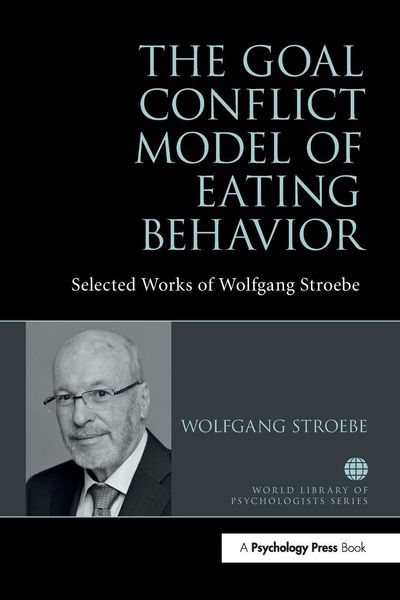
Produktbild: The Goal Conflict Model of Eating Behavior

The Goal Conflict Model of Eating Behavior Selected Works of Wolfgang Stroebe

59,99 €

inkl. gesetzl. MwSt., Versandkostenfrei


Beschreibung

In the World Library of Psychologists series, international experts present career-long collections of what they judge to be their finest pieces - extracts from books, key articles, salient research findings, and their major practical theoretical contributions.

In this volume:

Overweight and obesity rates...

Beschreibung

In the World Library of Psychologists series, international experts present career-long collections of what they judge to be their finest pieces - extracts from books, key articles, salient research findings, and their major practical theoretical contributions.

In this volume:

Overweight and obesity rates have increased dramatically in most industrialized countries, even though more and more people are chronically dieting. Dieters can manage to lose substantial amounts of weight while actively dieting, but most regain it within a few years. So why do most chronic dieters have such difficulty controlling their weight and why is there only a small minority of successful dieters?

To address these questions, Stroebe developed the goal conflict model of eating behavior, a social cognitive theory that attributes the difficulty of chronic dieters to a conflict between two incompatible goals: eating enjoyment and weight control. Although chronic dieters are motivated to pursue their weight control goal, most fail in food-rich environments: Surrounded by palatable food cues that activate thoughts of eating enjoyment, incompatible weight control thoughts are inhibited and weight control intentions are "forgotten". For successful dieters - probably due to past success in exerting self-control - tasty high-calorie food has become associated with weight control thoughts. For them, exposure to palatable food makes weight control thoughts more accessible, enabling them to control their body weight in food-rich environments.

This book contains the key articles of a research program by Stroebe and collaborators to assess the validity of this theory. They succeeded in tracing the processes that lead from temptation to a breakdown of dieting intentions. They also demonstrated that these theoretical principles can be used to develop effective weight loss interventions. The book should be of value for all researcgers, students and clinicians involved in obesity research and treatment.

Produktdetails

Einband

Taschenbuch

Erscheinungsdatum

21.01.2023

Verlag Taylor & Francis
Seitenzahl

256

Produktdetails

Einband

Taschenbuch

Erscheinungsdatum

21.01.2023

Verlag Taylor & Francis
Seitenzahl

256

Maße (L/B/H)

23,4/15,6/1,4 cm

Gewicht

363 g

Sprache

Englisch

ISBN

978-1-03-247650-6

Herstelleradresse

Libri GmbH
Europaallee 1
36244 Bad Hersfeld
DE

Email: gpsr@libri.de

Ein neues Kapitel für Ihre Bücher

Ein neues Kapitel für Ihre Bücher

Schenken Sie Ihren alten Schätzen ein zweites Leben und erhalten Sie dafür eine Thalia Geschenkkarte.

Jetzt verkaufen
Jetzt verkaufen

Noch keine Bewertungen vorhanden

Verfassen Sie die erste Bewertung zu diesem Artikel

Helfen Sie anderen Kundinnen und Kunden durch Ihre Meinung.

Kundinnen und Kunden meinen

Bewertungen (0)

Die Leseprobe wird geladen.
  • Produktbild: The Goal Conflict Model of Eating Behavior
  • Acknowledgments List of Works Reprinted Chapter 1. Introduction From Social Psychology to Eating Research: A Personal Journey W. Stroebe Chapter 2. The Goal-Conflict Model of Eating Why Dieters Fail: Testing the Goal Conflict Model of Eating W. Stroebe, W. Mensink, H. Aarts, H. Schut, & A. Kruglanski Pleasure in the Mind: Restrained Eating and Spontaneous Hedonic Thoughts about Food E. Papies, W. Stroebe, & H. Aarts The Allure of Forbidden Food: On the Role of Attention in Self-Regulation E. Papies, W. Stroebe, & H. Aarts As Pleasure Unfolds: Hedonic Responses to Tempting Food W. Hoffman, G. van Koningsbruggen, W. Stroebe, S. Ramanathan, & H. Aarts Chapter 3. Mechanism of Dieting Success Healthy Cognition: Processes of Self-Regulatory Success in Restrained Eating E. Papies, W. Stroebe, & H. Aarts The Rise and Fall of Self-Control: Temptation-Elicited Goal Activation and Effortful Goal-Directed Behavior G. van Koningsbruggen, W. Stroebe, & H. Aarts Chapter 4. Developing Interventions Implementation Intentions as Goal Primes: Boosting Self-Control in Tempting Environments W. Stroebe, G. van Koningsbruggen, E. Papies, & H. Aarts Targeting Impulisve Processes of Eating Behavior via the Internet. Effects on Body Weight H. Veling, G. van Koningsbruggen, H. Aarts, & W. Stroebe Comparing Two Psychological Interventions in Reducing Impulsive Proceses of Eating Behaviour: Effects on Self-Selected Portion Size G. van Koningsbruggen, H. Veling, W. Stroebe, & H. Aarts Chapter 5. Conclusions: Putting the Pieces Together Why Most Dieters Fail but Some Succeed: A Goal Conflict Model of Eating Behavior W. Stroebe, G. van Koningsbruggen, E. Papies, & H. Aarts Index