















































KI-Beratung Beta

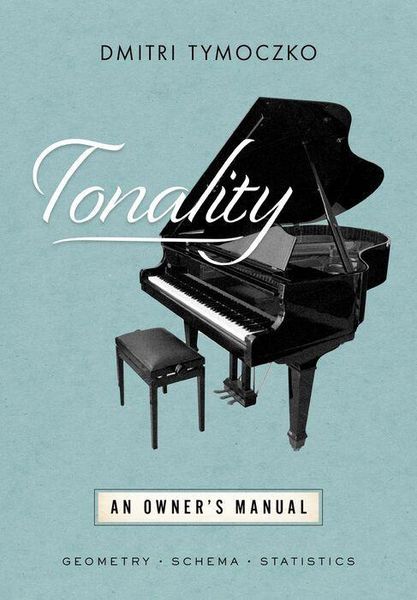
Produktbild: Tonality

Tonality An Owner's Manual

47,99 €

inkl. gesetzl. MwSt., Versandkostenfrei


Produktdetails

Einband

Gebundene Ausgabe

Erscheinungsdatum

03.11.2023

Abbildungen

698

Verlag Oxford Academic

Produktdetails

Einband

Gebundene Ausgabe

Erscheinungsdatum

03.11.2023

Abbildungen

698

Verlag Oxford Academic
Seitenzahl

632

Maße (L/B/H)

25,9/18,6/4 cm

Gewicht

1272 g

Sprache

Englisch

ISBN

978-0-19-757710-3

Herstelleradresse

Libri GmbH
Europaallee 1
36244 Bad Hersfeld
DE

Email: gpsr@libri.de

Ein neues Kapitel für Ihre Bücher

Ein neues Kapitel für Ihre Bücher

Schenken Sie Ihren alten Schätzen ein zweites Leben und erhalten Sie dafür eine Thalia Geschenkkarte.

Jetzt verkaufen
Jetzt verkaufen

Noch keine Bewertungen vorhanden

Verfassen Sie die erste Bewertung zu diesem Artikel

Helfen Sie anderen Kundinnen und Kunden durch Ihre Meinung.

Kundinnen und Kunden meinen

Bewertungen (0)

Die Leseprobe wird geladen.
  • Produktbild: Tonality
    • Preface and Acknowledgements
    • 1. Implicit musical knowledge
    • 1. Gesualdo's trick
    • 2. The quadruple hierarchy
    • 3. Philosophy
    • 4. Statistics
    • 5. Schema
    • 6. Outline
    • Prelude: transposition along a collection
    • 2. Rock logic
    • 1. A melodic principle
    • 2. A harmonic principle
    • 3. A first chord-loop family
    • 4. Two more families
    • 5. Shepard-tone passacaglias
    • 6. Minor triads and other trichords
    • 7. A fourth family
    • 8. Other modalities
    • 9. Function and retrofunction
    • 10. Continuity or reinvention?
    • Prelude: the Tinctoris transform
    • 3. Line and configuration
    • 1. The imperfect system
    • 2. Voice exchanges
    • 3. Other intervals
    • 4. The circle of diatonic triads
    • 5. Voice exchanges and multiple chord types
    • 6. Four-voice triadic counterpoint
    • 7. Counterpoint within the chord
    • 8. Seventh chords
    • 9. Harmony and counterpoint
    • Prelude: sequence and function
    • 4. Repetition
    • 1. Repetition reimagined
    • 2. Repeating contrapuntal patterns
    • 3. The geometry of two-voice sequences
    • 4. Three voices and the circle of triads
    • 5. Three voices arranged 2+1
    • 6. Four voices
    • 7. Contrary-motion sequences
    • 8. Melodic sequences and near sequences
    • 9. Near sequences
    • 10. Sequences as reductional targets
    • Prelude: three varieties of analytical reduction
    • 5. Nonharmonic tones
    • 1. The first practice and the SNAP system
    • 2. Schoenberg's critique
    • 3. Monteverdi's "Ohimè"
    • 4. The standardized second practice
    • 5. A loophole
    • 6. After nonharmonicity
    • Prelude: functional and scale-degree analysis
    • 6. The origins of functional harmony
    • 1. The logical structure of protofunctionality
    • 2. Similarities and differences
    • 3. Origin and meaning
    • 4. Harmony and polyphony
    • 5. The Pope Marcellus Kyrie
    • 6. A broader perspective
    • 7. "I Cannot Follow"
    • Prelude: could the Martians understand our music?
    • 7. Functional progressions
    • 1. A theory of harmonic cycles
    • 2. A more principled view
    • 3. Rameau and Bach
    • 4. Functional melody, functional harmony
    • 5. Fauxbourdon and linear idioms
    • 6. Sequences
    • 7. Bach the dualist
    • Prelude: chromatic or diatonic?
    • 8. Modulation
    • 1. Two models of key distance
    • 2. Enharmonicism and loops in scale space
    • 3. Minor keys
    • 4. Modulatory schemas
    • 5. Up and down the ladder
    • 6. Modal homogenization and scalar voice leading
    • 7. Generalized set theory
    • Prelude: hearing and hearing-as
    • 9. Melodic strategies
    • 1. Strategy and reduction
    • 2. Two models of the phrase
    • 3. Chopin and the Prime Directive
    • 4. An expanded vocabulary of melodic templates
    • 5. Simple harmonic hierarchy
    • 6. The four-part phrase
    • 7. Grouping, melody, harmony
    • 8. Beyond the phrase: hierarchy at the level of the piece
    • Prelude: why Beethoven?
    • 10. Beethoven theorist
    • 1. Meet the Ludwig
    • 2. From schema to flow
    • 3. The Tempest
    • 4. The Fifth Symphony
    • 5. The "Pastorale" sonata, op. 28
    • 6. Schubert's Quartettsatz
    • 7. The prelude to Lohengrin
    • 11. Conclusion
    • 12. Appendix 1: Fundamentals
    • 13. Appendix 2: Deriving the spiral diagrams
    • 14. Appendix 3: From sequence to transformation
    • 15. Appendix 4: Music theory and corpus analysis
    • Terms and Abbreviations
    • Bibliography