Beschreibung
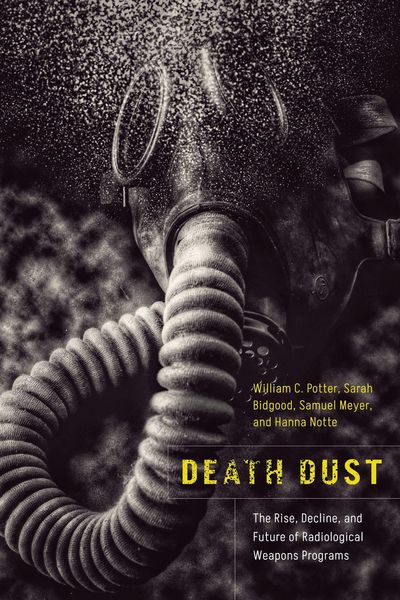
The postwar period saw increased interest in the idea of relatively easy-to-manufacture but devastatingly lethal radiological munitions whose use would not discriminate between civilian and military targets. Death Dust explores the largely unknown history of the development of radiological weapons (RW)-weapons designed to disperse radioactive material without a nuclear detonation-through a series of comparative case studies across the United States, the Soviet Union, the United Kingdom, Iraq, and Egypt. The authors illuminate the historical drivers of and impediments to radiological weapons innovation. They also examine how new, dire geopolitical events-such as the war in Ukraine-could encourage other states to pursue RW and analyze the impact of the spread of such weapons on nuclear deterrence and the nonproliferation regime. Death Dust presents practical, necessary steps to reduce the likelihood of a resurgence of interest in and pursuit of radiological weapons by state actors.
Rezension
"In this meticulously researched history of states pursuing the dirty bomb, the authors show how countries like the US, Russia, and the UK concluded that it is a weapon of mass disruption, not mass destruction, and not worth pursuing. They present excellent suggestions how to keep it that way. A great read."-Siegfried S. Hecker, author of Hinge Points: An Inside Look at North Korea's Nuclear Program "Sherlock Holmes solved a mystery by focusing on what didn't happen: a dog that didn't bark. The authors of this rigorously researched volume similarly explain why a widely expected event didn't happen-why several countries developed and tested radiological weapons but never deployed or used them, even though they are relatively cheap, easy to make, and assumed to have devastating effects. Their meticulous and highly readable analysis not only sheds light on a long-dormant mystery of the nuclear age, it also provides valuable insights into whether and under what circumstances states may again pursue radiological weapons and offers practical recommendations for mitigating the dangers of their possible future development. With evidence that interest in radiation dispersal as a weapon of war may be returning-for example, Russia's Poseidon "super torpedo"-Death Dust is especially timely and should be read by nuclear policymakers as well as members of the general public concerned about the nuclear threat."-Robert Einhorn, Brookings Institution, former Assistant Secretary of State for Nonproliferation "This exceptional account of the development of radiological weapons-'death dust'-is powerful and comprehensive. The authors reveal the history of such weapons programs around the world. Their analysis of Russian threats to use radiological weapons in Ukraine is a reminder that this danger lives on."-Rose Gottemoeller, Stanford University, former Under Secretary for Arms Control and International Security "By providing a comprehensive study that blends historical facts with contemporary concerns, [Death Dust] is a valuable addition to international security literature. It is a thought-provoking must-read for those interested in the history of weapons development and arms control issues."-Chad Allan Lawhorn, Arms Control Today "Death Dust's greatest strength is the authors' prodigious digging into the historical record. They have done their level best to scrape every last shred of available historical evidence on radiological weapons programs worldwide."-Jacques E. C. Hymans, H-Diplo "In recent years, governments have fretted about terrorists acquiring so-called dirty bombs that would cause panic without massive destruction. This welcome book fills a gap in the scholarship by looking at how states-notably the Soviet Union, the United Kingdom, and the United States, as well as Egypt and Iraq-researched and developed these weapons in the twentieth century."-Lawrence D. Freedman, Foreign Affairs "The authors compellingly argue that a tense international security landscape was neither the primary nor the decisive catalyst for the initiation of RWs programmes for these countries. Furthermore, the authors convincingly show that bureaucratic in-fighting and organizational politics inhibited the deployment of RWs."-Rabia Akhtar, International Affairs "Death Dust provides the most comprehensive, comparative examination of RW programs to date, shedding light on their complexities, challenges, and implications for endeavors. The book's thorough analysis makes it a valuable contribution to the understanding of radiological weapons programs and the identification of new RW programs, giving policymakers the tool to make sure these weapons remain dust-covered relics of the past that are never used on the battlefield."-Doreen Horschig, Political Science Quarterly