















































KI-Beratung Beta

Gutscheinbedingungen

Gültig bis 30.11.2026 | Gültig für nicht preisgebundene fremdsprachige Bücher | Einzelne Artikel können ausgeschlossen sein | Online auf thalia.de und in der Thalia App einlösbar | Click & Collect nur mit Online-Zahlung (Paypal/Kreditkarte) vorab | Nicht kombinierbar mit anderen Gutscheinen oder Preisaktionen | Nur einmal pro Einkauf einlösbar | Gutschein wird auf max. 500€ Bestellwert angerechnet | Keine Barauszahlung | Nicht gültig für Versandkosten und Services

Produktbild: Hormonal Theory

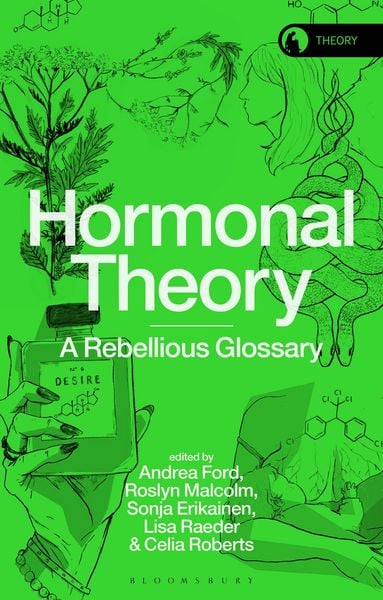
Hormonal Theory A Rebellious Glossary

29,99 €

inkl. gesetzl. MwSt., Versandkostenfrei


Beschreibung

From angiotensin to cortisol, testosterone to xenoestrogens, and dopamine to endocrine disruptors, hormones are everywhere. These chemical entities are foundational to biological life and shape social, cultural, and political forces, while simultaneously being shaped by them. Hormones are increasingly...

Beschreibung

From angiotensin to cortisol, testosterone to xenoestrogens, and dopamine to endocrine disruptors, hormones are everywhere. These chemical entities are foundational to biological life and shape social, cultural, and political forces, while simultaneously being shaped by them. Hormones are increasingly central not only to medical and other body-shaping practices and contemporary science, but also environmentally-oriented conversations. Throughout Hormonal Theory, authors trace how biomedical, social, political, and experiential forces entangle to produce hormones as we know them today. It illuminates how hormones emerge and exist as complex entities that permeate every sphere of our lives. Each glossary entry takes a particular hormonal compound as its starting point, yet works to elaborate and complicate understandings of hormones as distinct biological or chemical entities. The entries collectively show how hormones never operate in isolation from other hormones, nor bodies in isolation from other human and non-human bodies and their socio-ecological surroundings. Indeed, they "cascade" into one another. This volume, then, is not simply a qualitatively-rich companion to medical knowledge about hormones, but a challenge to the conceptual underpinnings of current dominant understandings of disease, wellness, and normalcy.

Produktdetails

Einband

Taschenbuch

Erscheinungsdatum

07.03.2024

Herausgeber Andrea Ford + weitere
Verlag Bloomsbury Publishing

Produktdetails

Einband

Taschenbuch

Erscheinungsdatum

07.03.2024

Herausgeber
Verlag Bloomsbury Publishing
Seitenzahl

248

Maße (L/B/H)

23,2/15,9/2,2 cm

Gewicht

386 g

Sprache

Englisch

ISBN

978-1-350-32298-1

Herstelleradresse

Libri GmbH
Europaallee 1
36244 Bad Hersfeld
DE

Email: gpsr@libri.de

Ein neues Kapitel für Ihre Bücher

Ein neues Kapitel für Ihre Bücher

Schenken Sie Ihren alten Schätzen ein zweites Leben und erhalten Sie dafür eine Thalia Geschenkkarte.

Jetzt verkaufen
Jetzt verkaufen

Noch keine Bewertungen vorhanden

Verfassen Sie die erste Bewertung zu diesem Artikel

Helfen Sie anderen Kundinnen und Kunden durch Ihre Meinung.

Kundinnen und Kunden meinen

Bewertungen (0)

Die Leseprobe wird geladen.
  • Produktbild: Hormonal Theory
  • List of Contributors
    Acknowledgements

    Hormonal Cascades: An Introduction
    1. Adrenaline, Celia Roberts (Australian National University, Canberra)
    2. Angiotensin, Anne Pollock (King's College London, UK)
    3. Cortisol, Roslyn Malcolm (Durham University, UK)
    4. Diethylstilbestrol (DES), Jacquelyne Luce (Mount Holyoke College, USA), Anjali Rao-Herel (Mount Holyoke College, USA) with the Feminist Technoscience Governance Collaboratory
    5. Dichloro-diphenyl-trichloroethane (DDT), Norah MacKendrick (Rutgers University, USA)
    6. Dopamine, Tom Boylston (University of Edinburgh, UK)
    7. Endocrine Disrupting Chemicals (EDCs), Wibke Straube (Karlstad University, Sweden)
    8. Follicle Stimulating Hormone (FSH) and Lutenizing Hormone (LH), Risa Cromer (Purdue University, USA)
    9. Gonadotropin-releasing hormone analogues (GnRHa), Cronan Cronshaw (Lancaster University, UK)
    10. Growth Hormone, Magdalena Radkowska-Walkowicz (University of Warsaw, Poland)
    11. Human Chorionic Gonadotropin (hCG), Emily Ross (University of Sheffield, UK)
    12. Hydrocortisone, Ian Harper (University of Edinburgh, UK)
    13. Mifepristone and Misoprostol, Leah Eades (University of Edinburgh, UK)
    14. Oestrogen, Charlotte Jones (Swansea University, UK) and Kriss Fearon (De Montfort University, UK)
    15. Oxytocin, Arbel Griner (Princeton University, USA) and Rafaela Zorzanelli (University of Rio de Janeiro, Brazil)
    16. Pitocin, Andrea Ford (University of Edinburgh, UK)
    17. Progesterone, Nayantara Sheoran Appleton (Victoria University of Wellington, Aotearoa New Zealand)
    18. Progestogens, Mariana Rios Sandoval
    19. Testosterone, Fabíola Rohden (Federal University at Rio Grande do Sul, Brazil)

    Index