















































KI-Beratung Beta

Gutscheinbedingungen

Gültig bis 30.11.2026 | Gültig für nicht preisgebundene fremdsprachige Bücher | Einzelne Artikel können ausgeschlossen sein | Online auf thalia.de und in der Thalia App einlösbar | Click & Collect nur mit Online-Zahlung (Paypal/Kreditkarte) vorab | Nicht kombinierbar mit anderen Gutscheinen oder Preisaktionen | Nur einmal pro Einkauf einlösbar | Gutschein wird auf max. 500€ Bestellwert angerechnet | Keine Barauszahlung | Nicht gültig für Versandkosten und Services

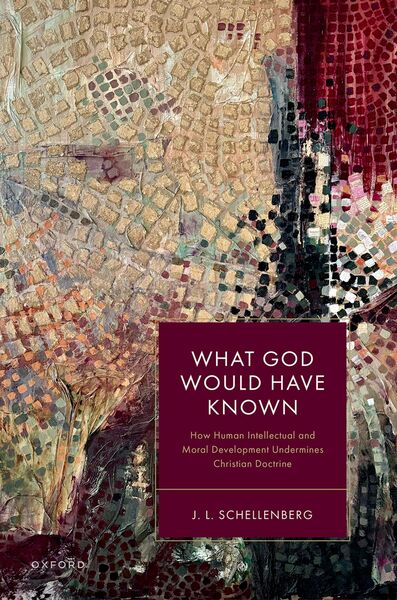
Produktbild: What God Would Have Known

What God Would Have Known How Human Intellectual and Moral Development Undermines Christian Doctrine

44,99 €

inkl. gesetzl. MwSt., Versandkostenfrei


Beschreibung

Classical Christian ideas loom large in philosophy of religion today. But arguments against Christian doctrine have been neglected. J. L. Schellenberg's new book remedies this neglect. And it does so in a novel way, by linking facts about human intellectual and moral development to what God would have...

Beschreibung

Classical Christian ideas loom large in philosophy of religion today. But arguments against Christian doctrine have been neglected. J. L. Schellenberg's new book remedies this neglect. And it does so in a novel way, by linking facts about human intellectual and moral development to what God would have known at the time of Jesus. The tide of human development, which the early Christians might have expected to corroborate their teaching, has in fact brought many results that run contrary to that teaching. Or at least it will be seen to have done so, says Schellenberg, when we think about the consequences of any God existent then being fully cognizant, when Christian doctrine was first formed, of all that we have laboriously learned since then. Newly discovered facts, not just about such things as evolution and the formation of the New Testament but also about mental illness, violent punishment, the relations between women and men, and the status of same-sex intimacy, suggest detailed new arguments against the content of the Christian revelation--Schellenberg designs and defends twenty--when the prior understanding of the purported revealer is taken into account. Written with Schellenberg's characteristic combination of verve and careful precision, What God Would Have Known offers a thorough and incisive treatment of its subject that remains respectful and fair-minded throughout. It is not concerned with the overworked question of whether classical Christians believe irrationally, but with what overlooked arguments about human development show in relation to the truth or falsity of Christian claims about reality. Fully conversant with relevant developments in science, the book is particularly generous in its attention to recent developments in social and ethical spheres as it works toward its striking conclusion that the God of the Christians, all good and all wise, would not have believed Christian doctrine.

Produktdetails

Einband

Gebundene Ausgabe

Erscheinungsdatum

23.08.2024

Verlag Oxford University Press
Seitenzahl

216

Produktdetails

Einband

Gebundene Ausgabe

Erscheinungsdatum

23.08.2024

Verlag Oxford University Press
Seitenzahl

216

Maße (L/B/H)

21,1/13/2 cm

Gewicht

386 g

Sprache

Englisch

ISBN

978-0-19-891232-3

Herstelleradresse

Libri GmbH
Europaallee 1
36244 Bad Hersfeld
DE

Email: gpsr@libri.de

Ein neues Kapitel für Ihre Bücher

Ein neues Kapitel für Ihre Bücher

Schenken Sie Ihren alten Schätzen ein zweites Leben und erhalten Sie dafür eine Thalia Geschenkkarte.

Jetzt verkaufen
Jetzt verkaufen

Noch keine Bewertungen vorhanden

Verfassen Sie die erste Bewertung zu diesem Artikel

Helfen Sie anderen Kundinnen und Kunden durch Ihre Meinung.

Kundinnen und Kunden meinen

Bewertungen (0)

Die Leseprobe wird geladen.
  • Produktbild: What God Would Have Known
    • Introduction
    • 1: Of Things to Come (1820)
    • 2: On Sin
    • 3: On Spiritual Helplessness
    • 4: On Salvation
    • 5: On the Divine Jesus
    • 6: On the Holy Spirit
    • 7: On Revelation (I)
    • 8: On Revelation (II)
    • 9: The Christian Hiddenness Problem
    • 10: What God Would Have Known
    • Conclusion