















































KI-Beratung Beta

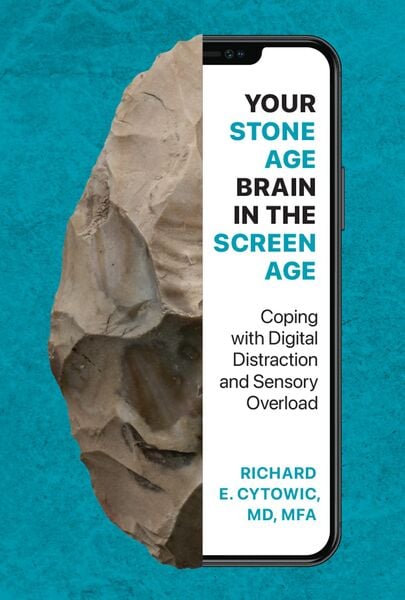
Produktbild: Your Stone Age Brain in the Screen Age

Your Stone Age Brain in the Screen Age Coping with Digital Distraction and Sensory Overload

30,99 €

inkl. gesetzl. MwSt.

Beschreibung

An award-winning neurologist on the Stone-Age roots of our screen addictions, and what to do about them. The human brain hasn't changed much since the Stone Age, let alone in the mere thirty years of the Screen Age. That's why, according to neurologist Richard Cytowic-who, Oliver Sacks observed, "changed...

Beschreibung

An award-winning neurologist on the Stone-Age roots of our screen addictions, and what to do about them. The human brain hasn't changed much since the Stone Age, let alone in the mere thirty years of the Screen Age. That's why, according to neurologist Richard Cytowic-who, Oliver Sacks observed, "changed the way we think of the human brain"-our brains are so poorly equipped to resist the incursions of Big Tech: They are programmed for the wildly different needs of a prehistoric world. In Your Stone Age Brain in the Screen Age, Cytowic explains exactly how this programming works-from the brain's point of view. What he reveals in this book shows why we are easily addicted to screen devices; why young, developing brains are particularly vulnerable; why we need silence; and what we can do to push back. In the engaging storytelling style of his popular TED Talk, Cytowic draws an easily comprehensible picture of the Stone Age brain's workings-the function of neurotransmitters like dopamine in basic instincts for survival such as desire and reward; the role of comparison in emotion, and emotion in competition; and, most significantly, the orienting reflex, one of the unconscious circuits that automatically focus, shift, and sustain attention. Given this picture, the nature of our susceptibility to digital devices becomes clear, along with the possibility of how to break their spell. Full of practical actions that we can start taking right away, Your Stone Age Brain in the Screen Age offers compelling evidence that we can change the way we use technology, resist its addictive power over us, and take back the control we have lost.

Produktdetails

Format

ePUB

Kopierschutz

Ja

Family Sharing

Ja

Text-to-Speech

Ja

Produktdetails

Format

ePUB

Format

eBooks im ePUB-Format erlauben eine dynamische Anpassung des Inhalts an die jeweilige Display-Größe des Lesegeräts. Das Format eignet sich daher besonders für das Lesen auf mobilen Geräten, wie z.B. Ihrem tolino, Tablets oder Smartphones.

Kopierschutz

Ja

Kopierschutz

Zum Lesen dieses eBooks auf eReadern außerhalb der tolino Familie sowie am PC benötigen Sie eine Adobe ID. Weitere Hinweise zum Lesen von kopiergeschützten eBooks finden Sie unter Hilfe/Downloads.

Family Sharing

Ja

Family Sharing

Mit Family Sharing können Sie eBooks innerhalb Ihrer Familie (max. sechs Mitglieder im gleichen Haushalt) teilen. Sie entscheiden selbst, welches Buch Sie mit welchem Familienmitglied teilen möchten. Auch das parallele Lesen durch verschiedene Familienmitglieder ist durch Family Sharing möglich. Um eBooks zu teilen oder geteilt zu bekommen, muss jedes Familienmitglied ein Konto bei Thalia oder einem anderen tolino-Buchhändler haben. Weitere Informationen finden Sie unter Hilfe/Family-Sharing.

Text-to-Speech

Ja

Text-to-Speech

Bedeutet Ihnen Stimme mehr als Text? Mit der Funktion Text-to-Speech können Sie sich im tolino webReader und in der aktuellen Thalia – Lesen & Hören App das eBook vorlesen lassen. Weitere Informationen finden Sie unter Hilfe/Text-to-Speech.

Erscheinungsdatum

01.10.2024

Verlag MIT Press
Seitenzahl

352 (Printausgabe)

Dateigröße

1957 KB

Sprache

Englisch

EAN

9780262379113

Barrierefreiheit
  • keine Information zur Barrierefreiheit bekannt

Noch keine Bewertungen vorhanden

Verfassen Sie die erste Bewertung zu diesem Artikel

Helfen Sie anderen Kundinnen und Kunden durch Ihre Meinung.

Kundinnen und Kunden meinen

Bewertungen (0)

Weitere Artikel finden Sie in

Die Leseprobe wird geladen.
  • Produktbild: Your Stone Age Brain in the Screen Age