Beschreibung
Produktdetails
Einband
Gebundene Ausgabe
Erscheinungsdatum
29.08.2024
Herausgeber
Shoei K. Stephen Huang + weitereVerlag
Elsevier LTDSeitenzahl
827
Maße (L/B/H)
28/22,4/3,9 cm
Gewicht
2600 g
Auflage
5. Auflage
Sprache
Englisch
ISBN
978-0-323-93110-6
**Selected for 2025 Doody’s Core Titles® in Cardiology**
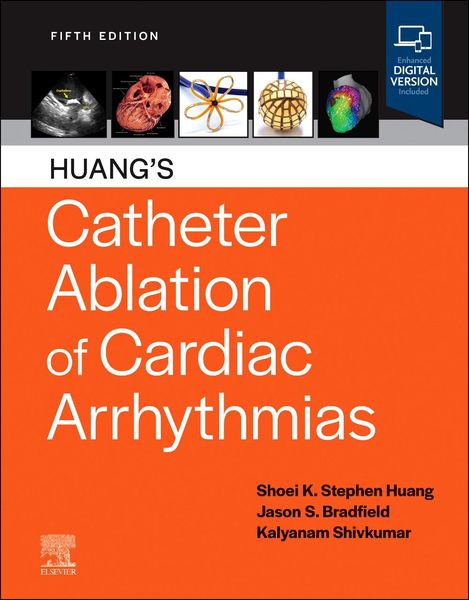
Written and edited by world-renowned experts in the field, including Dr. Shoei K. Stephen Huang, a pioneer of radiofrequency catheter ablation procedures, Huang's Catheter Ablation of Cardiac Arrhythmias, 5th Edition, provides authoritative, comprehensive information on these increasingly used electrophysiology procedures. This outstanding resource is packed with cutting-edge content in every area of this fast-changing field, including anatomy, diagnostic criteria, differential diagnosis, mapping, and ablation. Ideal for practitioners who need a definitive, user-friendly ablation text for the electrophysiology lab or office setting, it offers quick access to practical content, using detailed tables and high-quality images to help you apply what you learn in your practice.
Written and edited by world-renowned experts in the field, including Dr. Shoei K. Stephen Huang, a pioneer of radiofrequency catheter ablation procedures, Huang's Catheter Ablation of Cardiac Arrhythmias, 5th Edition, provides authoritative, comprehensive information on these increasingly used electrophysiology procedures. This outstanding resource is packed with cutting-edge content in every area of this fast-changing field, including anatomy, diagnostic criteria, differential diagnosis, mapping, and ablation. Ideal for practitioners who need a definitive, user-friendly ablation text for the electrophysiology lab or office setting, it offers quick access to practical content, using detailed tables and high-quality images to help you apply what you learn in your practice.
- Reflects all the latest technology, including the new pulse field ablation (PFA) procedure, new balloon technologies (RF, laser, and PFA) for pulmonary vein isolation, and high-resolution 3D mapping systems.
- Offers expert guidance on atrial tachycardia and flutter, atrial fibrillation, atrioventricular nodal reentrant tachycardia, tachycardias related to accessory atrioventricular connections, ventricular tachycardia, transseptal catheterization techniques, ablation for pediatric patients, and patient safety and complications.
- Contains new chapters covering Biophysics and Clinical Applications of Laser Ablation, Biophysics and Clinical Applications of Pulse Field Ablation, Multiple Strategic Approach to Ablate Atrial Fibrillation, Ablation of Challenging/Difficult Accessory Pathways, Ablation of Ventricular Tachycardia in Arrhythmogenic Ventricular Cardiomyopathy, and more.
- Contains 450 figures, including ECGs, intracardiac recordings, 3D mapping, ultrasound, fluoroscope, and ablation images.
- Includes numerous tables and boxes that provide quick access to key points, arrhythmia mechanisms, diagnostic criteria, target sites for ablation, use of special equipment, complications, and troubleshooting problems and their solutions.
- Provides access to 20 video clips, including transseptal access to the left atrium, intracardiac ultrasound, and techniques of pericardial access.
- An eBook version is included with purchase. The eBook allows you to access all of the text, figures, videos, and references, with the ability to search, customize your content, make notes and highlights, and have content read aloud. Any additional digital ancillary content may publish up to 6 weeks following the publication date.
Ein neues Kapitel für Ihre Bücher
Ein neues Kapitel für Ihre Bücher
Schenken Sie Ihren alten Schätzen ein zweites Leben: Einfach Barcode scannen, Versandetikett ausdrucken, Bücher verschicken und Thalia Geschenkkarte erhalten.
Jetzt verkaufenKundinnen und Kunden meinen
Verfassen Sie die erste Bewertung zu diesem Artikel
Helfen Sie anderen Kund*innen durch Ihre Meinung
Kurze Frage zu unserer Seite
Vielen Dank für Ihr Feedback
Wir nutzen Ihr Feedback, um unsere Produktseiten zu verbessern. Bitte haben Sie Verständnis, dass wir Ihnen keine Rückmeldung geben können. Falls Sie Kontakt mit uns aufnehmen möchten, können Sie sich aber gerne an unseren Kund*innenservice wenden.
zum Kundenservice