















































KI-Beratung Beta

Gutscheinbedingungen

Gültig bis 30.11.2026 | Gültig für nicht preisgebundene fremdsprachige Bücher | Einzelne Artikel können ausgeschlossen sein | Online auf thalia.de und in der Thalia App einlösbar | Click & Collect nur mit Online-Zahlung (Paypal/Kreditkarte) vorab | Nicht kombinierbar mit anderen Gutscheinen oder Preisaktionen | Nur einmal pro Einkauf einlösbar | Gutschein wird auf max. 500€ Bestellwert angerechnet | Keine Barauszahlung | Nicht gültig für Versandkosten und Services

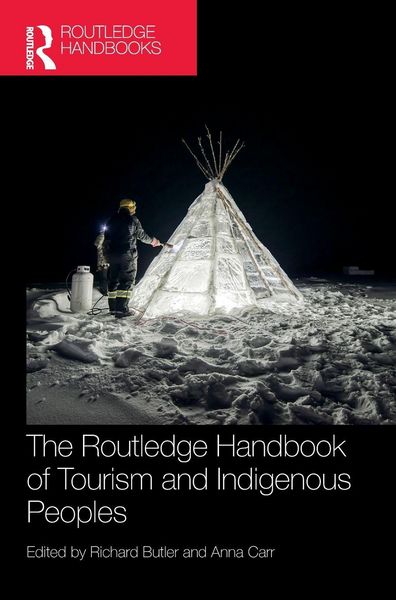
  • Produktbild: The Routledge Handbook of Tourism and Indigenous Peoples
  • Produktbild: The Routledge Handbook of Tourism and Indigenous Peoples
- 16%

The Routledge Handbook of Tourism and Indigenous Peoples

16% sparen

309,99 € UVP 370,80 €

inkl. gesetzl. MwSt., Versandkostenfrei


Beschreibung

The Routledge Handbook of Tourism and Indigenous Peoples presents an up-to-date, critical and comprehensive overview of established and emerging themes around Indigeneity and connections between Indigenous peoples and tourism development.

Offering socio-cultural perspectives and multidisciplinary insights...

Beschreibung

The Routledge Handbook of Tourism and Indigenous Peoples presents an up-to-date, critical and comprehensive overview of established and emerging themes around Indigeneity and connections between Indigenous peoples and tourism development.

Offering socio-cultural perspectives and multidisciplinary insights from leading Indigenous and non-Indigenous scholars and tourism practitioners, the book explores contemporary issues, challenges and trends. Organised into six sections, the handbook explores Indigenous community involvement in tourism, Indigenous entrepreneurship and innovation, Indigenous tourism policies and politics, and the complexities of colonialism and decolonisation issues. This text focuses on the active role that Indigenous peoples have in the industry and uses international case studies and experiences to explore the global context of Indigenous tourism.

This handbook fills a notable gap by offering a critical and detailed understanding of the role of Indigenous practitioners and societies in tourism and how they interact within the tourism nexus. It will be of interest to scholars, students, tourism practitioners and policymakers working in tourism, development studies, anthropology, human geography and sociology.

Produktdetails

Einband

Gebundene Ausgabe

Erscheinungsdatum

30.08.2024

Abbildungen

57 SW-Abb., 47 SW-Fotos, 10 SW-Zeichn., 18 Tabellen

Herausgeber Richard Butler + weitere

Produktdetails

Einband

Gebundene Ausgabe

Erscheinungsdatum

30.08.2024

Abbildungen

57 SW-Abb., 47 SW-Fotos, 10 SW-Zeichn., 18 Tabellen

Herausgeber
Verlag Taylor & Francis
Seitenzahl

496

Maße (L/B/H)

25/17,5/3,1 cm

Gewicht

970 g

Sprache

Englisch

ISBN

978-1-03-213654-7

Herstelleradresse

Libri GmbH
Europaallee 1
36244 Bad Hersfeld
DE

Email: gpsr@libri.de

Ein neues Kapitel für Ihre Bücher

Ein neues Kapitel für Ihre Bücher

Schenken Sie Ihren alten Schätzen ein zweites Leben und erhalten Sie dafür eine Thalia Geschenkkarte.

Jetzt verkaufen
Jetzt verkaufen

Noch keine Bewertungen vorhanden

Verfassen Sie die erste Bewertung zu diesem Artikel

Helfen Sie anderen Kundinnen und Kunden durch Ihre Meinung.

Kundinnen und Kunden meinen

Bewertungen (0)

Die Leseprobe wird geladen.
  • Produktbild: The Routledge Handbook of Tourism and Indigenous Peoples
  • Produktbild: The Routledge Handbook of Tourism and Indigenous Peoples
  • 1. Introduction: Revisiting Tourism and Indigenous People. Section 1. Indigeneity. 2. "Are We Not All Indigenous?" Negotiating Indigenity in Greenlandic Tourism. 3. The Constant Creation of Aboriginality: A Commentary on Indigenous Being and Becoming. 4. A Critical Realist Appraisal of Indigeneity: The Case of Miao Peoples in a Tourism Village in China. 5. Power, Policies, and Cultural Sensitivity in Ainu Tourism: Indigenous Involvement in and Control over Tourism Developments in Hokkaido, Japan. Section 2. Indigenous. 6. Decolonising Indigenous Tourism: Reconciliation, Truth-Telling, Whiteness and "Welcome to Country" in Australia. 7. Learn, Teach, Heal: Indigenous Tourism as a Site for Reclaiming and Becoming. 8. "Come and Know a Little About Your Own Backyard": Transformative Learning Potentials Through Knowledge Sharing in Indigenous Tourism in Australia. 9. Tourism, Truth-telling and Sovereignty: A Gitxaala Perspective. 10. You Can't Ask That! Projective Techniques Unearth Socio-cultural Aversions Towards Indigenous Tourism. 11. An Indigenous Community Code of Conduct for Tourist Behaviours: Voices from the Tibet Autonomous Region, China. 12. Confronting Marginalisation? Gender Dynamics and Batwa Engagement with Tourism in Uganda. Section 3. Indigenous Alternatives. 13. Doing it the 'Pacific Way': Indigenous Education and Training in the Pacific Islands. 14. Stewarding Maori Taonga for Sustainable Indigenous Tourism Enterprise. 15. Indigenizing Tourism by Indigenizing the Landscape: A Digital Marketing Case Study of Wagiman Ethnobiology for Tourism and Conservation. 16. Conversations about Culture: The Need to Integrate Indigenous Voices into the Development of Sustainable Cultural Heritage Tourism Opportunities in the Pacific. 17. Tourism Enterprises in the South Pacific: Culturally Centered Adaptation in the Face of Covid-19. Section 4. Indigenous Knowledge and Rights. 18. The Integration of Indigenous Knowledge in Canadian Protected Areas to Foster Conservation, Reconciliation and Tourism Development. 19. Tourism Appropriation: 'Taking' Land and Culture in Sámi Areas. 20. An Evaluation of the New Ainu Law: Tourism Promotion Policy and Indigenous Rights of the Ainu People in Japan. 21. Indigenous Hosts and Food Security: A Case Study from Simien Mountains National Park. 22. Indigenous Knowledge as an Important Contribution to the Sustainability of Geotourism and Geoparks. 23 Reflexivity on the Establishment of National Parks in the Light of the Chapter by Mason et al. Section 5. Indigenous Tourism Innovations and Developments. 24. Social Innovation in an Indigenous Tourism Development. 26. Pathways To Culturally Sensitive Tourism Policies and Practices. 25. The Upper Navua Conservation Area: Reflections on Ecotourism and Community. 27. Indigenous Handicrafts Based Domestic Tourism in Bangladesh. 28. Indigenous Tourism in Iran. 29. Contemporary Arts and Indigenous Arts-Based Tourism in West Africa. 30. Don't Worry. We Have Your Best Interests at Heart. Section 6. Indigenous Involvement in Planning Development. 31. Indigenous Tourism Association of Canada (ITAC). 32. Indigenous Tourism International Framework, Rights, and Empowerment of Grassroots Organizations: Latin America and the Chilean Case. 33. Development of the Inaugural Queensland First Nations Tourism Action Plan 2020-2025 and the Queensland First Nations Tourism Council. 34. Reflection on Aboriginal Tourism in Western Australia: A Balancing Act of Opportunity and Challenge. 35. Conclusions. Appendix.