















































KI-Beratung Beta

Gutscheinbedingungen

Gültig bis 30.11.2026 | Gültig für nicht preisgebundene fremdsprachige Bücher | Einzelne Artikel können ausgeschlossen sein | Online auf thalia.de und in der Thalia App einlösbar | Click & Collect nur mit Online-Zahlung (Paypal/Kreditkarte) vorab | Nicht kombinierbar mit anderen Gutscheinen oder Preisaktionen | Nur einmal pro Einkauf einlösbar | Gutschein wird auf max. 500€ Bestellwert angerechnet | Keine Barauszahlung | Nicht gültig für Versandkosten und Services

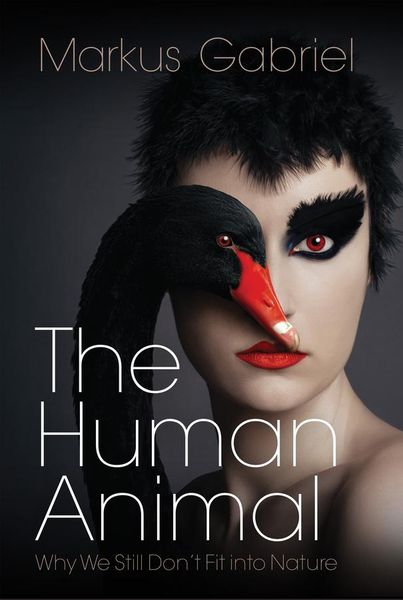
Produktbild: The Human Animal

The Human Animal Why We Still Don't Fit into Nature

38,99 €

inkl. gesetzl. MwSt., Versandkostenfrei


Beschreibung

The climate crisis has forced us to recognize that we are not separate from nature but are part of the natural world on which we depend: human beings are animals and we must understand much better our place in nature and our impact on our environment if we are to avoid our own annihilation as a species. ...

Beschreibung

The climate crisis has forced us to recognize that we are not separate from nature but are part of the natural world on which we depend: human beings are animals and we must understand much better our place in nature and our impact on our environment if we are to avoid our own annihilation as a species.  And yet we feel nevertheless that we do not entirely fit into nature, that we stand apart from other animals in some way - in what way, exactly?
Markus Gabriel argues that what distinguishes humans from other animals is that humans are minded living beings who seek to understand the world and themselves and who possess ethical insight into moral contexts.  Mind is the capacity to lead one's life in the light of a conception of who or what one is.  The undeniable difference between us and other animals defines the human condition and places a special responsibility on us to consider our actions in the context of other living beings and our shared habitat.  It also calls on us to cultivate an ethics of not-knowing: to recognize that, however much we may seek to understand the world, we will never completely master it.  Our grasp of reality, mediated by our animal minds, will always be limited: much is and will remain alien to us, lending itself only to speculation - and to remember this is to stand us in better stead for carving out an existence among the environmental crisis that looms before us all.

Produktdetails

Einband

Gebundene Ausgabe

Erscheinungsdatum

29.11.2024

Verlag Wiley
Seitenzahl

288

Produktdetails

Einband

Gebundene Ausgabe

Erscheinungsdatum

29.11.2024

Verlag Wiley
Seitenzahl

288

Maße (L/B/H)

23,1/15,7/3,1 cm

Gewicht

560 g

Übersetzt von

Karl der Luft

Sprache

Englisch

ISBN

978-1-5095-5803-2

Herstelleradresse

Libri GmbH
Europaallee 1
36244 Bad Hersfeld
DE

Email: gpsr@libri.de

Ein neues Kapitel für Ihre Bücher

Ein neues Kapitel für Ihre Bücher

Schenken Sie Ihren alten Schätzen ein zweites Leben und erhalten Sie dafür eine Thalia Geschenkkarte.

Jetzt verkaufen
Jetzt verkaufen

Noch keine Bewertungen vorhanden

Verfassen Sie die erste Bewertung zu diesem Artikel

Helfen Sie anderen Kundinnen und Kunden durch Ihre Meinung.

Kundinnen und Kunden meinen

Bewertungen (0)

Die Leseprobe wird geladen.
  • Produktbild: The Human Animal
  • Introduction

    First Part: We and the Other Animals
    The Logical Animal - How Humans Became Animals  The Specific Something   Nature is not a Safari   The Anthropocene as Hybris  The Network: Plants, Bats, Fungi   Continuity, Discontinuity, or Somehow Both?   Shadowboxing   What Does it Actually Mean to Understand Oneself as an Animal?   Why We are Not Amphibians   The Animal Word: Why the Zoo does not Exist   Animalism, The Prestige, and The Anomaly   The Human Animal as Machine?   Animals Like Us? Korsgaard's Values   Alice Crary - Inside Ethics   Subjectivity and Objectivity - Why We Aren't Strangers in Nature   The New Enlightenment in the Age of Living Beings   Kant's Four Questions - Being Human is an Answer to a Question   The Human Being as the Animal Who Doesn't Want to Be One

    Second Part
    Social Freedom and the Meaning of Life
    The Basic Idea of Liberal Pluralism   The History of Life   The Idea of Life   To Live and to Survive - The Basic Form of Human Society   Do We Want to Live Forever?   The Meaning in Life   The Meaning of Life [pg. ] is Not Nonsense   Nonsense is Sense-deprivation   Limits of Liberal Pluralism?   Who We Are and Who We Want to Be - Radical Autonomy and the New Enlightenment   Social Freedom and the Meaning of Life   Why Science Has Not Discovered that Life Has No Meaning   From Mind Back to Nature

    Third Part
    Towards an Ethics of Not-Knowing
    Nature, Environment, Universe   In-itself and For-itself...   Is Science Fiction?   Limits of Scientific Knowledge   Otherness - Towards an Ecological Ethics   Under-complex, Complex, Hyper-complex   Homo sapiens, Or, The Wise Words of Socrates   Opinions, Knowledge, and the Idea of the Good   Moral Reality and Ethical Facts   Not-knowing   Towards An Ethics of Not-knowing

    Acknowledgments
    Glossary
    Notes
    Index