















































KI-Beratung Beta

Gutscheinbedingungen

Gültig bis 11.11.2026 | Gültig für Spielzeug, Filme, Musik, Software, Games, Geschenke & Trends, Schreibwaren, Hörbücher und Hörbuch-Downloads (außer Abo & Shelfies), gebrauchte Bücher, nicht preisgebundene Bücher und Kalender | Einlösbar unter thalia.de und in der Thalia App | Click & Collect nur mit Online-Zahlung (Paypal/Kreditkarte) vorab | Einzelne Artikel können ausgeschlossen sein | Nicht kombinierbar mit anderen Gutscheinen oder Preisaktionen | Nur einmal pro Einkauf einlösbar | Gutschein wird auf max. 500€ Bestellwert angerechnet | Keine Barauszahlung | Digitale Hörbücher nur für Android  | Nicht gültig für preisgebundene Artikel (aufgrund der Buchpreisbindung sind Gutscheine nicht auf Bücher, eBooks, Presse einlösbar), tolino eReader & Zubehör, Abonnements & Flatrates, Geschenkkarten, Versandkosten und Services

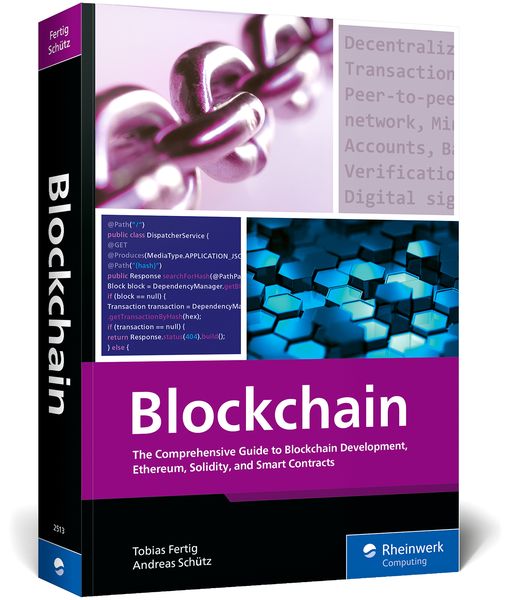
Produktbild: Blockchain

Blockchain The Comprehensive Guide to Blockchain Development, Ethereum, Solidity, and Smart Contracts

59,95 €

inkl. gesetzl. MwSt., Versandkostenfrei


Beschreibung

Produktdetails

Einband

Taschenbuch

Erscheinungsdatum

03.09.2024

Verlag

Rheinwerk Publishing

Seitenzahl

654

Maße (L/B/H)

25,4/17,8/3,4 cm

Gewicht

1140 g

Farbe

Lila / Cool Grey

Auflage

1

Sprache

Englisch

ISBN

978-1-4932-2513-2

Beschreibung

Produktdetails

Einband

Taschenbuch

Erscheinungsdatum

03.09.2024

Verlag

Rheinwerk Publishing

Seitenzahl

654

Maße (L/B/H)

25,4/17,8/3,4 cm

Gewicht

1140 g

Farbe

Lila / Cool Grey

Auflage

1

Sprache

Englisch

ISBN

978-1-4932-2513-2

Herstelleradresse

Rheinwerk Verlag GmbH
Rheinwerkallee 4
53227 Bonn
DE

Email: service@rheinwerk-verlag.de

Ein neues Kapitel für Ihre Bücher

Ein neues Kapitel für Ihre Bücher

Schenken Sie Ihren alten Schätzen ein zweites Leben und erhalten Sie dafür eine Thalia Geschenkkarte.

Jetzt verkaufen
Jetzt verkaufen

Noch keine Bewertungen vorhanden

Verfassen Sie die erste Bewertung zu diesem Artikel

Helfen Sie anderen Kundinnen und Kunden durch Ihre Meinung.

Kundinnen und Kunden meinen

Bewertungen (0)

  • Produktbild: Blockchain

  • ... Foreword ... 21


    ... Preface ... 25


    1 ... Introduction ... 29


    1.1 ... What Is Blockchain? ... 29


    1.2 ... History of Blockchain ... 36


    1.3 ... Application of Blockchain Technology ... 47


    1.4 ... Summary ... 66


    2 ... The Basics: How Blockchain Works ... 69


    2.1 ... Cryptography Basics ... 69


    2.2 ... The Blockchain ... 81


    2.3 ... Alternative Consensus Models ... 111


    2.4 ... Blockchain Security ... 119


    2.5 ... Summary ... 128


    3 ... Ethereum: Blockchain 2.0 ... 131


    3.1 ... Basics of Ethereum ... 132


    3.2 ... From Blocks to Blockchain 2.0 ... 144


    3.3 ... The Blockchain System 2.0 ... 152


    3.4 ... Further Development of the Ethereum Platform ... 170


    3.5 ... Summary ... 177


    4 ... Fundamentals of Creating Your Own Blockchain ... 179


    4.1 ... Transactions: The Smallest Units of a Blockchain ... 181


    4.2 ... Block Header: Calculating the Block ID ... 183


    4.3 ... Chaining Blocks ... 184


    4.4 ... Storing the Blockchain State Persistently ... 186


    4.5 ... The Genesis Block: Initializing a Blockchain ... 188


    4.6 ... Pending Transactions ... 189


    4.7 ... The Difficulty of a Blockchain ... 191


    4.8 ... Let’s Mine: The Miner Thread ... 192


    4.9 ... Summary and Outlook ... 196


    5 ... Implementing a Web API for the Blockchain ... 199


    5.1 ... The Endpoints of the Web API ... 200


    5.2 ... Deploying the Web API ... 205


    5.3 ... Sending Transactions via a Web Interface ... 209


    5.4 ... Implementing Your Own Block Explorer ... 212


    5.5 ... Summary and Outlook ... 219


    6 ... Implementing a Peer-to-Peer Network ... 221


    6.1 ... Configuration of the Peer-to-Peer Framework ... 222


    6.2 ... Broadcasting Transactions to the Network ... 225


    6.3 ... Broadcasting Blocks to the Network ... 228


    6.4 ... The Longest Chain Rule ... 229


    6.5 ... Adding New Nodes to the Network ... 233


    6.6 ... Summary and Outlook ... 235


    7 ... Introducing Accounts and Balances ... 237


    7.1 ... Rewarding Miners ... 238


    7.2 ... Managing Accounts ... 241


    7.3 ... Integrating Accounts ... 245


    7.4 ... Integrating Accounts into the Block Explorer ... 246


    7.5 ... Summary and Outlook ... 251


    8 ... Implementing Verification and Optimizations ... 253


    8.1 ... Signing Transactions ... 253


    8.2 ... Enforcing Constraints ... 256


    8.3 ... Locking and Unlocking Balances ... 258


    8.4 ... Optimizing Performance via Merkle Trees ... 261


    8.5 ... Optimizing Storage by Shortening the Public Keys ... 264


    8.6 ... Supporting Initial Balances in the Genesis Block ... 265


    8.7 ... Additional Optimizations ... 266


    8.8 ... Summary and Outlook ... 267


    9 ... Smart Contract Development ... 269


    9.1 ... Smart Contract Basics ... 270


    9.2 ... Simple Smart Contracts with Bitcoin Script ... 272


    9.3 ... Advanced Smart Contracts ... 279


    9.4 ... Contract-Oriented Programming ... 282


    9.5 ... The Challenge of Random Number Generators ... 287


    9.6 ... Trusting Off-Chain Data ... 291


    9.7 ... Time Dependencies ... 292


    9.8 ... Summary and Outlook ... 293


    10 ... Integrated Development Environments and Frameworks ... 295


    10.1 ... Integrated Development Environments ... 295


    10.2 ... Contract-Oriented Frameworks ... 300


    10.3 ... Summary and Outlook ... 313


    11 ... An Introduction to Solidity ... 315


    11.1 ... The Basics of Solidity ... 315


    11.2 ... Elements and Data Locations of a Contract ... 319


    11.3 ... Available Data Types ... 331


    11.4 ... Additional Features of Solidity ... 340


    11.5 ... Creating Inheritance Hierarchies of Smart Contracts ... 347


    11.6 ... Creating and Using Libraries ... 352


    11.7 ... Summary and Outlook ... 356


    12 ... Digging Deeper into Solidity ... 359


    12.1 ... Low-Level Functions in Solidity ... 359


    12.2 ... Using Assembly in Solidity Smart Contracts ... 363


    12.3 ... Internal Layouts of Data Locations ... 371


    12.4 ... Understanding the Contract ABI ... 375


    12.5 ... Understanding the Bytecode Representation of Smart Contracts ... 376


    12.6 ... Summary and Outlook ... 378


    13 ... Testing and Debugging Smart Contracts ... 381


    13.1 ... Testing Contracts with Remix ... 382


    13.2 ... Implementing Tests with Foundry ... 386


    13.3 ... Implementing Tests with Hardhat ... 391


    13.4 ... Debugging Smart Contracts ... 394


    13.5 ... Fork Testing Ethereum-Based Chains ... 396


    13.6 ... Summary and Outlook ... 398


    14 ... Understanding and Optimizing Gas Costs ... 401


    14.1 ... Understanding Gas Costs in Ethereum ... 401


    14.2 ... Understanding the Compiler Optimizer ... 405


    14.3 ... Basic Guidelines for Gas Optimization ... 407


    14.4 ... Optimizations Derived from Traditional Efficiency Rules ... 411


    14.5 ... Advanced Gas Optimization ... 414


    14.6 ... Expert Gas Optimizations ... 418


    14.7 ... Additional Optimizations for Different Use Cases ... 423


    14.8 ... Helpful Tools for Gas Optimizations ... 424


    14.9 ... Summary and Outlook ... 425


    15 ... Protecting and Securing Smart Contracts ... 427


    15.1 ... General Security Recommendations ... 427


    15.2 ... Example Attacks on Smart Contracts ... 431


    15.3 ... Auditing Smart Contracts via Slither ... 454


    15.4 ... Summary and Outlook ... 455


    16 ... Deploying and Managing Smart Contracts ... 457


    16.1 ... Setting Up MetaMask and Using Accounts ... 458


    16.2 ... Deploying Contracts with Remix and MetaMask ... 459


    16.3 ... Deploying Contracts with Foundry ... 462


    16.4 ... Deploying Contracts with Hardhat ... 465


    16.5 ... Publishing and Verifying Code on Etherscan ... 469


    16.6 ... Setting Up and Running Your Own Ethereum Node ... 472


    16.7 ... Managing Contracts after Deployment ... 474


    16.8 ... Summary and Outlook ... 476


    17 ... Standards, Libraries, and Design Patterns ... 479


    17.1 ... ERC-173 Contract Ownership Standard ... 479


    17.2 ... ERC-165 Standardized Interface Detection ... 481


    17.3 ... ERC-20 Token Standard ... 485


    17.4 ... ERC-777 Token Standard ... 488


    17.5 ... ERC-721 Non-Fungible Token Standard ... 489


    17.6 ... ERC-1155 Multi-Token Standard ... 494


    17.7 ... Using OpenZeppelin Libraries ... 496


    17.8 ... The Publish-Subscribe Design Pattern ... 496


    17.9 ... The Checks-Effects-Interactions Pattern ... 500


    17.10 ... Summary and Outlook ... 500


    18 ... Upgrading Smart Contracts ... 503


    18.1 ... Basics of Upgrade Mechanisms ... 503


    18.2 ... Performing Contract Migrations ... 504


    18.3 ... Separation of Data and Business Logic ... 508


    18.4 ... The Proxy Pattern ... 513


    18.5 ... The Diamonds Pattern ... 517


    18.6 ... Additional Mechanisms and Considerations ... 520


    18.7 ... The Metamorphic Smart Contract Exploit ... 521


    18.8 ... Summary and Outlook ... 526


    19 ... Developing Decentralized Applications ... 529


    19.1 ... What Is a Decentralized Application? ... 529


    19.2 ... The Development Process for a DApp ... 530


    19.3 ... Developing the Smart Contracts of Your First DApp ... 533


    19.4 ... Developing the Off-Chain Elements of Your First DApp ... 537


    19.5 ... Hosting the Frontend of Your First DApp in a Decentralized Manner ... 543


    19.6 ... Setting Up ENS Domains ... 545


    19.7 ... Summary and Outlook ... 550


    20 ... Upgrading Your First DApp to a DAO ... 553


    20.1 ... What Is a Decentralized Autonomous Organization? ... 553


    20.2 ... Implementing a Governance Contract for Your DAO ... 554


    20.3 ... Implementing the Frontend with Vue.js and Ethers.js ... 558


    20.4 ... Ideas for Additional Backend and Oracle Services ... 568


    20.5 ... Deploying Your DApp and Assigning an ENS Domain ... 569


    20.6 ... Additional Frameworks, Tools, and Libraries ... 569


    20.7 ... Summary and Outlook ... 571


    21 ... Reverse Engineering Smart Contracts ... 573


    21.1 ... Why Reverse Engineer? ... 573


    21.2 ... Manual Reverse Engineering ... 575


    21.3 ... Manual Recovery of a Contract ABI ... 586


    21.4 ... Tools for Reverse Engineering Smart Contracts ... 590


    21.5 ... Summary and Outlook ... 594


    22 ... Additional Contract-Oriented Programming Languages ... 595


    22.1 ... Yul: The Intermediate Language for Different Backends ... 596


    22.2 ... Huff: Highly Optimized Smart Contracts ... 605


    22.3 ... Vyper: Smart Contracts for Everyone? ... 610


    22.4 ... Comparison of Gas Costs ... 614


    22.5 ... Summary and Outlook ... 615


    23 ... Applying Blockchain Technologies ... 617


    23.1 ... Decentralized Finance ... 617


    23.2 ... Developing and Minting NFTs ... 622


    23.3 ... Ethereum Layer 2 Solutions ... 629


    23.4 ... Other Blockchain 2.0 Projects ... 631


    23.5 ... A Different Blockchain Approach: Ripple ... 633


    23.6 ... Summary ... 635


    ... Appendices ... 637


    A ... Bibliography ... 637


    B ... The Authors ... 639


    ... Index ... 641