















































KI-Beratung Beta

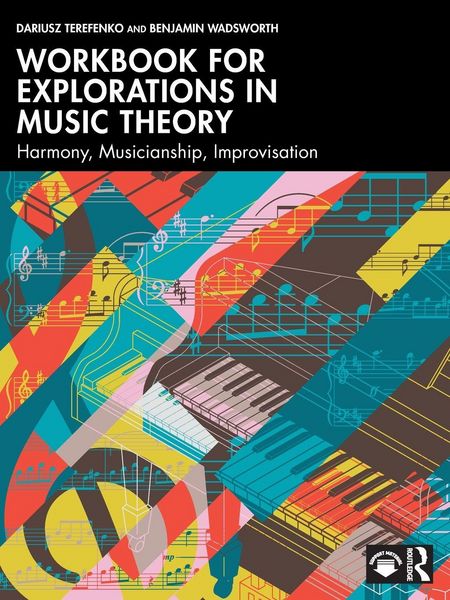
  • Produktbild: Workbook for Explorations in Music Theory
  • Produktbild: Workbook for Explorations in Music Theory

Workbook for Explorations in Music Theory Harmony, Musicianship, Improvisation

87,99 €

inkl. gesetzl. MwSt., Versandkostenfrei


Beschreibung

Explorations in Music Theory: Harmony, Musicianship, Improvisation offers an innovative learning approach to music theory, centered on instrumental skills, improvisation, and composition. Providing a comprehensive textbook to support music theory curricula, along with an accompanying workbook, it includes...

Beschreibung

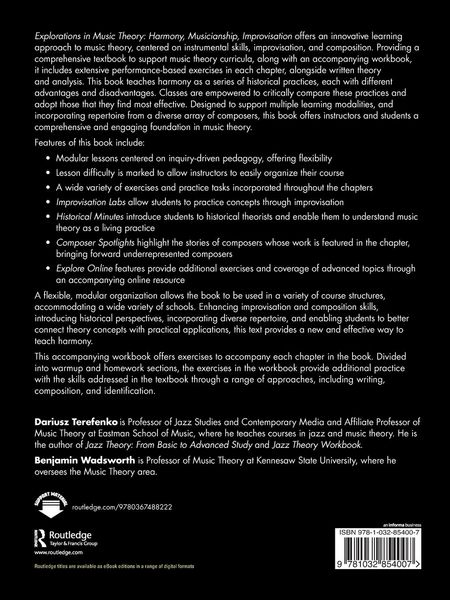
Explorations in Music Theory: Harmony, Musicianship, Improvisation offers an innovative learning approach to music theory, centered on instrumental skills, improvisation, and composition. Providing a comprehensive textbook to support music theory curricula, along with an accompanying workbook, it includes extensive performance-based exercises in each chapter, alongside written theory and analysis. This book teaches harmony as a series of historical practices, each with different advantages and disadvantages. Classes are empowered to critically compare these practices and adopt those that they find most effective. Designed to support multiple learning modalities, and incorporating repertoire from a diverse array of composers, this book offers instructors and students a comprehensive and engaging foundation in music theory.

Features of this book include:

· Modular lessons centered on inquiry-driven pedagogy, offering flexibility

· Lesson difficulty is marked to allow instructors to easily organize their course

· A wide variety of exercises and practice tasks incorporated throughout the chapters

· Improvisation Labs allow students to practice concepts through improvisation

· Historical Minutes introduce students to historical theorists and enable them to understand music theory as a living practice

· Composer Spotlights highlight the stories of composers whose work is featured in the chapter, bringing forward underrepresented composers

· Explore Online features provide additional exercises and coverage of advanced topics through an accompanying online resource

A flexible, modular organization allows the book to be used in a variety of course structures, accommodating a wide variety of schools. Enhancing improvisation and composition skills, introducing historical perspectives, incorporating diverse repertoire, and enabling students to better connect theory concepts with practical applications, this text provides a new and effective way to teach harmony.

This accompanying Workbook offers exercises to accompany each chapter in the book. Divided into warmup and homework sections, the exercises in the Workbook provide additional practice with the skills addressed in the textbook through a range of approaches, including writing, composition, and identification.

Produktdetails

Einband

Taschenbuch

Erscheinungsdatum

16.12.2024

Abbildungen

1016 SW-Abb., 1016 SW-Zeichn., 132 Tabellen

Verlag Taylor & Francis

Produktdetails

Einband

Taschenbuch

Erscheinungsdatum

16.12.2024

Abbildungen

1016 SW-Abb., 1016 SW-Zeichn., 132 Tabellen

Verlag Taylor & Francis
Seitenzahl

596

Maße (L/B/H)

28/21/3,2 cm

Gewicht

1437 g

Sprache

Englisch

ISBN

978-1-03-285400-7

EU-Ansprechpartner

Taylor & Francis Verlag GmbH
Kaufingerstraße 24
80331 München
DE
GPSR@taylorandfrancis.com

Herstelleradresse

Taylor & Francis Group
5 Howick Place
SW1P 1WG London
UK
GPSR@taylorandfrancis.com

Ein neues Kapitel für Ihre Bücher

Ein neues Kapitel für Ihre Bücher

Schenken Sie Ihren alten Schätzen ein zweites Leben und erhalten Sie dafür eine Thalia Geschenkkarte.

Jetzt verkaufen
Jetzt verkaufen

Noch keine Bewertungen vorhanden

Verfassen Sie die erste Bewertung zu diesem Artikel

Helfen Sie anderen Kundinnen und Kunden durch Ihre Meinung.

Kundinnen und Kunden meinen

Bewertungen (0)

Die Leseprobe wird geladen.
  • Produktbild: Workbook for Explorations in Music Theory
  • Produktbild: Workbook for Explorations in Music Theory
  • Part I: Fundamentals

    1. Music Notation

    2. Rhythm and Meter

    3. Major Scales

    4. Minor Scales

    5. Intervals

    6. Triads

    7. Seventh Chords

    8. Non-Chord Tones

    9. Root-Position Triads

    10. First-Inversion Triads

    Part II: Diatonic Harmony

    12. Composing with V7

    13. Non-Dominant Sevenths

    14. viio7 and viiø7

    15. Six-Four Chords

    16. Microform

    17. Applied Chords

    18. Diatonic Modulation

    19. Small Forms

    Part III: Chromaticism

    21. Diatonic Sequences

    22. Mixtures

    23. The Neapolitan

    24. Topic Theory

    25. Augmented Sixths

    26. Chromatic Chords

    27. Chromatic Modulation

    28. Chromatic Progressions

    Part IV: Advanced Harmony

    30. Rondo and Composite Forms

    31. Sonata Form

    32. Concerto Form

    33. The Cadenza

    34. Fugue

    Part V: Advanced Topics

    35. Modes and Collections

    36. Free Atonality and Serialism

    37. Centricity and Neoclassicism

    38. Jazz Improvisation

    39. Three 20th Century Composers