















































KI-Beratung Beta

Gutscheinbedingungen

Gültig bis 30.11.2026 | Gültig für nicht preisgebundene fremdsprachige Bücher | Einzelne Artikel können ausgeschlossen sein | Online auf thalia.de und in der Thalia App einlösbar | Click & Collect nur mit Online-Zahlung (Paypal/Kreditkarte) vorab | Nicht kombinierbar mit anderen Gutscheinen oder Preisaktionen | Nur einmal pro Einkauf einlösbar | Gutschein wird auf max. 500€ Bestellwert angerechnet | Keine Barauszahlung | Nicht gültig für Versandkosten und Services

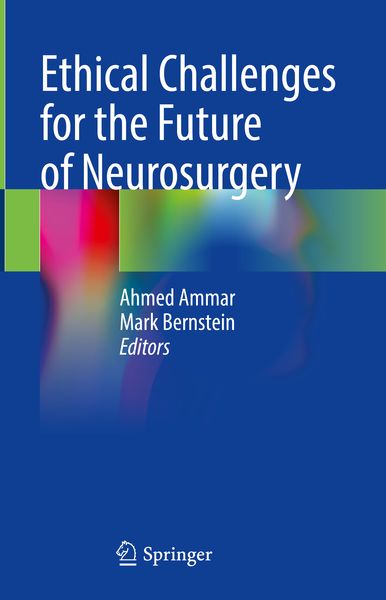
Produktbild: Ethical Challenges for the Future of Neurosurgery
- 11%

Ethical Challenges for the Future of Neurosurgery

11% sparen

131,99 € UVP 149,79 €

inkl. gesetzl. MwSt., Versandkostenfrei


Beschreibung

This work informs about major changes in health care systems at present and to come, and the ethical consequences. Rapid technological developments, especially in the fields of communication and virtual communication, artificial intelligence, implanted brain chips, augmented reality, in situ real-time...

Beschreibung

This work informs about major changes in health care systems at present and to come, and the ethical consequences. Rapid technological developments, especially in the fields of communication and virtual communication, artificial intelligence, implanted brain chips, augmented reality, in situ real-time pathological diagnosis of lesions during surgery, and others are challenging aspects of neurosciences in particular and medicine in general. Most of these modern technologies are available nowadays, just waiting to be tried and used. Ethicists (and neurosurgeons!) are facing unprecedented challenges as they have to be one step ahead in reading the future and predict what is coming and how the implementation of these technologies may affect patients’ safety, dignity, and autonomy. This book supports neurosurgeons and medical care providers to understand and implement the newly developed technologies, which will help advance medical care.


Each chapter has been written by a world leader. Some of these authors are making the future and producing new advanced technologies. The authors discuss all the new innovations and the editors asked the authors to point out the ethical dilemmas if such technologies are implemented. The ethical questions are highlighted and suggestions are provided for solving such ethical problems to guarantee patient safety and dignity. According to the definition and principles of the Values-Based Medicine concept, the patient is the center of care, is the sole center of care. No compromising of patients’ well-being and safety can be allowed!

Portrait


Ahmed Ammar, MBChB, DMSc, FICS, FACS, currently he is the chairman of the Department of Neurosurgery, Faculty of Medicine, Delta University for Science and Technology, Gamasa, Egypt. He was a Professor and Consultant Neurosurgeon at the KFHU, Dammam University from 1987 to 2023. He graduated from the Medical School in 1977 and started his Neurosurgery training program at the Karolinska Institute, Stockholm, Sweden in 1979. He subsequently moved to Japan’s Shinshu University, where he completed his doctorate in Neurosurgery in 1984. This was followed by a fellowship at the Dept. of Neurosurgery, Pittsburgh University, USA, in 1989.He is an educator, he shared in writing the first Neurosurgery Training Program in Saudi Arabia in 1987, since that time he wrote at least 6 fellowships training programs in Saudi Arabia and other countries. He wrote the first Head Trauma Protocol for MOH, SA 2013, and has published over 150 manuscripts in international journals and chapters in 14 books and 3 books. He was editor of the books “Ethics in Neurosurgery Practice”, and "Hydrocephalus" published by Springer in 2014 and 2017.


Prof. Ammar has a special interest in pediatric neurosurgery. His current scientific research focuses on the long-term outcomes of mild head trauma (in progress), the long-term outcomes of hydrocephalus (finished), and whole exome sequencing for hydrocephalus and Epilepsy (in progress). He has also designed and patented four neurosurgical instruments and been recognized with the following awards: The World Federation for Neurosurgical Societies Honorary Gold Medal in 2022,  the Life Time Achievement in Medicine/ Neurosurgery Award, Venous International Foundation, 2016, Walter E Dandy Neurosurgical International Society Award, 2015, Saudi Neurosurgical Society Medal of Appreciation 2014, and the Saud Neuroscience Society Appreciation Award 2009. He has 8 patents from USA, Egypt and other countries.


Dr. Bernstein is Professor of Surgery at the University of Toronto and a neurosurgeon at Toronto Western Hospital, University Health Network. His main areas of interest are neuro-oncology, bioethics, palliative care, and advancing surgery in the developing world, where he spends time operating and teaching.

Produktdetails

Einband

Gebundene Ausgabe

Erscheinungsdatum

16.11.2024

Abbildungen

XVII, 372 p. 27 illus., 14 illus. in color.

Herausgeber Ahmed Ammar + weitere

Produktdetails

Einband

Gebundene Ausgabe

Erscheinungsdatum

16.11.2024

Abbildungen

XVII, 372 p. 27 illus., 14 illus. in color.

Herausgeber
Verlag Springer
Seitenzahl

372

Maße (L/B/H)

24,1/16/2,6 cm

Gewicht

771 g

Sprache

Englisch

ISBN

978-3-031-71476-4

Herstelleradresse

Springer-Verlag KG
Sachsenplatz 4-6
1201 Wien
AT

Email: ProductSafety@springernature.com

Ein neues Kapitel für Ihre Bücher

Ein neues Kapitel für Ihre Bücher

Schenken Sie Ihren alten Schätzen ein zweites Leben und erhalten Sie dafür eine Thalia Geschenkkarte.

Jetzt verkaufen
Jetzt verkaufen

Noch keine Bewertungen vorhanden

Verfassen Sie die erste Bewertung zu diesem Artikel

Helfen Sie anderen Kundinnen und Kunden durch Ihre Meinung.

Kundinnen und Kunden meinen

Bewertungen (0)

  • Produktbild: Ethical Challenges for the Future of Neurosurgery
  • Part 1: General Neurosurgical ethics.- Introduction.- The dilemma of the healthcare economy Justice, equity, and equality.- Values- Based Medicine and Values- Based medical Education.- Neuroethics.- Consent, litigation, and accountability.- Part 2: Future challenges.- Deep brain stimulation.- Brain-Computer interfaces and Implanted brain prosthesis.- Neurosurgery during a pandemic.- Artificial Intelligence.- Telemedicine/Virtual care.- Telesurgery/Robotic surgery.- Genetic therapy/genetic alteration.- Neuroablation.- Psychosurgery.- Prenatal surgery.- Medical tourism.- Research and innovation.- Human clinical trials.- Neurosurgery for the elderly.- Neuropalliative care.- Augmented virtual integrated reality/ Metaverse.- Training and education.- Global Neurosurgery.- Future of the future of Neurosurgery.