















































KI-Beratung Beta

Gutscheinbedingungen

Gültig bis 30.11.2026 | Gültig für nicht preisgebundene fremdsprachige Bücher | Einzelne Artikel können ausgeschlossen sein | Online auf thalia.de und in der Thalia App einlösbar | Click & Collect nur mit Online-Zahlung (Paypal/Kreditkarte) vorab | Nicht kombinierbar mit anderen Gutscheinen oder Preisaktionen | Nur einmal pro Einkauf einlösbar | Gutschein wird auf max. 500€ Bestellwert angerechnet | Keine Barauszahlung | Nicht gültig für Versandkosten und Services

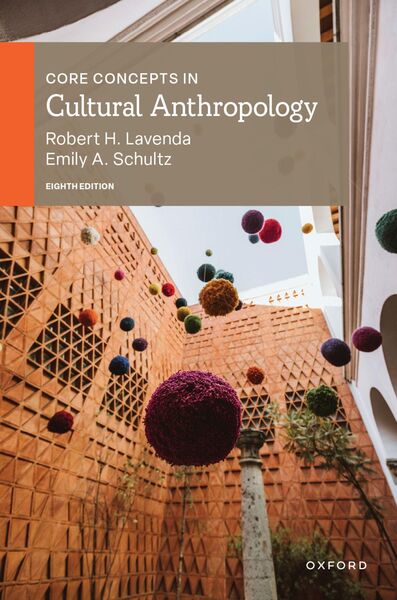
Produktbild: Core Concepts in Cultural Anthropology

Core Concepts in Cultural Anthropology

83,99 €

inkl. gesetzl. MwSt., Versandkostenfrei


Produktdetails

Einband

Taschenbuch

Erscheinungsdatum

19.05.2025

Verlag Oxford Academic
Seitenzahl

272

Produktdetails

Einband

Taschenbuch

Erscheinungsdatum

19.05.2025

Verlag Oxford Academic
Seitenzahl

272

Maße (L/B/H)

23,5/15,6/1,5 cm

Gewicht

472 g

Auflage

8 Revised edition

Sprache

Englisch

ISBN

978-0-19-775651-5

Herstelleradresse

Libri GmbH
Europaallee 1
36244 Bad Hersfeld
DE

Email: gpsr@libri.de

Ein neues Kapitel für Ihre Bücher

Ein neues Kapitel für Ihre Bücher

Schenken Sie Ihren alten Schätzen ein zweites Leben und erhalten Sie dafür eine Thalia Geschenkkarte.

Jetzt verkaufen
Jetzt verkaufen

Noch keine Bewertungen vorhanden

Verfassen Sie die erste Bewertung zu diesem Artikel

Helfen Sie anderen Kundinnen und Kunden durch Ihre Meinung.

Kundinnen und Kunden meinen

Bewertungen (0)

  • Produktbild: Core Concepts in Cultural Anthropology
    • PREFACE
    • Chapter 1 Anthropology
    • 1.1 An Anthropological Perspective
    • 1.2 The Subfields of Anthropology
    • 1.3 Is Anthropology a Science? Modernism, Postmodernism, and Beyond
    • 1.4 Reflexive Anthropology
    • 1.5 Moral Anthropology
    • Chapter 2 Theory in Sociocultural Anthropology?
    • 2.1 Anthropology as Science?
    • 2.2 Nineteenth-Century Approaches?
    • 2.3 Early Twentieth-Century Approaches?
    • 2.4 Mid-Twentieth-Century Approaches?
    • 2.5 Late Twentieth-Century Debates?
    • 2.6 New Directions in the Twenty-First Century?
    • Chapter 3 Culture?
    • 3.1 Culture Against Racism: The Early Twentieth Century?
    • 3.2 The Evolution of Culture?
    • 3.3 Culture and Symbolism?
    • 3.4 Ethnocentrism and Cultural Relativism?
    • 3.5 The Boundaries of Culture??
    • 3.6 The Concept of Culture in a Global World: Problems and Practices
    • 3.7 Culture: Contemporary Discussion and Debate
    • 3.8 Culture: A Contemporary Consensus?
    • Chapter 4 Meaning-Making and Language
    • 4.1 Making Meaning?
    • 4.2 Studying Language: A Historical Sketch
    • 4.3 The Building Blocks of Language
    • 4.4 Language and Culture
    • 4.5 Language and Society
    • 4.6 Discourse
    • 4.7 Language Contact and Change
    • 4.8 Meaning-Making and Art
    • 4.9 The Anthropology of Media and the Arts
    • Chapter 5 Worldview and Religion
    • 5.1 Religion
    • 5.2 Myth
    • 5.3 Ritual
    • 5.4 Magic and Witchcraft
    • 5.5 Religious Practitioners
    • 5.6 Change in Religious Systems
    • 5.7 Secularism, Fundamentalism, and New Religious Movements
    • Chapter 6 The Dimensions of Social Organization
    • 6.1 What Is Social Organization?
    • 6.2 Dimensions of Social Organization
    • 6.3 Caste and Class
    • 6.4 Race
    • 6.5 Ethnicity
    • Chapter 7 Sex, Gender, and Sexuality
    • 7.1 Sex, Gender, and Feminism in the Twentieth Century
    • 7.2 Sex, Gender, Race, and Class
    • 7.3 Gender Performativity
    • 7.4 Theoretical Diversity in Studies of Sex and Gender
    • 7.5 Sex, Gender, and the Body
    • 7.6 Sex, Gender, and Sexuality
    • 7.7 Sex, Gender, and Sexuality in Ethnographic Context
    • Chapter 8 Relatedness: Kinship, Marriage, Family, and Friendship
    • 8.1 Kinship Versus Biology
    • 8.2 Descent
    • 8.3 Bilateral Descent
    • 8.4 Unilineal Descent
    • 8.5 Kinship Terminologies
    • 8.6 What Is Marriage?
    • 8.7 Whom to Marry and Where to Live
    • 8.8 How Many Spouses?
    • 8.9 Marriage as Alliance
    • 8.10 Family
    • 8.11 Divorce
    • 8.12 Friendship
    • Chapter 9 Political Anthropology
    • 9.1 Power
    • 9.2 Political Ecology and Political Economy
    • 9.3 Disputes and Dispute Resolution
    • 9.4 Forms of Political Organization
    • 9.5 Social Stratification
    • 9.6 Forms of Political Activity
    • 9.7 Social Control and Law
    • 9.8 Nationalism and Hegemony
    • Chapter 10 Economic Anthropology
    • 10.1 The "Arts of Subsistence"
    • 10.2 Subsistence Strategies
    • 10.3 Explaining the Material Life Processes of Society
    • 10.4 Modes of Exchange
    • 10.5 Production, Distribution, and Consumption
    • 10.6 Mode of Production
    • 10.7 Peasants
    • 10.8 Consumption
    • 10.9 The Anthropology of Food and Nutrition
    • 10.10 Politics, Economics, and the Anthropology of Development
    • Chapter 11 Globalization
    • 11.1 The Cultural Legacy of Colonialism
    • 11.2 Analyzing Sociocultural Change in the Postcolonial World
    • 11.3 Globalization
    • 11.4 The Cultural Effects of Contact
    • 11.5 Globalization, Citizenship, and Human Rights
    • 11.6 New Global Institutions
    • Chapter 12 The Anthropology of Science, Technology, and Medicine
    • 12.1 Science and Anthropology
    • 12.2 Anthropology, Science, and Technology
    • 12.3 The Anthropology of Medicine
    • 12.4 Human Health in Evolutionary Context
    • 12.5 Human Health and Nutrition
    • 12.6 Health and Human Reproduction
    • 12.7 Sickness and Health in the Global Capitalist Economy
    • Appendix Reading Ethnography
    • The Parts of an Ethnography
    • The Use of Indigenous and Local Terms
    • The Photographs
    • Why Are You Reading This Ethnography (and How Should You Read It)?
    • BIBLIOGRAPHY
    • INDEX